

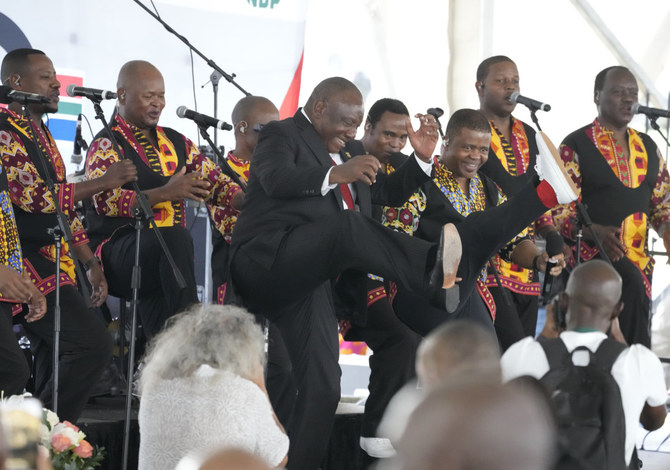

PRETORIA: South Africa marked 30 years since the end of apartheid and the birth of its democracy with a ceremony in the capital Saturday that included a 21-gun salute and the waving of the nation’s multicolored flag.
But any sense of celebration on the momentous anniversary was set against a growing discontent with the current government.
President Cyril Ramaphosa presided over the gathering in a huge white tent in the gardens of the government buildings in Pretoria as head of state.
He also spoke as the leader of the African National Congress party, which was widely credited with liberating South Africa’s Black majority from the racist system of oppression that made the country a pariah for nearly a half-century.
The ANC has been in power ever since the first democratic, all-race election of April 27, 1994, the vote that officially ended apartheid.
But this Freedom Day holiday marking that day fell amid a poignant backdrop: Analysts and polls predict that the waning popularity of the party once led by Nelson Mandela is likely to see it lose its parliamentary majority for the first time as a new generation of South Africans make their voices heard in what might be the most important election since 1994 next month.

People queue to cast their votes in Soweto, South Africa, on April 27, 1994, in the country's first all-race elections. South Africans celebrate "Freedom Day" every April 27, when they remember their country's pivotal first democratic elections in 1994 that announced the official end of the racial segregation and oppression of apartheid. (AP Photo/File)
“Few days in the life of our nation can compare to that day, when freedom was born,” Ramaphosa said in a speech centered on the nostalgia of 1994, when Black people were allowed to vote for the first time, the once-banned ANC swept to power, and Mandela became the country’s first Black president. “South Africa changed forever. It signaled a new chapter in the history of our nation, a moment that resonated across Africa and across the world.”
“On that day, the dignity of all the people of South Africa was restored,” Ramaphosa said.
The president, who stood in front of a banner emblazoned with the word “Freedom,” also recognized the major problems South Africa still has three decades later with vast poverty and inequality, issues that will be central yet again when millions vote on May 29. Ramaphosa conceded there had been “setbacks.”
The 1994 election changed South Africa from a country where Black and other nonwhite people were denied most basic freedoms, not just the right to vote. Laws controlled where they lived, where they were allowed to go on any given day, and what jobs they could have. After apartheid fell, a constitution was adopted guaranteeing the rights of all South Africans no matter their race, religion, gender or sexuality.
But that hasn’t significantly improved the lives of millions, with South Africa’s Black majority that make up more than 80 percent of the population of 62 million still overwhelmingly affected by severe poverty.
The official unemployment rate is 32 percent, the highest in the world, and more than 60 percent for young people between the ages of 15 and 24. More than 16 million South Africans — 25 percent of the country — rely on monthly welfare grants for survival.
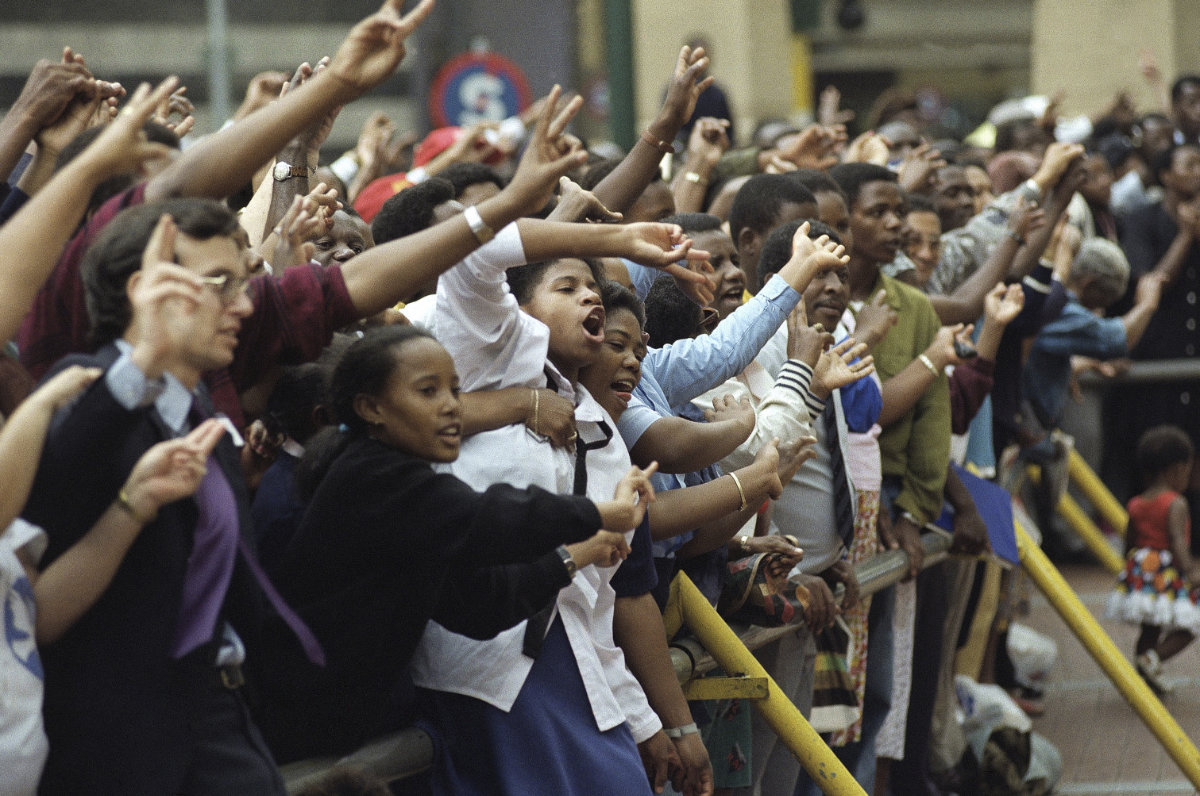
A crowd of people sing and give peace signs during a lunchtime peace march in downtown Johannesburg, South Africa, on Jan. 27, 1994 ahead of the country's all race elections. South Africans celebrate "Freedom Day" every April 27, when they remember their country's pivotal first democratic elections in 1994 that announced the official end of the racial segregation and oppression of apartheid. (AP Photo/File)
South Africa is still the most unequal country in the world in terms of wealth distribution, according to the World Bank, with race a key factor.
While the damage of apartheid remains difficult to undo, the ANC is increasingly being blamed for South Africa’s current problems.
In the week leading up to the anniversary, countless South Africans were asked what 30 years of freedom from apartheid meant to them. The dominant response was that while 1994 was a landmark moment, it’s now overshadowed by the joblessness, violent crime, corruption and near-collapse of basic services like electricity and water that plagues South Africa in 2024.
It’s also poignant that many South Africans who never experienced apartheid and are referred to as “Born Frees” are now old enough to vote.
Outside the tent where Ramaphosa spoke in front of mostly dignitaries and politicians, a group of young Black South Africans born after 1994 and who support a new political party called Rise Mzansi wore T-shirts with the words “2024 is our 1994” on them. Their message was that they were looking beyond the ANC and for another change for their future in next month’s election.
“They don’t know what happened before 1994. They don’t know,” said Seth Mazibuko, an older supporter of Rise Mzansi and a well-known anti-apartheid activist in the 1970s.
“Let us agree that we messed up,” Mazibuko said of the last 30 years, which have left the youngsters standing behind him directly impacted by the second-worst youth unemployment rate in the world behind Djibouti.
He added: “There’s a new chance in elections next month.”


