BEIRUT: Lebanese Forces party leader Samir Geagea warned on Saturday that violent escalation in southern Lebanon could lead to an “undesirable situation.”
His remarks came amid the increase in clashes on the southern front, expanding a domestic rift set against Hezbollah’s support for Hamas in Gaza.
Hezbollah’s opponents accuse it of “usurping” the power to make peace and war from the Lebanese state.
Many are demanding the implementation of UN Resolution 1701, adopted during the July 2006 war between Israel and Hezbollah, which explicitly empowers the UN Interim Force in Lebanon and the Lebanese Army to maintain peace along the so-called Blue Line demarcating the border with Israel.
BACKGROUND
The border between Lebanon and Israel has seen near-daily exchanges of fire since the Israel- Hamas war in Gaza began nearly seven months ago.
Geagea was speaking at a meeting at the party’s headquarters in Maarab, which included MPs from the Lebanese Forces, independent politicians, and opposition figures.
The meeting concluded with a warning that “weapons outside state institutions are a threat to Lebanese sovereignty and a blatant attack on the security of the Lebanese people and must be immediately withdrawn.”
The participants called on the government to “enforce Resolution 1701 and immediately issue orders to deploy the Lebanese Army under the Litani Line in the south and on the entire border, enhance border control with Syria, and implement the agreement on the return of refugees to their country.”
Geagea condemned “the presence of a state within the state that confiscates decision-making and facilitates smuggling through illegal crossings.”
He pointed out that “a certain group in Lebanon holds onto power and refuses to consider any resolutions. The latest problem is the military operations in southern Lebanon, which began with a decision from Hezbollah alone.”
He asked: “How can Hezbollah call for internal dialogue on the presidency of the republic while avoiding talks with the Lebanese people about dragging them into the war?”
Geagea said that Hezbollah “claims that the military operations are aimed at supporting Gaza, but events in southern Lebanon have not helped Gaza in any way but rather has only caused devastation for Lebanon.”
He cautioned: “Things are escalating, and we cannot remain spectators to what is happening.”
Geagea pointed out that “the data indicates that if the Lebanese Army deploys to all the points where Hezbollah is present in southern Lebanon, the danger will end, so what is the government waiting for to take action? The people of the south are paying the price for the presence of an Iranian military arm on the borders of Israel.”
On Saturday, Naim Qassem, Hezbollah’s deputy leader, warned that a ceasefire in the south would help Israel, adding that “the ceasefire initiative in southern Lebanon will not be viable if it does not begin with a ceasefire in Gaza.”
This came against the backdrop of fears that full-blown war with Israel may break out, and amid US and French diplomatic efforts to avoid escalation, with both Hezbollah and the Israeli military having violated the rules of engagement and expanded hostilities deep into each other’s territory.
Qassem addressed the Israeli minister of defense, Yoav Gallant, “who wants settlers to return to their homes in the north,” saying: “War cannot make the residents of the north return to their homes. It will drive them further away and may permanently prevent their return.”
He added: “Expanding the aggression against Lebanon complicates their lives further.”
Qassem said: “Hezbollah decided to respond to the Israeli aggression proportionally, ensuring that any expansion of the Israeli attacks will be met with an expanded response. This is a firm decision.”
Qassem addressed those opposing linking the Lebanese southern front to the Gaza Strip front, saying that Hezbollah’s support for the Gaza Strip “disrupted present and future Israeli military plans in Palestine and Lebanon.”
He added: “The advantages go beyond supporting Gaza and protecting Lebanon and include forming a real deterrent force able to face Israel and prevent it from overstepping the boundaries.”
Hezbollah also announced in a statement that it targeted “new positions of the Israeli soldiers west of the Shomera settlement on Saturday, causing direct hits.”
On Friday night it struck “the Haboushit site and the headquarters of the Hermon Brigade in the Maale Golani barracks with dozens of Katyusha rockets.”
The escalation came after an Israeli military drone targeted a car deep into western Bekaa, killing two Al-Fajr Forces commanders, identified as Musab Said Khalaf and Bilal Mohammed Khalaf.
The Israeli military claimed Musab Khalaf had activated numerous “terrorist activities against Israel from Lebanese territory toward Jabal Er Rouss area (Har Dov) and other areas recently, in cooperation with Hamas in Lebanon, and has coordinated and carried out terrorist attacks against Israel.”
It said that his elimination “aimed at striking the organization’s capabilities in carrying out terrorist attacks planned recently against the State of Israel on the northern border.”
The Israeli military also fired heavy artillery shells on Lebanese border towns, especially Kfarchouba and Shebaa in the Aarqoub area and on the outskirts of the town of Tayr Harfa.
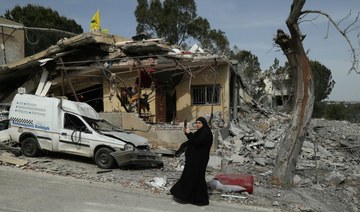
These attacks resulted in the killing of Lebanese civilian Qassem Asaad and the destruction of some homes and property in Kfarchouba.
The Israeli military said warplanes hit “Hezbollah facilities in the Jabal Al-Rihane area and Kfarkela.”
Hezbollah announced the death of one of its members, Rafay Fayez Hassan, 50, from the town of Khiam, who was killed in the shelling on Kfarkela.