RAWALPINDI: At a small tea shop in Pakistan’s garrison city of Rawalpindi, Nazar Hussain pours piping hot tea from a kettle into small cups and hands them away to eager customers, many of them regulars who have been frequenting the shop for decades.
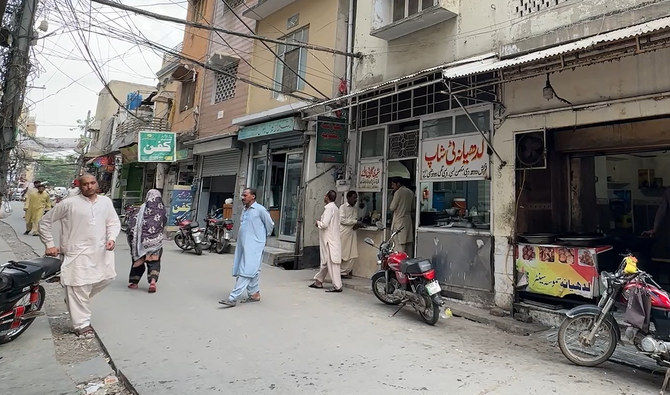
This is the scene from a typical evening at Ludhiana Tea Shop, located in the narrow streets of Rawalpindi’s old Lal Kurti area. The tea shop takes its name after the northwestern Indian city of Ludhiana, from where its owners migrated to Rawalpindi in 1947.
“My grandfather named this business in the memory of his hometown in India,” Hussain, who took charge of the shop in 1976, told Arab News, adding that he also sold dairy products and ghee.
“We are a family of milk sellers,” he said. “In India, we used to do the same. We were milk sellers and we used to own buffaloes.”
The shop has been serving tea to customers for the past 77 years. Agha Asghar Saeed, 72, is one of them and has been coming here since he was young.
“I was born here. I spent my childhood here, my youth and now my old age as well,” he told Arab News. “I’ve been having this tea since then.”
During the Muslim holy month of Ramadan, Saeed would break his fast at home but have tea at Ludhiana Tea Shop.
“I am addicted to this tea,” he explained.
But what inspires such loyalty in customers?
“You have to buy good quality milk,” Hussain said, adding that he purchased pure and organic milk for his shop that was a bit expensive. “Not everyone knows how to buy good milk.”
He maintained that most milk sellers in Pakistan did not sell pure milk, making him take several sips while buying to check the fat content.
Just like the milk, he continued, the quality of the tea leaves was also important.
The price of one cup of tea used to be around five paisas several years ago.
“Now, we sell it for Rs60 (22 cents),” he added.
The rich taste of Ludhiana Tea Shop means Muhammad Hasnain and his friends visit it every day rather than go to other tea shops in the neighborhood.
“Obviously, everybody wants a good bang for their buck,” Hasnain told Arab News. “The most important thing for anyone is that the quality should be good, and both quality and quantity are good here.”
Ludhiana Tea Shop offers customers deep-fried sweet and savory snacks, such as pakoras, samosas, jalebis and spring rolls, delectable items popularly consumed in Pakistan with tea.
Muhammad Shoaib Khan, a man in his 30s, informed he visited the shop with his friends at least a couple of times every day.
“We come on our bikes and travel for at least 1.5 kilometer on every trip,” Khan told Arab News. “It roughly adds up to 6 kilometers.”
Despite the cost of petrol, which has surged in recent times, Khan said he visited the shop for tea because it was worth it.
Hussain said he understood why customers came from far-off places just to have a cup of tea at his 77-year-old shop.
“Everyone cannot make good tea,” he said. “They don’t pour their heart in it. They lack passion. Making good tea is something that can only be done from the heart.”


![]()

In Rawalpindi, 77-year-old tea shop named after India’s Ludhiana is still a hit with customers
Short Url
https://arab.news/v7ng4
In Rawalpindi, 77-year-old tea shop named after India’s Ludhiana is still a hit with customers
- Ludhiana Tea Shop owners migrated from India’s northwestern city at the time of Partition in 1947
- Customers say they come from far-off places to relish the taste of tea at the shop which they find unique
Latest updates


© 2026 SAUDI RESEARCH & PUBLISHING COMPANY, All Rights Reserved And subject to Terms of Use Agreement.