Iran says nuclear weapons have no place in its nuclear doctrine

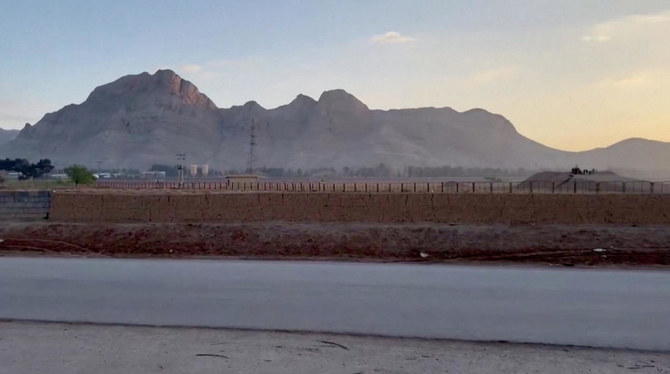
Military personnel stand guard at a nuclear facility in the Zardanjan area of Isfahan (Reuters)
Short Url
Updated 22 April 2024
Follow

Iran says nuclear weapons have no place in its nuclear doctrine

  • Tehran’s nuclear program banned the development of nuclear weapons in a fatwa

DUBAI: Nuclear weapons have no place in Iran’s nuclear doctrine, the country’s foreign ministry said on Monday, days after a Revolutionary Guards commander warned that Tehran might change its nuclear policy if pressured by Israeli threats.
“Iran has repeatedly said its nuclear program only serves peaceful purposes. Nuclear weapons have no place in our nuclear doctrine,” ministry spokesperson Nasser Kanaani said during a press conference in Tehran.
Following a spike in tensions with Israel, the Guards commander in charge of nuclear security Ahmad Haghtalab said last week that Israeli threats could push Tehran to “review its nuclear doctrine and deviate from its previous considerations.”
Iran’s Supreme Leader, Ayatollah Ali Khamenei, who has the last say on Tehran’s nuclear program, banned the development of nuclear weapons in a fatwa, or religious decree, in the early 2000s.


Flash floods kill 21 in Moroccan coastal town

Updated 5 sec ago
Follow

Flash floods kill 21 in Moroccan coastal town

RABAT: Flash-flooding caused by sudden, heavy rain killed at least 21 people in the Moroccan coastal town of Safi on Sunday, local authorities said.
Images on social media showed a torrent of muddy water sweeping cars and rubbish bins from the streets in Safi, which sits around 300 kilometers (186 miles) south of the capital Rabat.
At least 70 homes and businesses in the historic old city were flooded, authorities said.
Another 32 people were injured and taken to hospital, but most of them have been discharged.

Damage to roads cut off traffic along several routes to and from the port city on the Atlantic coast.
“It’s a black day,” resident Hamza Chdouani told AFP.
By evening, the water level had receded, leaving people to pick through a mud-sodden landscape to salvage belongings.
Another resident, Marouane Tamer, questioned why government trucks had not been dispatched to pump out the water.
As teams searched for other possible casualties, the weather service forecast more heavy rain on Tuesday across the country.
Severe weather and flooding are not uncommon in Morocco, which is struggling with a severe drought for the seventh consecutive year.
The General Directorate of Meteorology (DGM) said 2024 was Morocco’s hottest year on record, while registering an average rainfall deficit of -24.7 percent.
Moroccan autumns are typically marked by a gradual drop in temperatures, but climate change has affected weather patterns and made storms more intense because a warmer atmosphere holds more moisture and warmer seas can turbocharge the systems.