


WASHINGTON: The United States on Friday imposed sanctions on an ally of Israel’s far-right national security minister and two entities that raised money for Israeli men accused of settler violence, the latest actions aimed against those Washington blames for an escalation of violence in the Israeli-occupied West Bank.
The sanctions, in addition to those already imposed on five settlers and two unauthorized outposts already this year, are the latest sign of growing US frustration with the policies of Israeli Prime Minister Benjamin Netanyahu.
The moves on Friday, which freeze any US assets held by those targeted and generally bar Americans from dealing with them, hit two organizations that launched fundraising campaigns to support settlers accused of violence and targeted by previous sanctions, the Department of the Treasury said in a statement.
The Biden administration’s moves against Israeli settlers have upset right-wing members of Netanyahu’s governing coalition who support the expansion of Jewish settlements and ultimately the annexation of the West Bank, where Palestinians envisage a future state.
They come as the complex relationship between Washington and its ally Israel is tested by the war in Gaza and as the Biden administration urges Israel to show restraint in responding to retaliatory strikes by Iran.
Washington sanctioned Ben-Zion Gopstein, founder and leader of the right-wing group Lehava, which opposes Jewish assimilation with non-Jews and agitates against Arabs in the name of religion and national security. Gopstein has said Lehava has 5,000 members.
State Department spokesperson Matthew Miller said members of the group had engaged in “destabilizing violence affecting the West Bank.”
“Under Gopstein’s leadership, Lehava and its members have been involved in acts or threats of violence against Palestinians, often targeting sensitive or volatile areas,” Miller said in a statement, warning of additional steps if Israel does not take measures to prevent extremist attacks amid an escalation of violence in the West Bank in recent days.
The European Union also said on Friday it had agreed to take sanctions against Lehava and other groups linked to violent settlers.
A spokesperson for Israel’s embassy in Washington did not immediately respond to a request for comment.
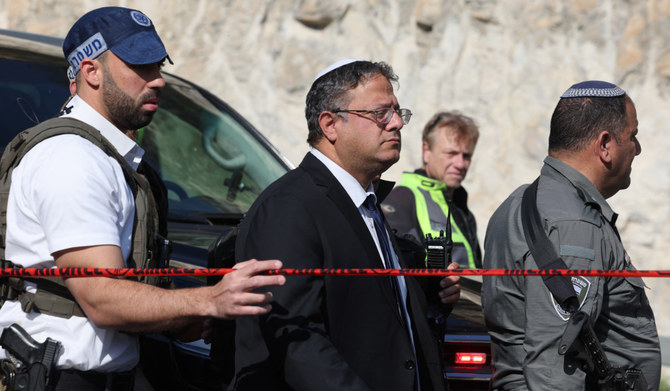
Gopstein, the most prominent Israeli figure targeted by US sanctions, is a close associate of and has family ties to National Security Minister Itamar Ben-Gvir, who himself lives in a West Bank settlement.
Ben-Gvir, like Gopstein, was a disciple of the late Meir Kahane, an ultranationalist rabbi whose Kach movement was listed by Washington as a specially designated global terrorist organization.
Ben-Gvir on Friday slammed what he called harassment against Lehava and “our dear settlers who have never engaged in terrorism or hurt anyone,” labeling the allegations against them a “blood libel” by Palestinian groups and anarchists.
“I call on Western countries to stop cooperating with these antisemites and end this campaign of persecution against the pioneering Zionist settlers,” Ben-Gvir said in a statement released by his office.
CROWDFUNDING
Since the 1967 Middle East war, Israel has occupied the West Bank of the Jordan River, which Palestinians want as the core of an independent state. It has built Jewish settlements there that most countries deem illegal. Israel disputes this and cites historical and Biblical ties to the land.
The Biden administration in February said settlements were inconsistent with international law, signaling a return to long-standing US policy on the issue that had been reversed by the previous administration of Donald Trump.
One entity targeted on Friday, Mount Hebron Fund, launched an online fundraising campaign that raised $140,000 for settler Yinon Levi, the Treasury said, after he was sanctioned on Feb. 1 for leading a group of settlers that assaulted Palestinian and Bedouin civilians, burned their fields and destroyed their property.
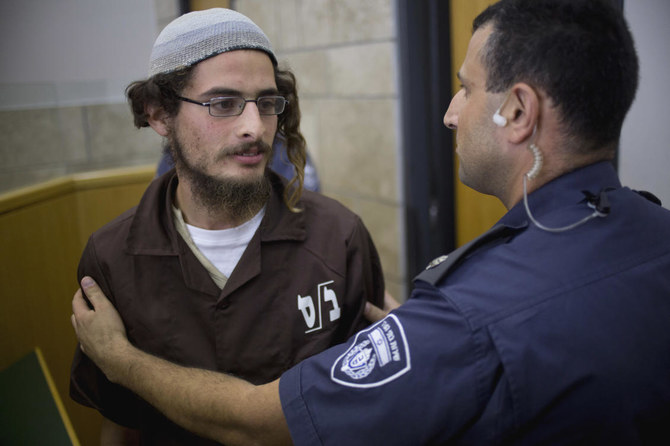
It said the second entity, Shlom Asiraich, raised $31,000 on a crowdfunding website for David Chai Chasdai, who the United States sanctioned for initiating and leading a riot that included setting vehicles and buildings on fire and causing damage to property in the Palestinian town of Hawara, resulting in the death of a Palestinian civilian.
“These types of enforcement actions against entities helping violent settlers evade US sanctions are what give sanctions teeth,” said Michael Schaeffer Omer-Man, director of research for Israel-Palestine at Democracy for the Arab World Now, a human rights group that has highlighted efforts by supporters to evade sanctions against settlers.


