

RIYADH: When picking up a pencil or paintbrush to create an artwork, self-taught Saudi artist Dana Almasoud channels her inner child.
“As soon as a child picks up a pencil, they attempt to draw or capture a sense of what they see through their eyes on paper. The majority of them stop at some point in their childhood, for whatever reason,” Almasoud told Arab News.
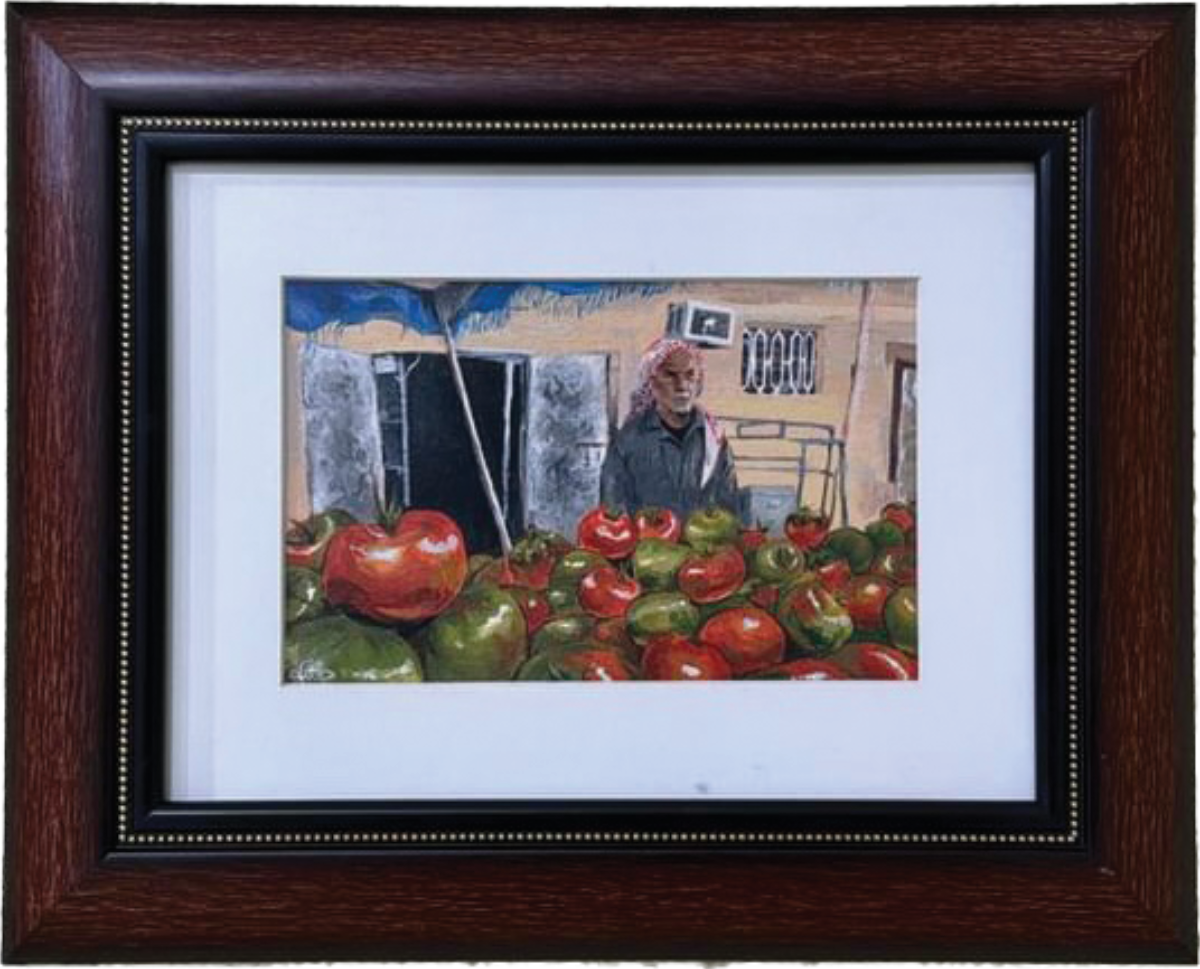
Almasoud’s painting of a man selling ramsi tomatoes, the seasonal heirloom fruits with green ‘shoulders’ found in Qatif. (Supplied)
“Fortunately, I was one of the few who never did. I had the luxury of a supportive mother who always looked forward to my next scribble.”
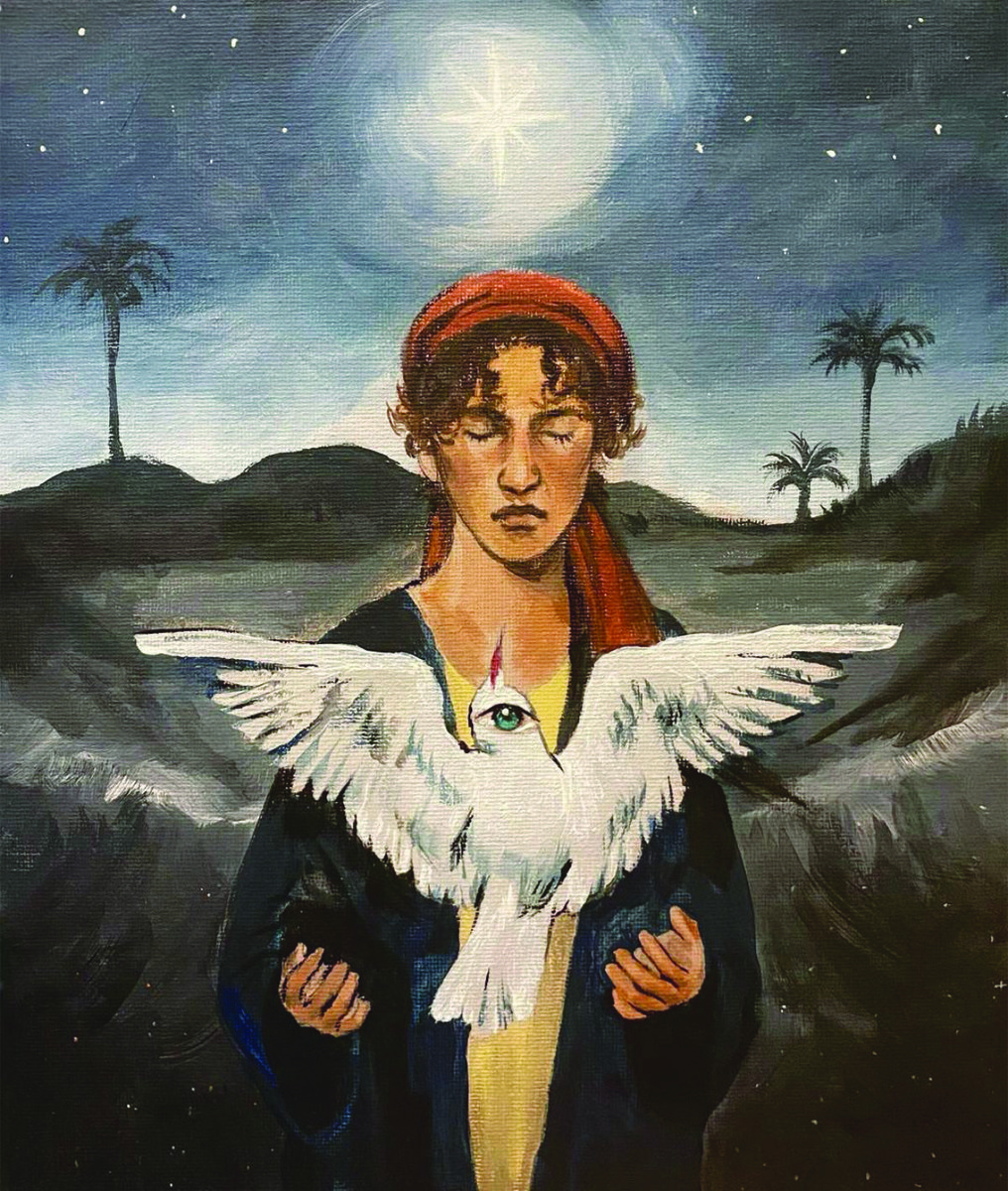
While pursuing her undergraduate studies in finance, as a freelance artist Almasoud explores a variety of styles, from fine art to surrealism and fantasy inspired by everyday scenes.
HIGHLIGHTS
• Much of Dana Almasoud’s work is inspired by Islamic historical art, characterized by its symbolism and emphasis on the beauty of spirituality.
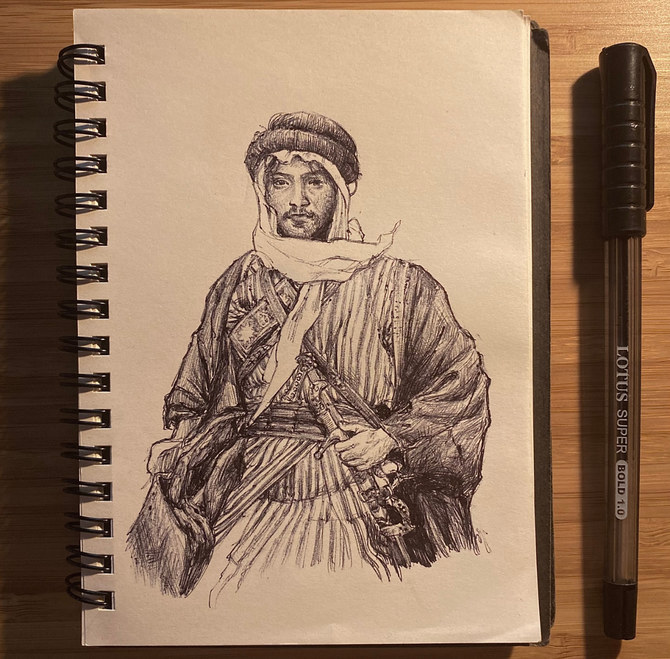
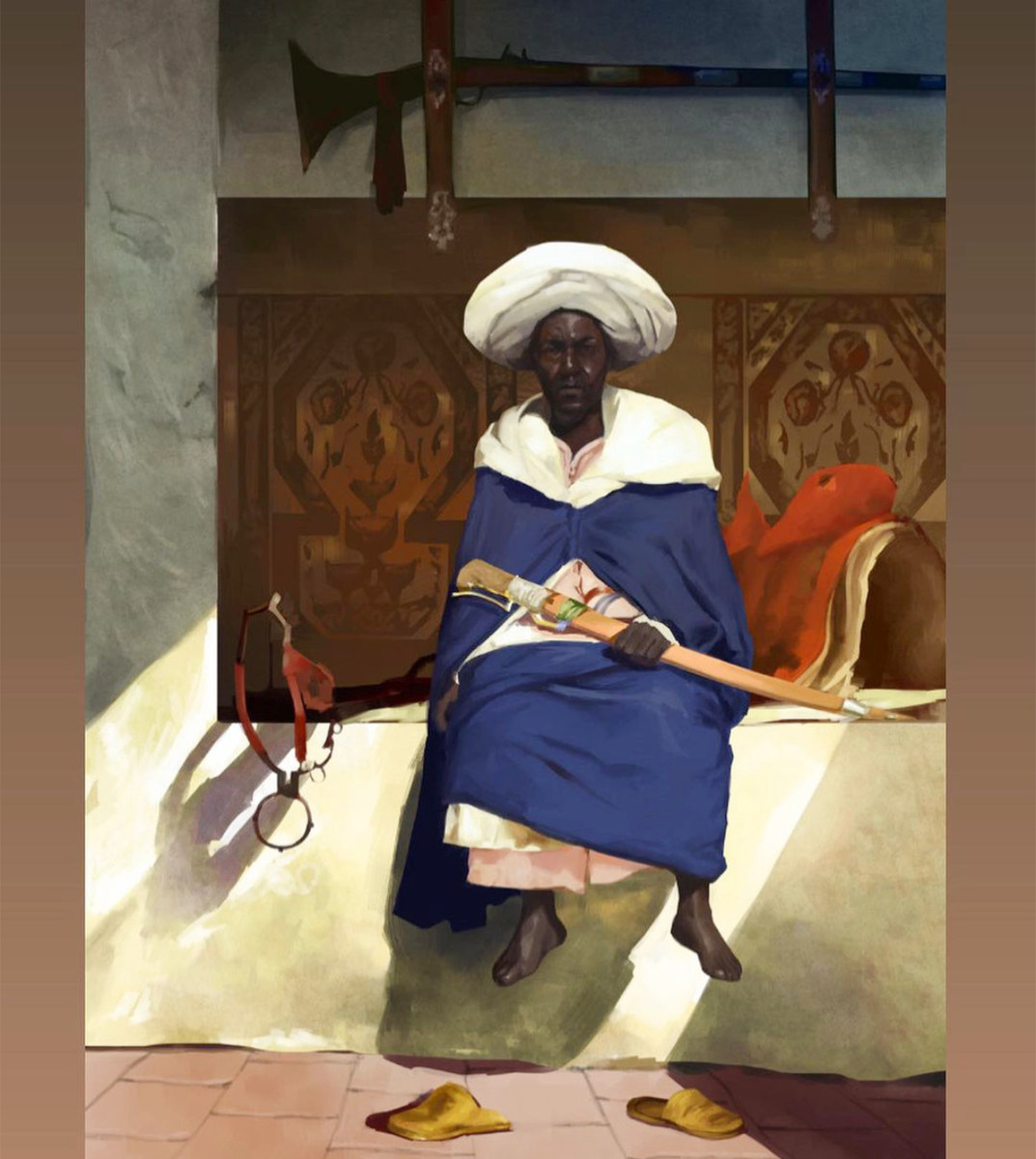
• One of her first works inspired by Saudi culture was a commission from a man who wanted a portrait in the orientalist style.
• The artist says her work is an attempt to fill the void that excess simplicity and minimalism has created in recent years.
“The warm morning sun, the singing of the birds, the stoplights and the people. I am surrounded by life and I do my best to pour what I see into my work. What makes us human is how we make things from nothing,” she said.
Almasoud’s painting of a man selling ramsi tomatoes, the seasonal heirloom fruits with green ‘shoulders’ found in Qatif. (Supplied)
Speaking about the “sanctuary” she has created in her room, she said: “It took me years of collecting, arranging and a lot of dedication to get it to how it is now.”
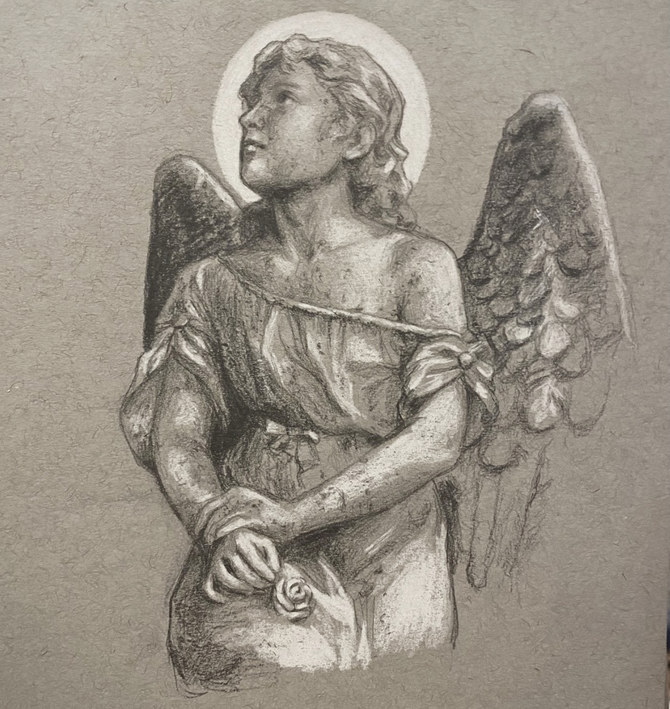
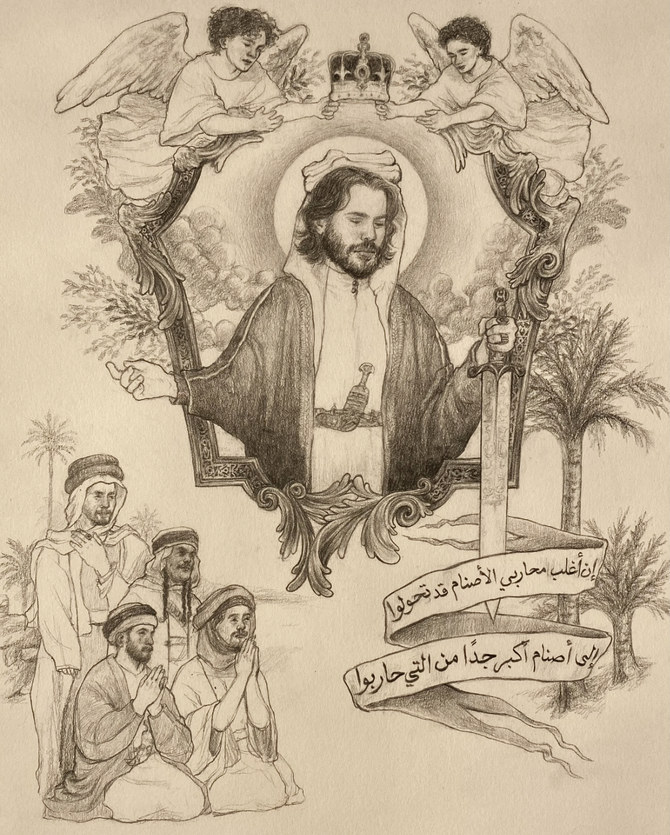
Much of Almasoud’s work is inspired by Islamic historical art, characterized by its symbolism and emphasis on the beauty of spirituality.
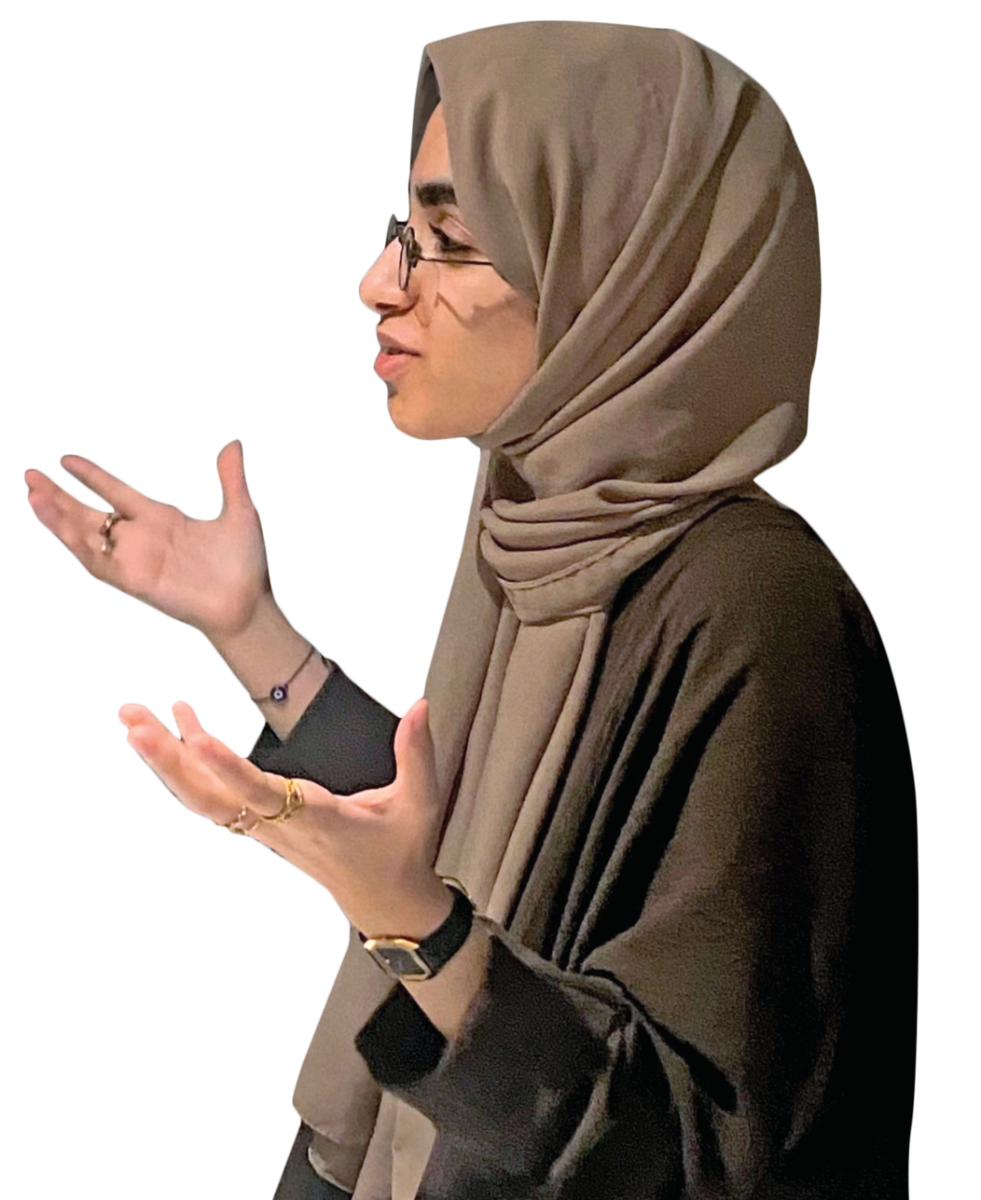
As a freelance artist Dana Almasoud explores a variety of styles, from fine art to surrealism and fantasy inspired by everyday scenes. (Instagram/esotericdana)
“In order for me to create things that resemble life, it only makes sense to use colors that already exist in nature,” she said.
“I take a lot of inspiration from historical art, both from Europe and the Middle East, since the pigments they used were extracted from natural sources and were perfectly saturated.”
Almasoud’s painting of a man selling ramsi tomatoes, the seasonal heirloom fruits with green ‘shoulders’ found in Qatif. (Supplied)
She enjoys experimenting with new mediums, but drawing with a pencil is her preferred choice.
“I also do enjoy the occasional challenge of an ink brush, because once it sets its bristles on paper, you cannot go back. When it comes to painting with color (watercolors, acrylics, oils), I still consider myself in the process of learning,” she said.
The warm morning sun, the singing of the birds, the stoplights and the people. I am surrounded by life and I do my best to pour what I see into my work.
Dana Almasoud, Saudi artist
“I also experiment with pyrography, doll making, embroidery, linoleum block printing and, soon, murals.”
Almasoud said one of her first works inspired by Saudi culture was a commission from a man who wanted to look like an orientalist.

Almasoud’s painting of a man selling ramsi tomatoes, the seasonal heirloom fruits with green ‘shoulders’ found in Qatif. (Supplied)
Her most recent painting is of a man selling ramsi tomatoes, the seasonal heirloom fruits with green “shoulders” that are prevalent in Qatif.
“These tomatoes are known for a special flavor and a lot of farmers from various lands tried to grow it themselves, but to no avail. For some reason, these tomatoes only taste special when they grow on that specific piece of land,” Almasoud said.
She said she had been told her work had “a layer of fog, where the edges are never harsh,” which reflects the high levels of humidity in the Eastern Province where she lives.
“I can see the Arabian Gulf from the window of my room. You can imagine the high rates of humidity, which is where I think that layer came from,” she said.
“I will always wonder how this translated into what I draw, but regardless, I do love it.”
Almasoud said her art was an attempt to fill the void that excess simplicity and minimalism has created in recent years.
“My art is an attempt to inspire people back to see the beauty in complexity and the intricacy of the small things in life.”
Speaking about the importance of art in the modern world, she said: “With the increase in the pace of the world, art has become even more important. It gives people and their minds something to hang on to, for them to not lose themselves and their identities in a busy world.”
For more information about the artist visit @esotericdana on Instagram.