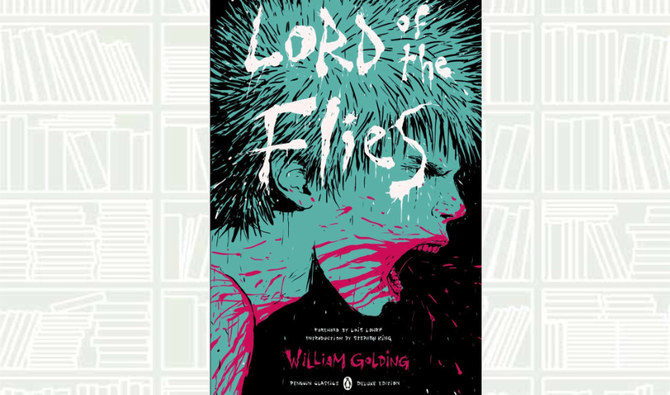

Author: William Golding
“Lord of the Flies” is a coming of age novel by British novelist William Golding. First published in 1954, the title has since become a classic of modern literature.
It tells the story of a group of British boys who find themselves stranded on an uninhabited island after their plane crashes during a wartime evacuation.
The novel explores themes of human nature, civilization, power and the inherent darkness within individuals. As the boys struggle to survive and establish order on the island, their society gradually descends into chaos and savagery.
The title refers to a severed pig’s head, symbolizing the evil and primitive instincts that take hold of the boys.
The main characters in the novel include Ralph, a charismatic and responsible boy who tries to maintain order and establish a signal fire to attract rescuers; Jack, a power-hungry and savage boy who becomes the leader of a group of hunters; Piggy, an intelligent but socially marginalized boy who serves as Ralph’s adviser; and Simon, a quiet and introspective boy who experiences a deep connection with nature.
As the story progresses, the boys’ civilization erodes, and they succumb to their primal instincts, engaging in violence and tribal warfare.
“Lord of the Flies” explores the destructive potential of unchecked power, the loss of innocence, and the conflict between civilization and savagery.
The novel has always been subject to various interpretations and perspectives by different readers and scholars. Much of it has been analyzed through the lens of allegorical human nature, political and social commentary, and even Freudian psychology.
“Lord of the Flies” has left a lasting impact on literature and popular culture through its exploration of universal themes, and its enduring relevance in contemporary society.
Its portrayal of the human condition and the fragility of civilization continues to resonate with readers, making it a classic that is worthy of being read again.