- Israel has killed more than 33,600 Palestinians, according to Gaza’s Health Ministry
PARIS: Israel and Iran have moved from once being firm allies to sworn enemies.
Here is a recap of their volatile relationship over the past half century.
Israel, following its creation in 1948, had close ties with Iran, which becomes the second Muslim country to recognize the Jewish state after Turkiye.
They become allies under the shah, Mohammad Reza Pahlavi. At the time, Iran was home to the biggest Jewish community in the Middle East.
The new Jewish state imported 40 percent of its oil from Iran in exchange for weapons, technology and agricultural produce.
Israel’s Mossad spy agency helped train the shah’s feared Savak secret police.
The 1979 Islamic revolution in Iran toppled the shah, dramatically ending the friendship between the two states.
Israel did not recognize the new Islamic Republic.
The ayatollahs considered Israel illegal occupiers of Jerusalem. Informal commercial links remained in place, however.
Islamic Jihad became the first Islamist Palestinian organization to take up arms against Israel in 1980, with Iran as its main backer.
Nonetheless, Israel sent Tehran around 1,500 missiles to help it fight Saddam Hussein during the Iran-Iraq war that raged from 1980 to 1988.
Israel invaded Lebanon in 1982 to counter Palestinian groups based there, going all the way to briefly hold the capital Beirut.
Iran’s elite Islamic Revolutionary Guard Corps subsequently backed the creation of militant group Hezbollah, which waged a campaign against Israeli forces from Shiite strongholds in southern Lebanon.
Israel blamed Hezbollah for attacks abroad, including in Argentina, where the 1992 bombing of the Israeli embassy killed 29 people and a 1994 attack on a Jewish community center left 85 dead.
Tensions rose after the election in 2005 of ultra conservative Mahmoud Ahmadinejad, who talked on several occasions of bringing an end to Israel and described the Holocaust as a “myth.”
Iran resumed uranium enrichment at Isfahan the same year.
When the Iran nuclear deal was brokered by world powers in 2015, Netanyahu slammed it as an “historic mistake.”
He was the first to congratulate then-US president Donald Trump when he withdrew the United States from the deal in 2018.
Iran has since resumed uranium enrichment.
Officially still at war with Syria, Israel claimed to want to stay out of the civil war that broke out in 2011 and still simmers.
But from 2013 on, Israel — wary of Hezbollah and Iran’s presence on the side of Syrian President Bashar Assad — carried out hundreds of air strikes against them in Syria.
Israel began cultivating ties with long-time foe Saudi Arabia, Iran’s main religious and regional rival.
In September 2020 Saudi allies the United Arab Emirates and Bahrain signed normalization accords with Israel.
The Unites States sought Israel-Saudi rapprochement, but the efforts were derailed by the Gaza War.
Over the following months Israel accused Iran of attacks on vessels. Iran accused Israel of targeted assassinations and the sabotage of the uranium enrichment plant at Natanz.
Israel was blamed for targeted attacks on Iranians in Syria, including top members of the Revolutionary Guard in 2022 and 2023.
An Israeli airstrike on Iran’s consular annex building in Damascus on April 1, 2024 killed more than a dozen people — including two senior members of the Revolutionary Guards.
US President Joe Biden warned that Iran was “threatening to launch a significant attack on Israel,” promising Israel “ironclad” support.
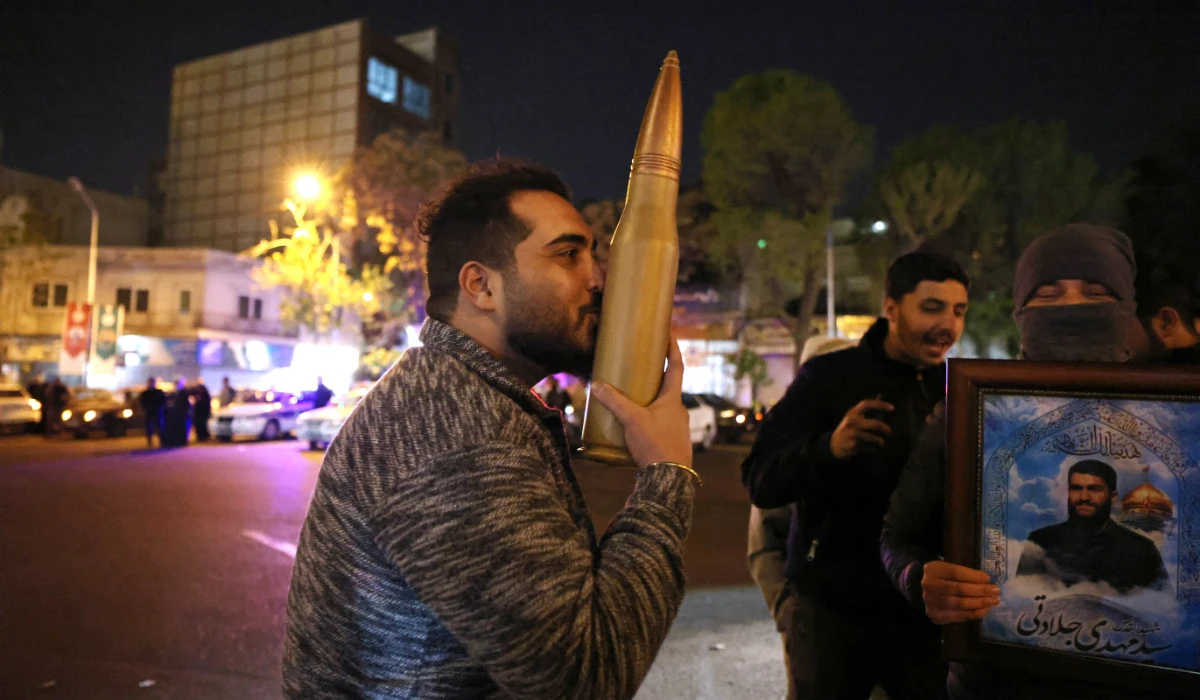
On April 13 — two weeks after the unprecedented attack on its consular facilities — Iran responded by sending waves of drones from its territory toward Israel, which closed its airspace, as did Iraq, Jordan and Lebanon.
Prime Minister Benjamin Netanyahu said Israel’s air defense systems were deployed and that it was prepared for a “direct attack from Iran.”