

Somalia refuses to accept Ethiopian naval base in breakaway region

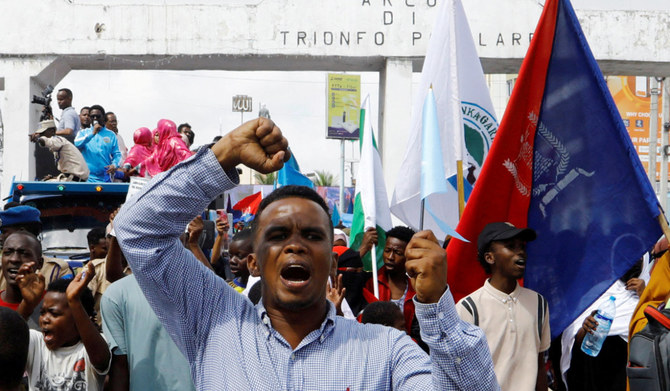
A Somali man reacts during a march against the Ethiopia-Somaliland port deal along KM4 street in Mogadishu, Somalia January 11, 2024. (REUTERS)
Short Url
Updated 13 April 2024
Follow

Somalia refuses to accept Ethiopian naval base in breakaway region

  • Somalia called the deal illegal as it considers Somaliland part of its territory even though it has had effective autonomy since 1991

NAIROBI: Somalia will never accept Ethiopia’s plan to build a naval base in its breakaway region of Somaliland but would consider granting Ethiopia commercial port access if discussed bilaterally, a senior Somali official said.
Landlocked Ethiopia sparked a diplomatic row with Mogadishu in January by signing a deal with Somaliland to lease 20 km of its coastline in return for recognizing the region as an independent state.
Somalia called the deal illegal as it considers Somaliland part of its territory even though it has had effective autonomy since 1991.

BACKGROUND

Landlocked Ethiopia sparked a diplomatic row with Mogadishu in January by signing a deal with Somaliland to lease 20 km of its coastline in return for recognizing the region as an independent state.

To defuse the acrimony, Kenya, in consultation with Djibouti and the Eastern African Bloc Intergovernmental Authority on Development, or IGAD, has proposed a maritime treaty to govern how landlocked states in the region can access ports on commercial terms, a senior Kenyan official said on Thursday.
Somalia’s state minister for foreign affairs, Ali Omar, said that before discussing port access bilaterally, Ethiopia must annul its agreement with Somaliland.
“Somalia will never accept (a) naval base,” Omar said.
“Somalia is ready for commercial access in accordance with the international law of the sea.”
He added that Somalia was willing to discuss proposals as long as they met the country’s interests, which are to “safeguard (our) sovereignty, political independence and unity.”
A spokesperson for Ethiopia’s Foreign Ministry declined to comment.


UK Police arrest 86 people at prison protest for Palestine Action hunger striker

Updated 25 January 2026
Follow

UK Police arrest 86 people at prison protest for Palestine Action hunger striker

  • Demonstration outside Wormwood Scrubs held in support of Umer Khalid
  • Khalid 1 of 5 people charged in connection with break-in at RAF base last year

LONDON: A protest outside a prison in the UK in support of a man detained for supporting the banned group Palestine Action has led to the arrest of 86 people.

London’s Metropolitan Police said a group of demonstrators breached the grounds of Wormwood Scrubs prison in the capital, refused to leave when ordered to do so, and threatened officers. They were arrested on suspicion of aggravated trespass.

The group, several of whom attempted to gain access to the prison itself, were protesting in support of Umer Khalid, who is currently on hunger strike at the facility.

Khalid is one of five people charged in relation to a break-in by Palestine Action members at an RAF base at Brize Norton last year, in which two military aircraft were damaged.

Khalid, who denies the charges, is one of several people who are on or who have taken part in hunger strikes in recent months, all of whom have been held on similar charges for over a year without their cases being brought to trial.

A spokesperson for the UK’s Ministry of Justice said: “The escalation of the protest at HMP Wormwood Scrubs is completely unacceptable. While we support the right to peacefully protest, reports of trespassing and threats being made to staff and police officers are deeply concerning.

“At no point was prison security compromised. However, where individuals’ actions cause risk or actual harm to hardworking staff, this will not be taken lightly and those responsible can expect to face consequences.

“Prisoners are being managed in line with longstanding policy. This includes regular checks by medical professionals, heart monitoring and blood tests, and support to help them eat and drink again. If deemed appropriate by healthcare teams, prisoners will be taken to hospital.”