Malaysia reports increase in requests to restrict social media content

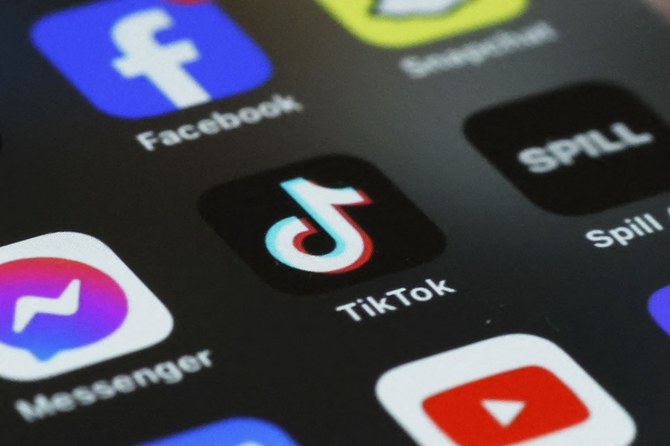
TikTok and Meta were also urged to curb content indicating coordinated inauthentic behaviour, or related to financial scams and illegal online gambling. (AFP/File)
Short Url
Updated 10 April 2024
Follow

Malaysia reports increase in requests to restrict social media content

  • Move is part of efforts to curb spread of harmful content related to race, religion and royalty
  • In the first three months of 2024, the government referred 51,638 cases to social media platforms, compared to 42,904 cases recorded in the whole of last year

KUALA LUMPUR: Malaysia urged Facebook operator Meta and short video service TikTok to step up monitoring on their platforms, it said on Tuesday, with the government reporting sharp increases in harmful social media content this year.
In the first three months of 2024, the government referred 51,638 cases to social media platforms, including Meta and TikTok, for further action, up from 42,904 cases recorded in the whole of last year, the communications regulator and Malaysian police said in a joint statement.
The agencies did not specify what types of content were reported, but said the move was part of efforts to restrict the spread of harmful content online, particularly those related to race, religion and royalty.
TikTok, owned by China’s ByteDance, and Meta were also urged to curb content indicating coordinated inauthentic behavior, or related to financial scams and illegal online gambling, the agencies said.
Race and religion are sensitive issues in Malaysia, which has a mainly Muslim ethnic Malay majority, alongside significant ethnic Chinese and Indian minorities. It also has laws prohibiting seditious remarks or insults against its monarchy.
Malaysia has increased scrutiny of online content in recent months, with Prime Minister Anwar Ibrahim’s administration facing accusations of backpedaling on its promises to protect free speech. The government has denied allegations of stifling diverse views, saying it needed to protect users from online harms.
Meta and TikTok restricted a record number of social media posts and accounts in Malaysia in the first six months of 2023, amid an increase in government requests to remove content, data published by the firms last year showed.



Musk’s AI bot Grok limits image generation on X to paid users after backlash

Updated 09 January 2026
Follow

Musk’s AI bot Grok limits image generation on X to paid users after backlash

  • AI tool was used to create sexualized images, sparking widespread criticisms
  • The standalone Grok app, which operates separately from X, still allows users ⁠to generate images without a subscription

LONDON: Elon Musk’s startup xAI has restricted the image generation function on its Grok chatbot on social media platform X to paid subscribers, after the tool’s ​use of AI to create sexualized images sparked a widespread backlash.
The chatbot’s image generation had allowed users on X to edit or create sexualized photos, which Reuters found was used to generate images of women and children in minimal clothing, often without the consent of the individuals depicted.
A torrent of semi-nude ‌images on X ‌led to European lawmakers urging legal ‌action, ⁠with ​German ‌media minister Wolfram Weimer describing them as the “industrialization of sexual harassment” and the European Commission calling them illegal.
Grok told X users on Friday that image generation and editing features were now available only to paying subscribers.
The standalone Grok app, which operates separately from X, still allows users ⁠to generate images without a subscription.
A Reuters reporter asked Grok ‌on X to convert a picture ‍of himself into one wearing ‍a bikini, echoing what has become a common request ‍over the last week by users. The bot did not do so and posted in reply that the tool was only available to paying subscribers of the social media ​platform.
In what seemed to be an automated response, xAI replied to an emailed Reuters request ⁠for comment by saying “Legacy Media Lies.” X did not immediately respond to a request for comment.
The European Commission said on Monday such images circulating on X were unlawful and appalling, while Britain’s data regulator said it had asked the platform to explain how it was complying with data protection laws following concerns that Grok was generating sexually abusive images of women.
Musk said last week that anyone using Grok to create illegal content would face ‌the same consequences as uploading such material directly.