

ARISH, Egypt: Twenty-one Palestinian cancer patients who escaped Gaza in recent months are now housed in a residence named Building 30 in the city of Arish in Egypt’s northern Sinai. There they await treatments that are no longer available in their war-scarred enclave.
“We are living in a state of limbo,” Said, a retired educator in his 70s who has prostate cancer, told Arab News at the residence, where he has stayed with his daughter Shahed since leaving Gaza for the safety of Egypt.
“It’s been five months since I last received medical care. I have been here for two months and prior to that for three months there was no cancer medication left in Gaza and it was hard to leave to receive treatment in Ramallah and the West Bank.”
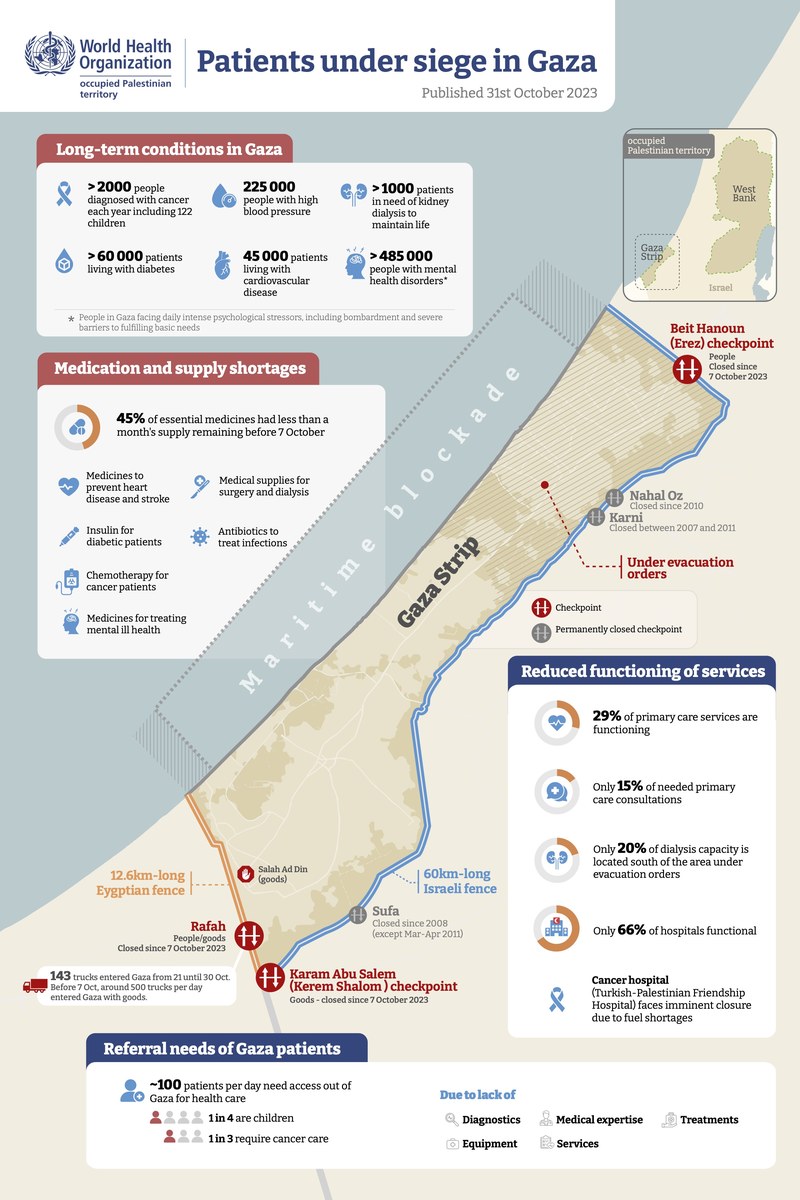
This infographic was published by the World Health Organization in October 2023, just 3 weeks after the war in Gaza began.
The conflict in Gaza between Israel and Hamas, which began on Oct. 7, has left thousands of Palestinian cancer patients unable to access diagnostics and potentially lifesaving treatments amid the destruction of infrastructure and shortages of medical supplies.
Early on in the conflict, the Turkish-Palestinian Friendship Hospital, the only facility in the Gaza Strip providing cancer treatments, was forced to suspend services owing to power outages and shortages of fuel for its generators.
About 10,000 cancer patients in Gaza have been unable to get treatment or medicines since the hospital shut down in the first week of November, according to Gaza’s health ministry.
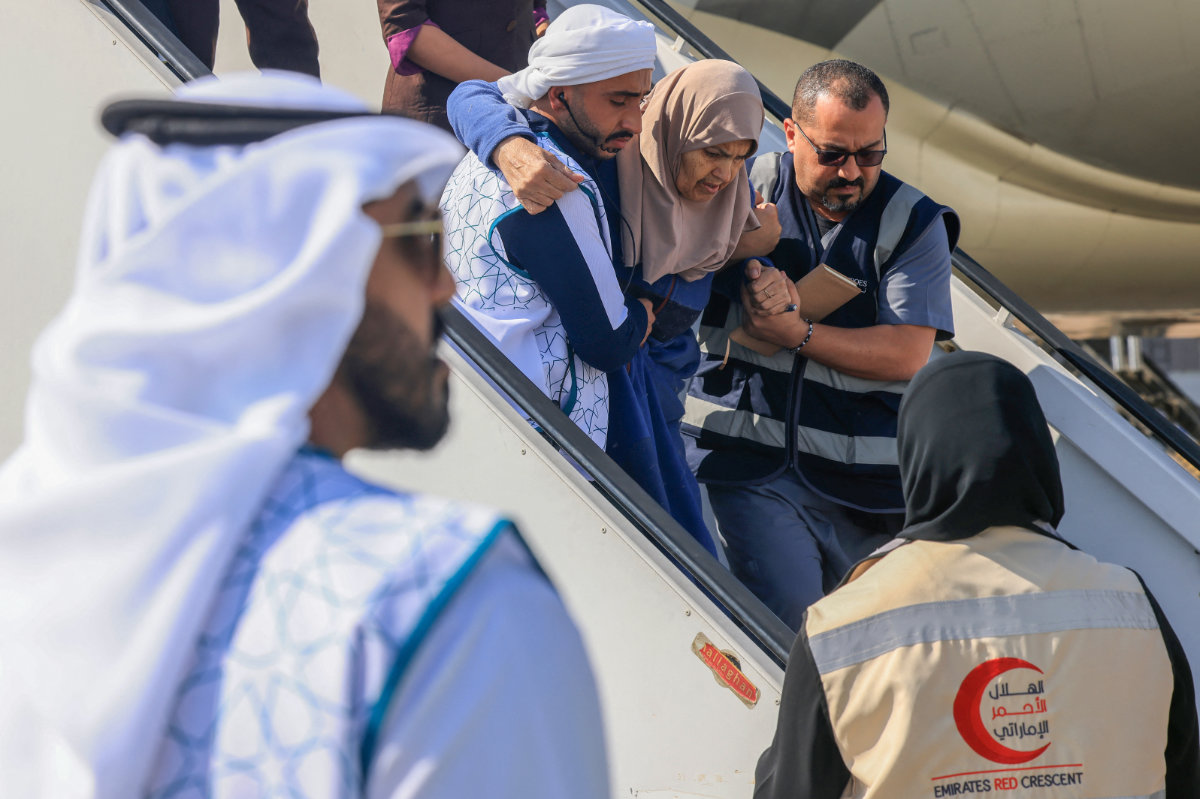
Palestinians evacuated from the Gaza Strip who arrived on a plane from Egypt's El-Arish airport disembark upon landing in Abu Dhabi on November 27, 2023, as part of a humanitarian mission organized by the United Arab Emirates. (AFP/File)
As a result, Palestinian cancer patients are either forgoing treatment altogether or desperately appealing to aid agencies and authorities to help facilitate their evacuation abroad where they can access medicines and therapies.
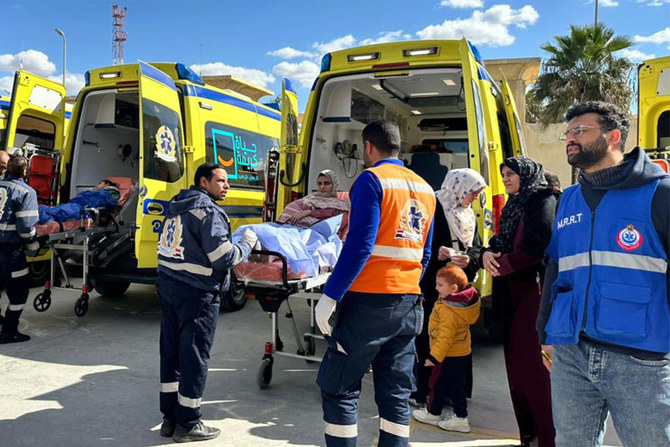
For those who have found a way to escape Gaza to neighboring Egypt, their best chance of receiving treatment lies in the hands of officials of the UAE, Qatar and Turkiye, which have made good on their pledge to support Gazan cancer patients.
The war has made it even harder for Gazans to secure permits for medical transfer out of the enclave. Even before the conflict, about 20,000 cancer patients required permission to leave each year to receive the specialized care unavailable in Gaza.
Barred from traveling to Ramallah in the West Bank to continue his treatment, Said decided to cross into Egypt with Shahed in the hope of securing treatment there or perhaps further afield.
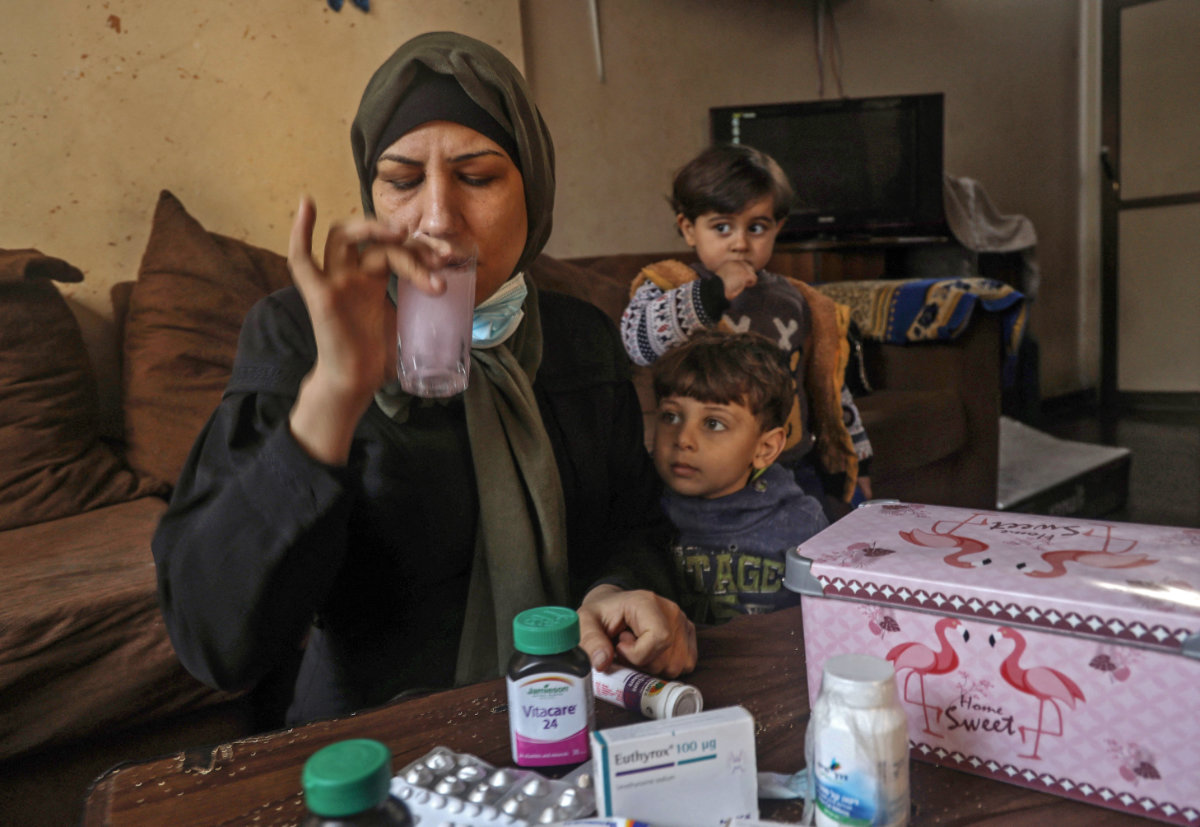
In this photo taken on February 1, 2021, Palestinian thyroid cancer patient Tahani al-Rifi takes her medicine at home in Gaza City. The destruction of hospitals and further restrictions imposed since the Israeli siege of Gaza has left thousands of cancer patients in the Palestinian enclave without medical care. (AFP/File)
But the stress of waiting for treatment has compounded the trauma of war and displacement, leaving Said weak and depressed. Shahed believes her father’s low mood is detrimental to his ailing health.
“I do what I can to keep his spirits up,” she told Arab News. “I have been working on trying to get him included with the patients that will be picked by the envoys. Medication of course matters but so does his mood. How can he beat the disease if he feels beaten himself?”
The battle to secure her father’s treatment has taken a toll on the whole family.
“It has been very difficult for us and we cannot afford to get him private treatment,” Shahed said. “We do not have the means for it anymore.”

In this handout photograph taken and released by Turkish Presidency Press Office on November 16, 2023, Turkish President Recep Tayyip Erdogan (R) speaks with Palestinian cancer patients at Bilkent City Hospital in Ankara. (Handout via AFP)
While fighting to secure treatment, Said is also enduring the grief of having lost another of his daughters.
“Not only is my father sick but he is haunted by the death of my sister,” Shahed said.
“One day she had called to check in on him and to see if he was able to receive a permit to go to Ramallah for his chemotherapy during the war, and as she was on the phone with him a rocket hit her house.
“She was crushed under heavy debris. Her death tore us apart, especially my father. You can see it in his eyes, there’s no light there anymore. Tell me, what should I help him heal first, his cancer or her death?”
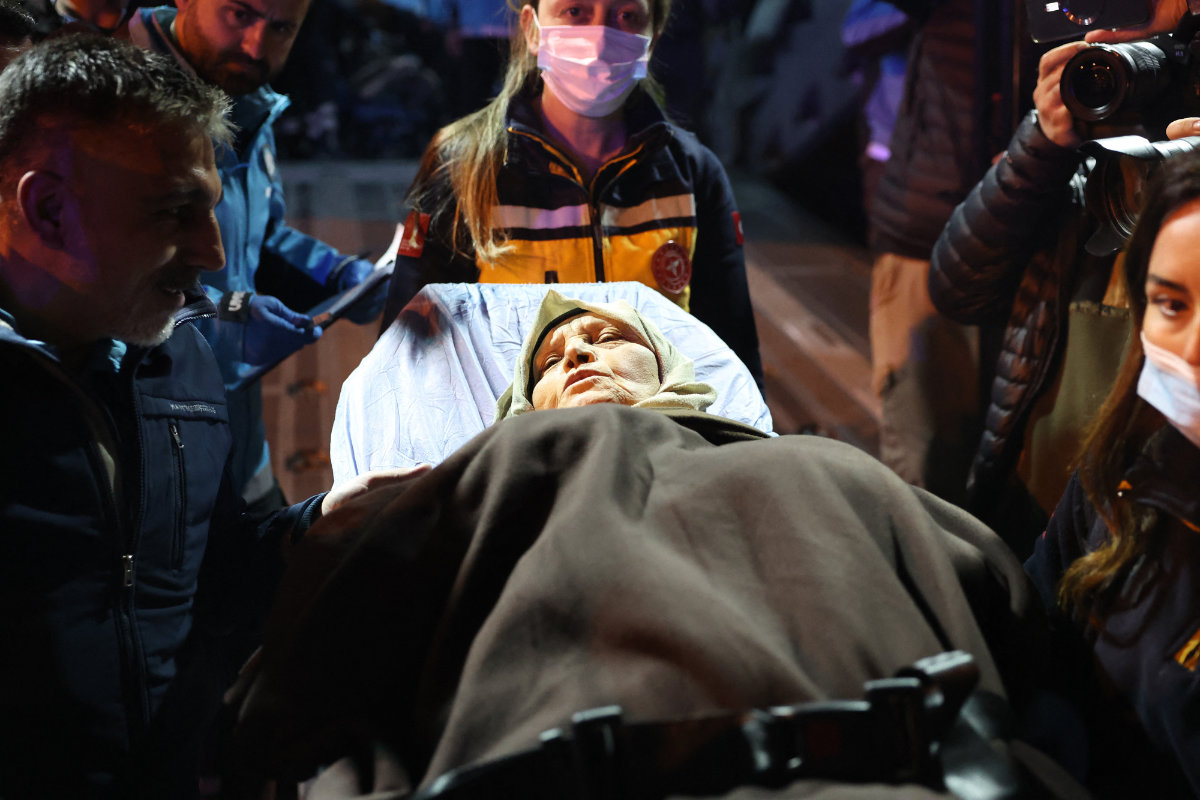
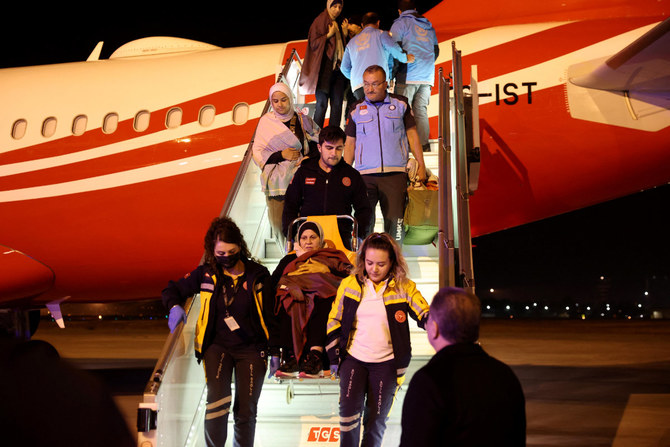
A Palestinian cancer patient, who had crossed from Gaza into Egypt, is carried on a stretcher after arriving at the Esenboga Airport in Ankara, Turkiye, on November 16, 2023. She was among the lucky ones who were able to get out of Gaza. (AFP/File)
Gazan cancer patients and their families felt abandoned, Shahed said.
“I know the medical needs for women and children and those injured are important, but it seems like we’ve been forgotten, overlooked. Elderly folk have a right to life too.”
Said’s cancer is at a risk of metastasizing and his missed treatment windows mean his condition has become life threatening.
“My body aches all the time,” he said. “And I just wait and wait. Lately, I have been having talks with Shahad about returning back to Gaza. I would rather die there and be with my deceased daughter than continue to wait and die slowly here. What else can I do?”
Israel has ignored repeated calls for an immediate ceasefire and appeals to allow sufficient humanitarian aid into the Gaza Strip. It remains determined to eliminate Hamas and other Palestinian militant groups responsible for the Oct. 7 attack.
In the process, Gaza’s health infrastructure has been brought to the brink of collapse. According to the UN, less than a third of the territory’s hospitals remain partially functioning. Those still operating are overwhelmed by wounded civilians.
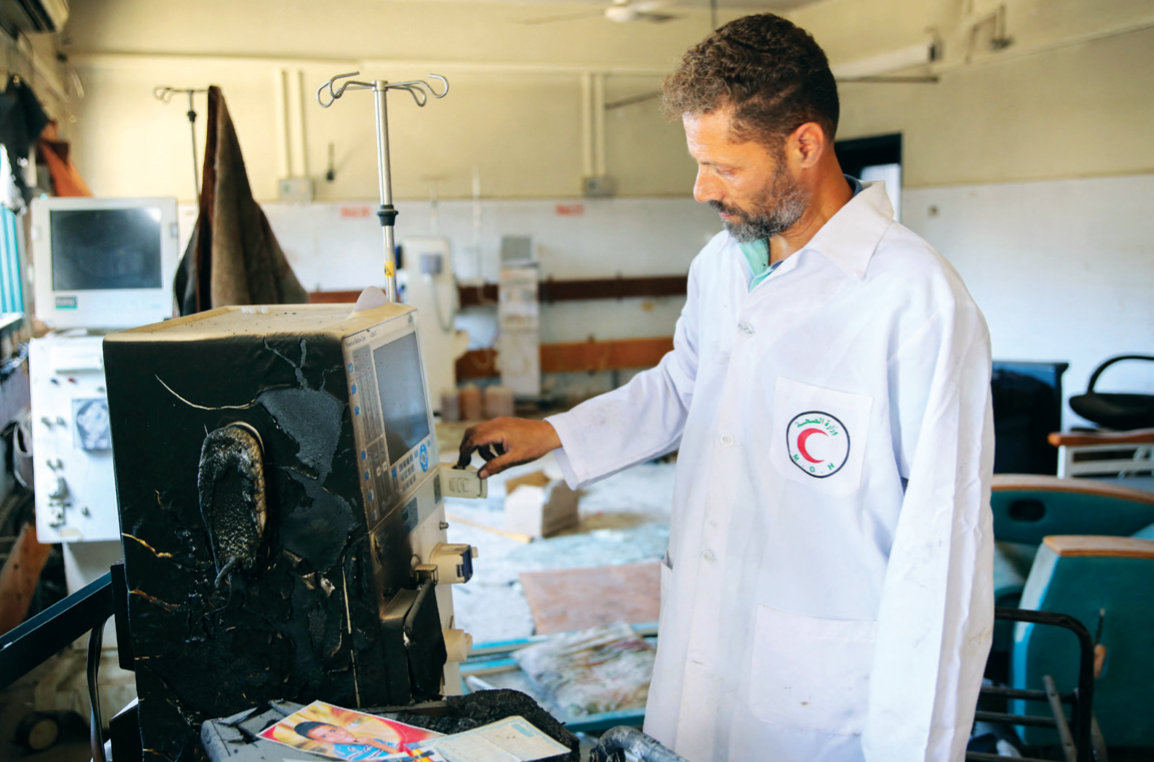
A Palestinian medic inspects damaged equipment in the dialysis unit at Gaza's devastated Al-Shifa hospital on April 3, 2024, two days after the Israeli military withdrew from the hospital complex. (AFP)
The Israeli government says its military does not target civilians or hospitals and blames Hamas for conducting military operations and launching rockets from crowded residential areas.
Nevertheless, for cancer patients, the loss of vital health infrastructure and options for travel have resulted in missed treatment windows, leading to the aggressive progression of the disease and death — outcomes that under regular circumstances could have been avoided.
Bassam, another resident of Building 30 who also has prostate cancer, said he felt like a “burning cigarette” — his lifespan gradually shrinking, reduced to ash, the longer he waits for treatment.
“I am wasting away here. It is a slow death,” he told Arab News.
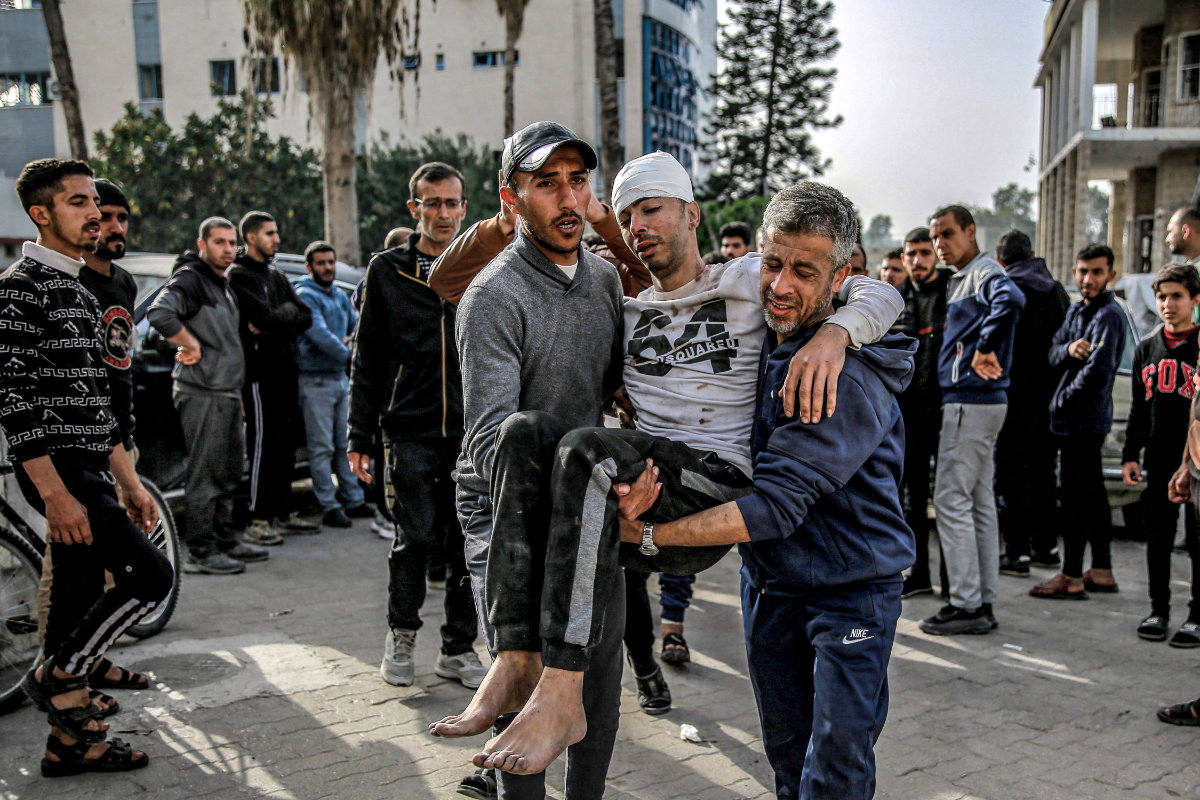
Two men take an injured to the Ahli Arab hospital in Gaza City on March 27, 2024 amid the ongoing conflict in the Gaza Strip between Israel and the Palestinian militant group Hamas. (AFP)
And just like Said, Bassam is simultaneously coping with trauma brought on by the cruelties of war.
“My son is still in Gaza. He has kidney problems, which require dialysis three times a week. He was being treated before the war but now he’s lucky if he can manage to get dialysis twice a week.
“His brother is willing to give him a kidney, but even with that option there is no hospital able to perform the operation. Israeli forces have left no hospital functional. We’re on a slow death, my son and I. He awaits treatment in Gaza and I wait here.”
More than 70,000 Palestinians have been injured since the war began, according to the Gaza health ministry. To bolster Egypt’s capacity to accept and treat Palestinian evacuees, the World Health Organization has donated $1 million worth of medical supplies.
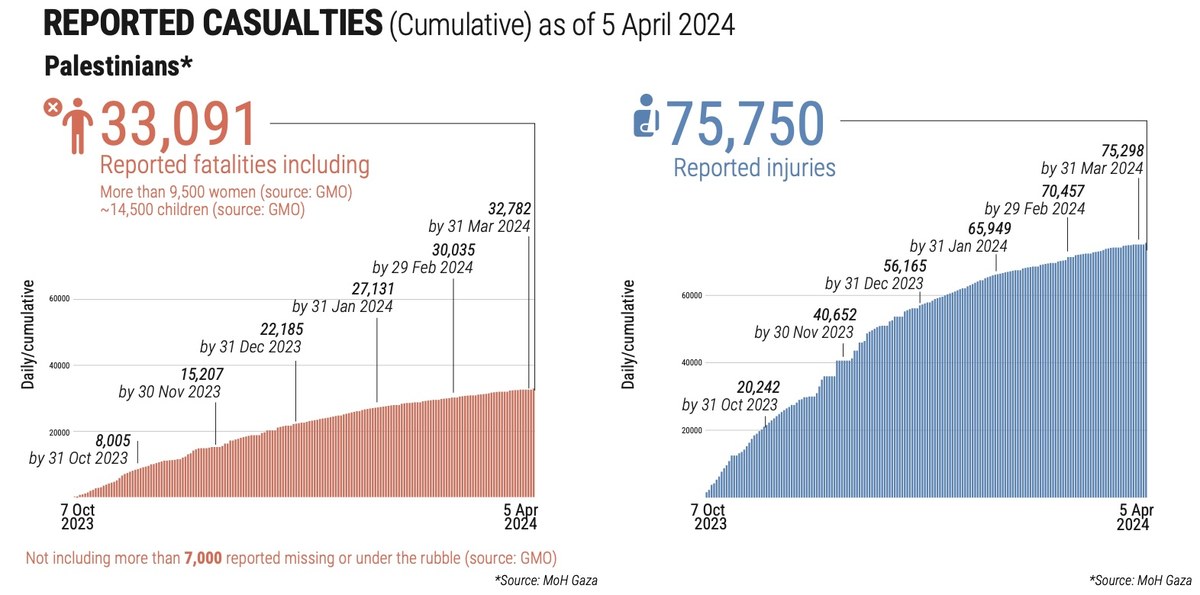
Infographic by ReliefWeb, a humanitarian information service of the UN Office for the Coordination of Humanitarian Affairs (OCHA).
These include trauma kits, blood for transfusions, medical equipment, hygiene kits, anesthetics and various medicines. The French government has also unloaded 8 tonnes of medical equipment in Egypt for hospitals treating injured Gazans.
Several nations and NGOs have established makeshift hospitals on land and on boats, while Egypt has allocated 37 hospitals across eight of its governorates to treat Palestinian patients.
According to the Egyptian Ministry of Health and Population, about 15,000 Palestinians are receiving medical care in the country. However, Bassam said that even those facilities were overcrowded, leaving little room for those with chronic conditions like cancer.
“Hospitals are crowded with those injured,” he said. “You look at us and you don’t see a visible illness or injury, so you assume we’re okay or that our treatment can wait. But it cannot.
“I am happy for those receiving treatment, but we must not be forgotten just because our ailment isn’t visible.”