

Aramco CEO sees ‘catastrophic consequences’ for oil if shipping doesn’t resume in Strait of Hormuz

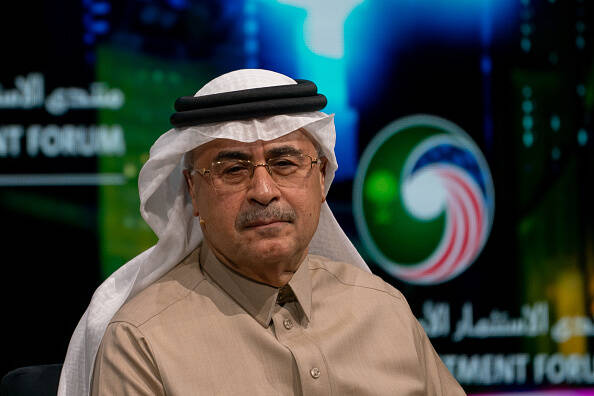
Aramco CEO Amin Nasser. Getty
Short Url
Updated 10 March 2026
Follow

Aramco CEO sees ‘catastrophic consequences’ for oil if shipping doesn’t resume in Strait of Hormuz

  • Aramco CEO: Hormuz disruption is the industry’s “biggest crisis“
  • Oil shipments from ‌the Gulf largely blocked
  • Aramco East-West pipeline to reach capacity in days

DUBAI: Saudi Arabia’s Aramco , the world’s top oil exporter, said on ​Tuesday there would be “catastrophic consequences” for the world’s oil markets if the Iran war continues to disrupt shipping in the Strait of Hormuz.

Oil shipments have been largely blocked from traversing through the shipping artery, where normally roughly 20 percent of the world’s oil would pass through daily.

Iran’s Revolutionary Guards said on Tuesday they would not allow “one liter of oil” to be shipped from the Middle East if US and Israeli attacks continue.

“There would be catastrophic consequences for the world’s oil markets and the longer the disruption goes on ... the more drastic the ‌consequences for the ‌global economy,” Aramco CEO Amin Nasser told reporters on ​an ‌earnings ⁠call.

“While we ​have ⁠faced disruptions in the past, this one by far is the biggest crisis the region’s oil and gas industry has faced.”

Wide range of sectors may be hit

The crisis has not only upended the shipping and insurance sectors but also promises to have drastic domino effects on aviation, agriculture, automotive and other industries, he added.

Global crude benchmark Brent, which rocketed to a more than three-year high of nearly $120 a barrel on Monday, was trading around $92 on Tuesday following comments by US President ⁠Donald Trump predicting the war could end soon.

Trump warned that ‌the US would hit Iran much harder if ‌it blocked exports from the vital energy-producing region.

He has also ​said the US Navy could escort ‌ships in the Gulf to guarantee safe passage. But the Navy’s capacity to do that ‌is unclear, with some vessels engaged in carrying out strikes against Iran and shooting down its missiles.

No exports from the Gulf

Nasser noted global inventories of oil were at a five-year low and said the crisis will lead to drawdowns at a faster rate, adding that it was critical that shipping ‌in the strait resumed.

At present, Aramco is not exporting oil from the Gulf as ships cannot load cargoes from there. But ⁠the company, which does ⁠not disclose its exact crude output, is meeting the majority of its customers’ needs, he said.

The East-West pipeline is being used to transport Arab Light and Arab Extra Light crude grades to the Red Sea port of Yanbu. The pipeline is expected to reach its full capacity of 7 million barrels per day in the next couple of days as customers re-route, he added.

In addition to the pipeline, Aramco is also able to direct crude toward domestic demand, he noted.

A small fire from an attack last week on Aramco’s Ras Tanura refinery, its largest domestically, was quickly extinguished and brought under control, Nasser said, adding that the refinery was in the process of being restarted.

His comments come after Aramco reported a 12 percent drop in annual profit mainly due to lower crude prices. It also announced it would repurchase ​up to $3 billion worth ​of shares in its first-ever buyback. 


Global investors commit more than $3bn to King Salman Park as Saudi giga-project secures new deals

Updated 10 March 2026
Follow

Global investors commit more than $3bn to King Salman Park as Saudi giga-project secures new deals

RIYADH: The King Salman Park Foundation has secured more than $3.8 billion in new private-sector commitments at the MIPIM 2026 real estate conference, including a landmark $3 billion fund backed by international investors to develop a major mixed-use district in the heart of Riyadh.

According to a press release, the announcements bring total committed investment in the 17.2 sq. kilometers urban regeneration project to over $5.3 billion across five major packages.

Launched in 2019 under Saudi Vision 2030, the development is designed to be the world’s largest city park and aims to boost green space, improve quality of life, and feature over 1 million trees and extensive leisure facilities.

A $3 billion metro-connected district

The largest of the two packages, designated Package 5, will see a consortium led by Kolaghassi Development Co. deliver a residential-led district with a total built-up area exceeding 1 million sq. meters. 

It will provide approximately 3,700 residential units, a K–12 school, around 300 hospitality keys and more than 100,000 sq m of Grade A office space alongside a wide variety of retail and dining offerings.

The development is supported by a Saudi-domiciled, Capital Market Authority-regulated fund managed by Mulkia Investment Co. that has attracted leading investors from the Kingdom and across the world.

Kolaghassi Development Co. will lead the project alongside Al Othaim Investment, one of the Kingdom’s real estate players, and RXR, a New York-headquartered real estate investor and operator.

“Securing investment of this scale, supported by international capital and expertise, is an important milestone for King Salman Park,” said George Tanasijevich, CEO of King Salman Park Foundation. 

$850 million cultural district package

In a separate announcement, the Foundation confirmed the award of Package 4 to a consortium led by Retal Urban Development Co., with support from a fund managed by SAB Invest.

The project has a total value exceeding $850 million and will host more than 600 residential units, over 140 hotel keys, and almost 50,000 sq m of Grade A office space, alongside curated retail and food and beverage experiences.

“This opportunity reflects the maturity of Saudi Arabia’s real estate investment landscape and our confidence in culture-led, mixed-use urban destinations as a driver of sustainable returns,” said Abdullah Al-Braikan, CEO and founder of Retal Urban Development Co.

Ali Al-Mansour, CEO of SAB Invest, said the fund structure brings together “long-term capital, experienced development partners, and a shared commitment to place-making excellence” while contributing to Riyadh’s cultural vibrancy and the Kingdom’s quality-of-life ambitions under Vision 2030.