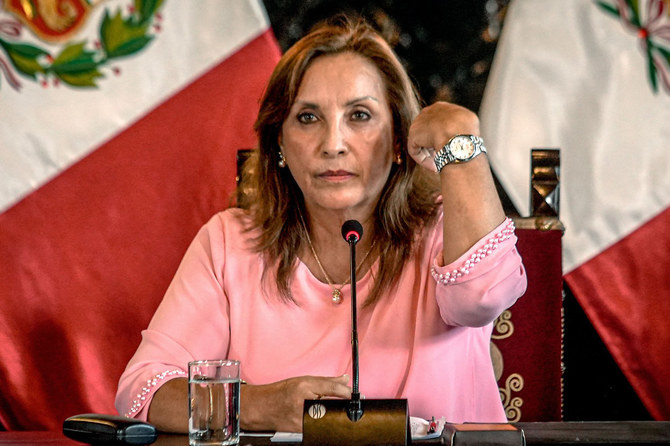


LIMA, Peru: Peruvian President Dina Boluarte was interrogated by prosecutors for five hours Friday as authorities investigate whether she illegally received hundreds of thousands of dollars in cash, luxury watches and jewelry.
Prosecutors have been investigating the highly unpopular leader on charges of illicit enrichment and failure to declare assets. After she gave testimony, Boluarte rolled out of the offices in a car with tinted windows, surrounded by police and security detail.
In a televised speech following the meeting, Boluarte responded to the allegations saying “everything they’ve said is false.” She flaunted one of her Rolex watches and a number of other golden bracelets and necklaces that spurred on the controversy, holding them up for the cameras and railing against critics.
“With respect to the watches, I should recognize that it was a mistake to have accepted (them) on loan,” she said. “As these watches are not my property, I was not obliged to declare them.”
While she said some of the jewelry was hers, she said she received the watches as a loan from Wilfredo Oscorima, the governor of the southern rural region of Ayacucho.
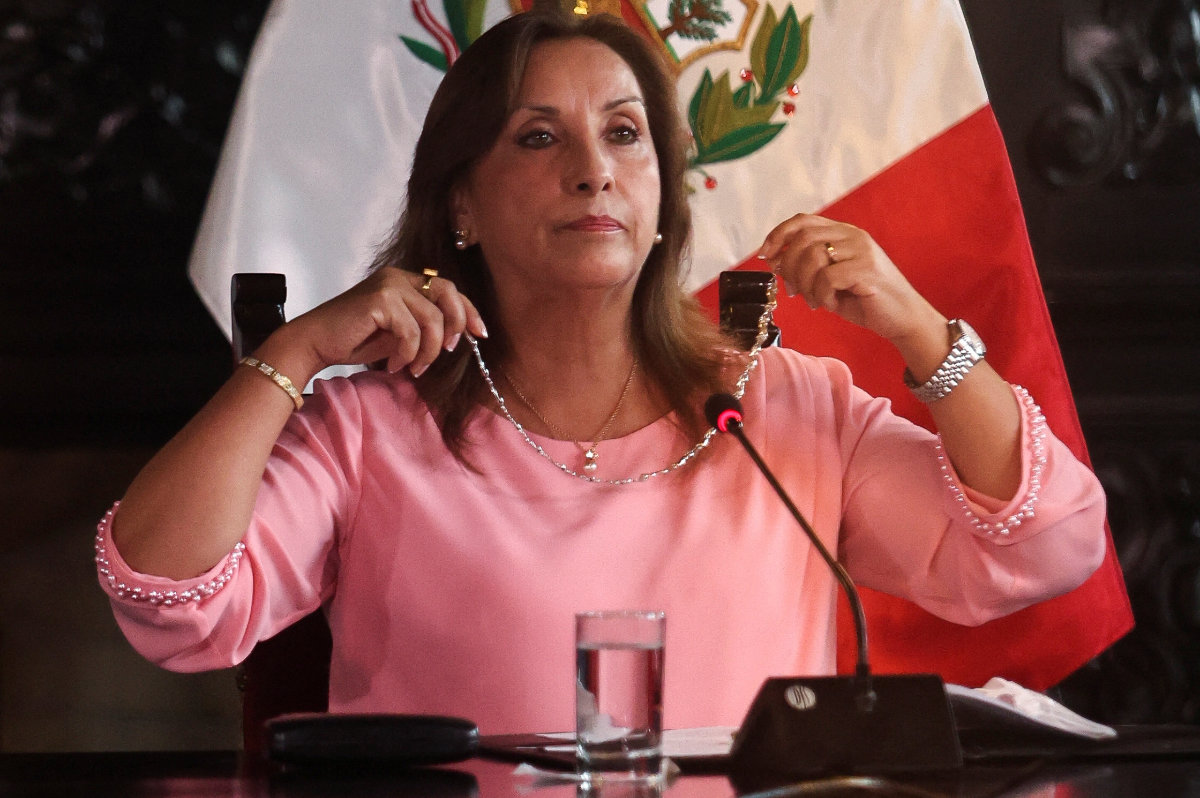
Peru's President Dina Boluarte shows a piece of jewelry during a press conference at the government palace in Lima after giving a statement to the prosecutor's office hearing on April 5, 2024. (REUTERS)
Boluarte’s statements Friday appear to directly contradict previous comments she made saying the Rolex watches were “fruit of my labor,” working since she was 18.
The unfolding scandal is the latest turmoil that has wracked Peru’s political system in recent years.
The probe began in mid-March after the digital news program La Encerrona spotlighted Boluarte wearing a Rolex watch worth up to $14,000 in Peru. Other TV shows later reported that the leader was seen wearing at least two other Rolexes as well as a gold and diamond Cartier bracelet estimated to cost more than $54,000.
The controversy was quickly dubbed “Rolexgate” on social media.
Peruvian law requires officials to declare jewelry whose price exceeds $2,791, and it’s still not clear where the watches and hundreds of thousands of dollars in bank transfers came from.
The controversy will only add headwinds for Boluarte, who is unpopular with 86 percent of Peruvians, according to a March survey by the Institute of Peruvian Studies.
“She has no good governance, she’s rejected by the majority, her problems with the people are very serious,” said Alonso Cárdenas, political science professor at Peru’s Antonio Ruiz de Montoya University.
Earlier on Friday, scuffles broke out as opposing protesters gathered near the building, waiting for Boluarte to leave.
While a number of protesters came to defend the president carrying a sign reading “Dina resist,” others blocks away from the presidential palace railed against the embattled leader, carrying brooms and shouting “get them all out!” They were blocked by riot police, who drove them away with tear gas.
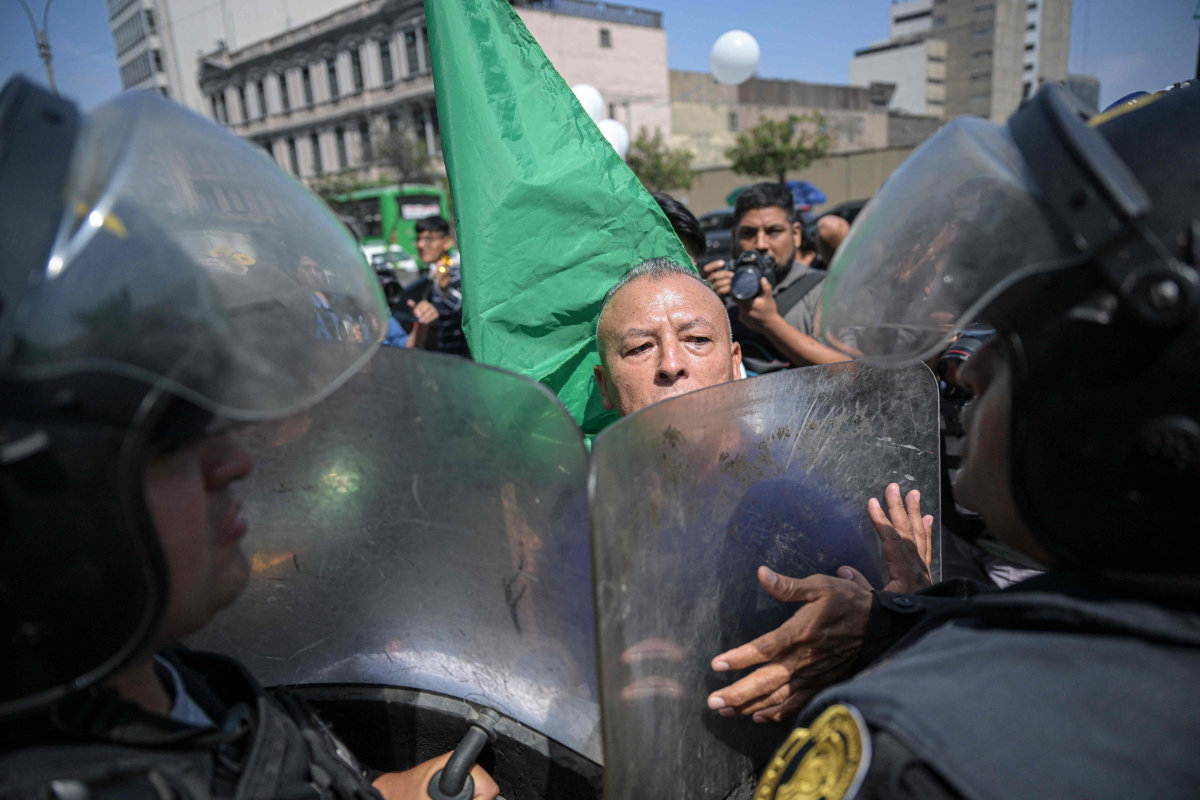
Riot police confront a supporter of President Dina Boluarte protesting in front of the Peruvian Prosecutor's Office building in Lima on April 5, 2024, as she testifies amid a scandal over her lavish Rolex and jewelry collection. (AFP)
Last week, armed police officers broke down the front door of Boluarte’s house with a battering ram and entered the property to search for the watches. They did not find them, and moved on to the presidential palace, where they also weren’t located.
Top prosecutor Juan Villena had said his office was expanding the scope of the investigation, given that investigators believe Boluarte has even more undeclared assets than they originally suspected.
The office estimated that her jewelry, including the Cartier bracelet and watches, may be worth as much as $500,000, and said she received more than $400,000 in “deposits of unknown origin” into her bank account.
Boluarte, a 61-year-old lawyer, was a modest district official before entering then-President Pedro Castillo’s government as vice president and social inclusion minister with a total monthly salary of $8,136 in July 2021. She became president in December 2022 — after Parliament dismissed Castillo — with a salary of $4,200 per month. Shortly after, she began wearing the watches in public.
The Andean nation is no stranger to political tumult. Peru has had six presidents in six years, following waves of political controversies. That doesn’t mean Boluarte is soon to be ejected from the presidency. Analysts told The Associated Press she is unlikely to face any real consequences – at least in the short term. Sitting presidents in Peru can’t be charged with crimes while in office, and Congress will be reluctant to move forward with impeachment proceedings.
Boluarte’s alliance with a coalition of congressional leaders means she will likely stay in office until 2026, said Will Freeman, a fellow of Latin American studies for the Council of Foreign Relations. Freeman says Boluarte is a “puppet” who has enabled the lawmakers to pass reforms that are slowly “dismantling democracy” so that they can stay in power.
Peru’s Congress on Thursday shot down two requests by a number of lawmakers to remove Boluarte from office. Boluarte called the motions “absurd” on Friday and thanked the congress for shooting them down.