

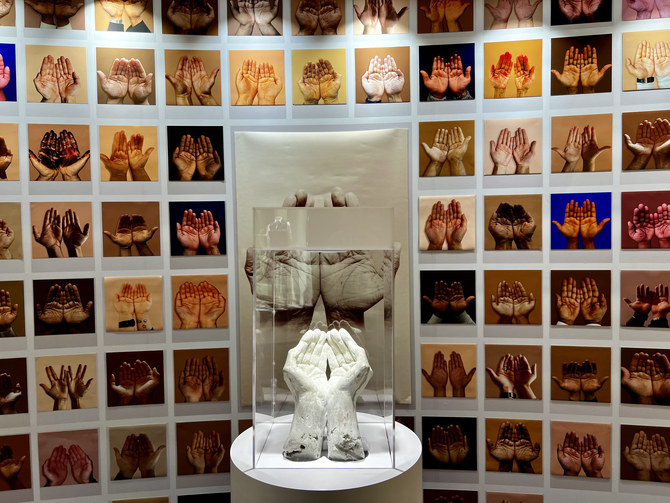


RIYADH: Art took over the luxury fashion mall Centria this Ramadan with a display of works from 33 artists in the Kingdom’s capital.
Curated by Saudi designer Amar Alamdar under the theme “Senses and Spirituality,” the exhibition provided a platform to show the true values of the holy month and the culture surrounding it from the perspectives of the featured artists.
In line with the concept of charity, one of the pillars of Islam, proceeds from the exhibition’s silent auction will be donated to the Ekhaa Charitable Foundation for Orphan Care.
Visual artist Meshal bin Diran is driven by a passion to discover the mysteries of color and composition, articulating it as a means of communicating. Brushes, paint and pen are merely tools to immortalize his emotions. His work edges on abstract surrealist art devoid of clear elements with a unique mix of color and composition.
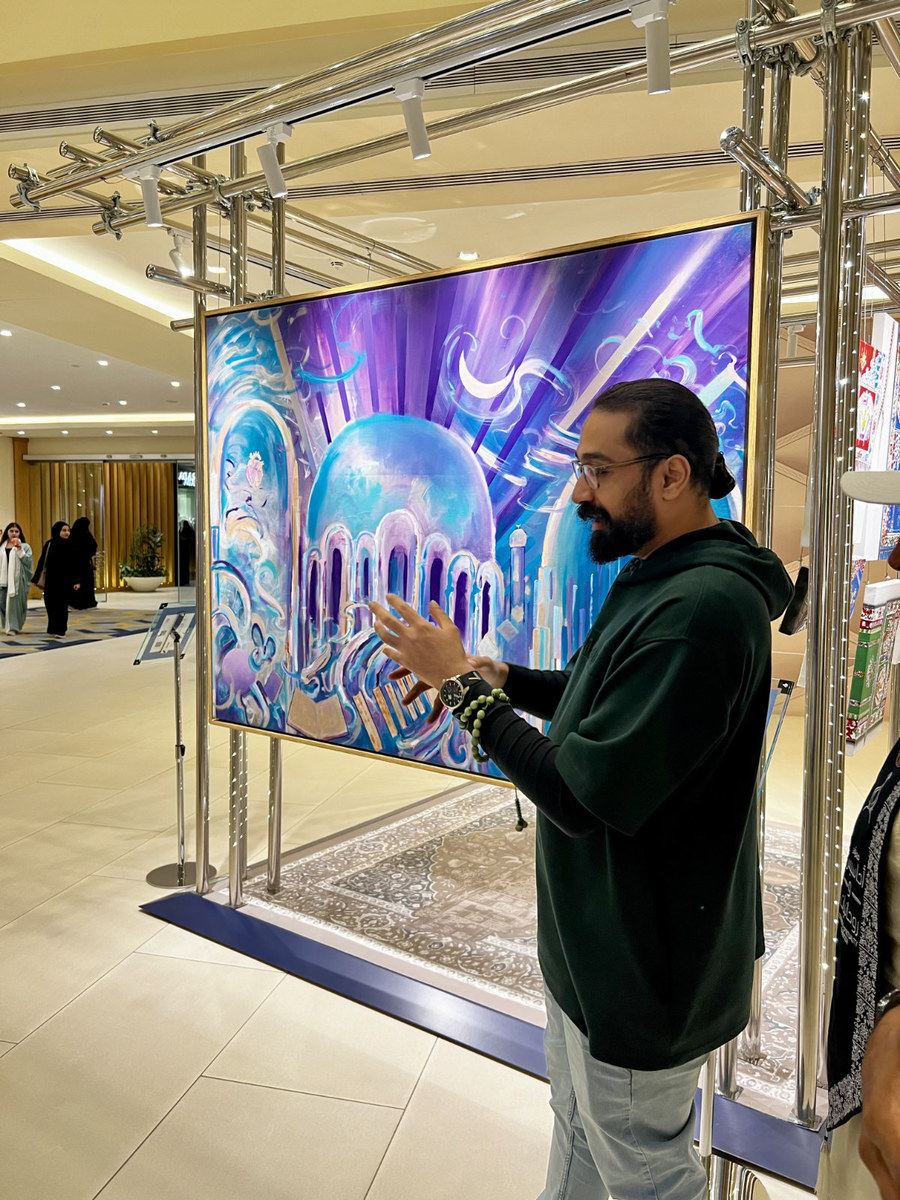
Visual artist Meshal bin Diran is driven by a passion to discover the mysteries of color and composition, articulating it as a means of communicating. (Arab News photo)
“Spirituality is derived from culture, whether that’s religion or ancient rituals or otherwise, so that’s difficult to target … I went back to the definition of spirituality that I resonate with, which is prayer and all its elements of reverence, serenity, concentration and cleanliness. It’s very integrated as a spiritual environment,” he told Arab News.
His painting features soft but bright pastel colors in an almost whimsical interpretation. Set in the hub of the spiritual act, the mosque, the work features elements such as the entrance to the masjid, hearts hanging from the arches, and prayer beads reminiscent of the ones he carries around himself.
The identical beads circularly lead the way into the entrance, signifying that any one of them could be one of us, or in turn, an imam. The element also highlights the lack of division in the Islamic religion.
The style is rooted in movement, causing the content of the work to seem as if it is floating.
“Spirituality is subjective to every person, so all the pages in the painting’s book are blank. It’s an idea that we believe in and pass down to generations,” he said.
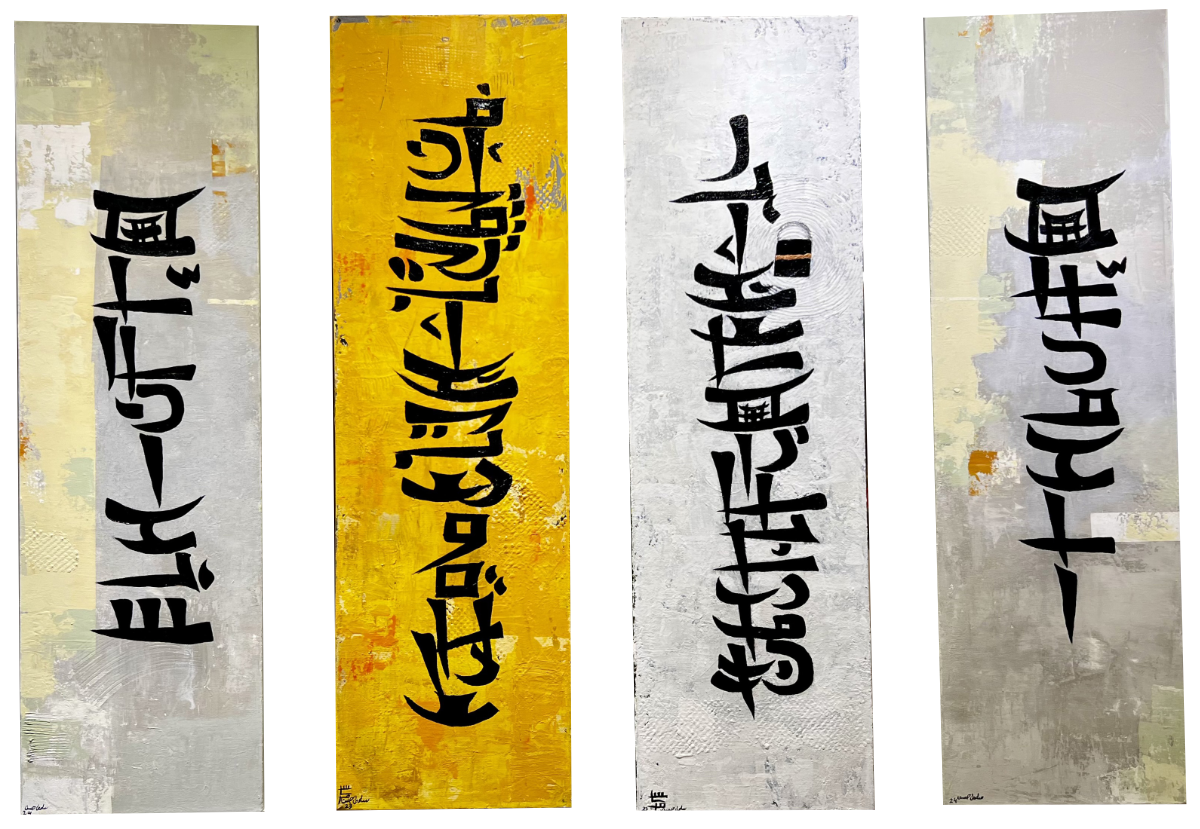
Self-taught artist Salama Hassan used characteristics of Chinese typography to shape various verses in the Qur’an to prompt the audience to contemplate the language and verses at hand. (AN photo)
Salama Hassan, a self-taught artist who specializes in the fine arts, pushes the boundaries of Arabic calligraphy to the point where her work transcends a mere font and becomes conceptual.
Using Chinese typography characteristics to shape various verses in the Qur’an, Hassan prompts the audience to contemplate the language and verses at hand. The artwork becomes a puzzle, demanding us to look deeper into the meaning and placement of each letter.
Hassan told Arab News previously: “I’m a fan of Arabic calligraphy … I decided to venture out of the box. I love Eastern cultures like Japanese and Chinese and their calligraphy, as well as Arabic. I wanted to prove that the Arabic letter is valid in any time and space. I’m trying to create more awareness around it.”
She traced the Qur’anic verses vertically, with each line holding one or two letters, leading the viewer to enunciate each letter and word. The method of language bridging provides an insightful opportunity for cultural exchange.
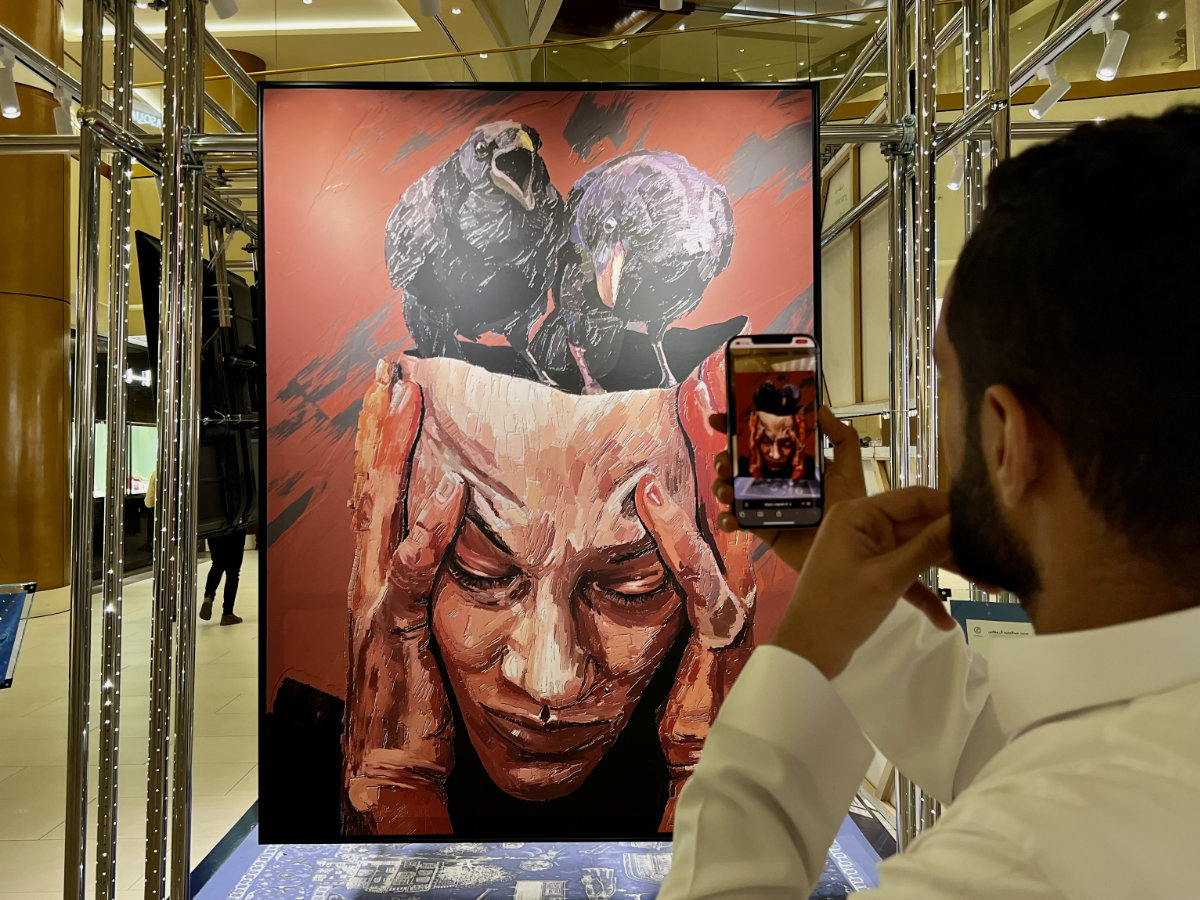
Digital artist Muhammed Wahas’ work shows a woman in desperation, as two crows sit atop her head. (AN photo)
The exhibition featured immersive works that allowed visitors to interact through their own phone screens using an app. The work of digital artist Mohammed Wahas shows an anguished woman with two crows perched on her head. One is silent and the other is screaming to express the mental instability caused by excessive thinking. As the viewer moves their lens to the painting, the two birds come alive, floating between serenity and despair.
Artist Sarah Al-Alshaikh’s work “Peace of Mind” animates a faceless woman with her rosary to tell a much larger story. The piece was inspired by the Rumi quote: “You presume you are a small entity, but within you is enfolded the entire Universe.”
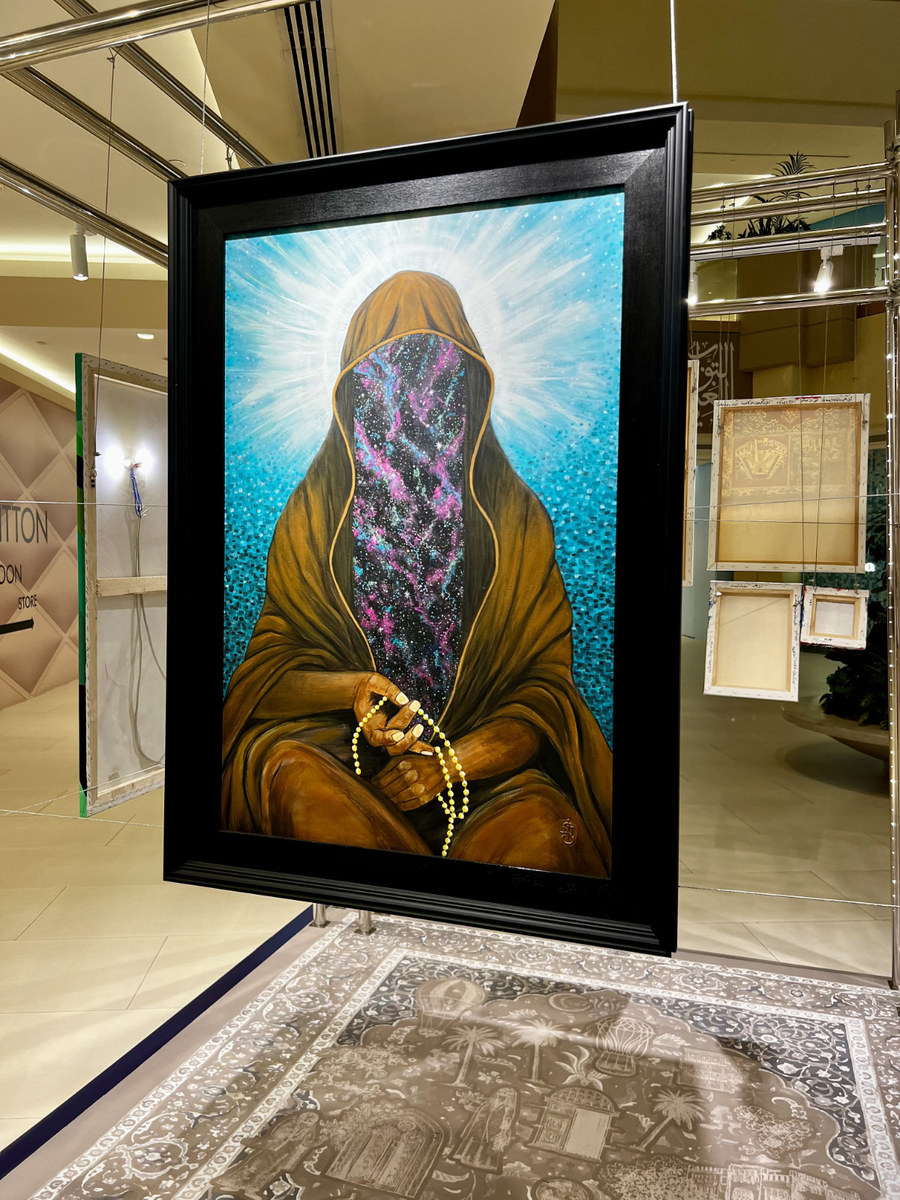
Artist Sarah Al-Alshaikh’s work “Peace of Mind” is inspired by the Rumi quote: “You presume you are a small entity, but within you is enfolded the entire Universe.” (AN photo)
Hams Muryh used her Asiri roots as points of inspiration. Her work documents traditional southern crafts by incorporating Al-Haseer, a traditional hand-weaving technique using date palm leaves, and Al-Qatt Al-Asiri, a style of Saudi art that is usually painted by women in the southern region of the Kingdom, which she acquired from her grandmother.
The two works on display, “Kiswa” and “Intima,” set out to encapsulate the authenticity of Saudi heritage and the depth of its culture.
She told Arab News: “I was keen to display these two works with different materials, from the fineness of the paper to the roughness of the mats. However, the art of Al-Qatt Al-Asiri reflects both the intangible and material impact on the people of the Asir region, and how they can celebrate the renewal and decoration of walls before Eids and celebratory occasions in a distinct, modern style that reflects the artistry that’s rooted within them.”
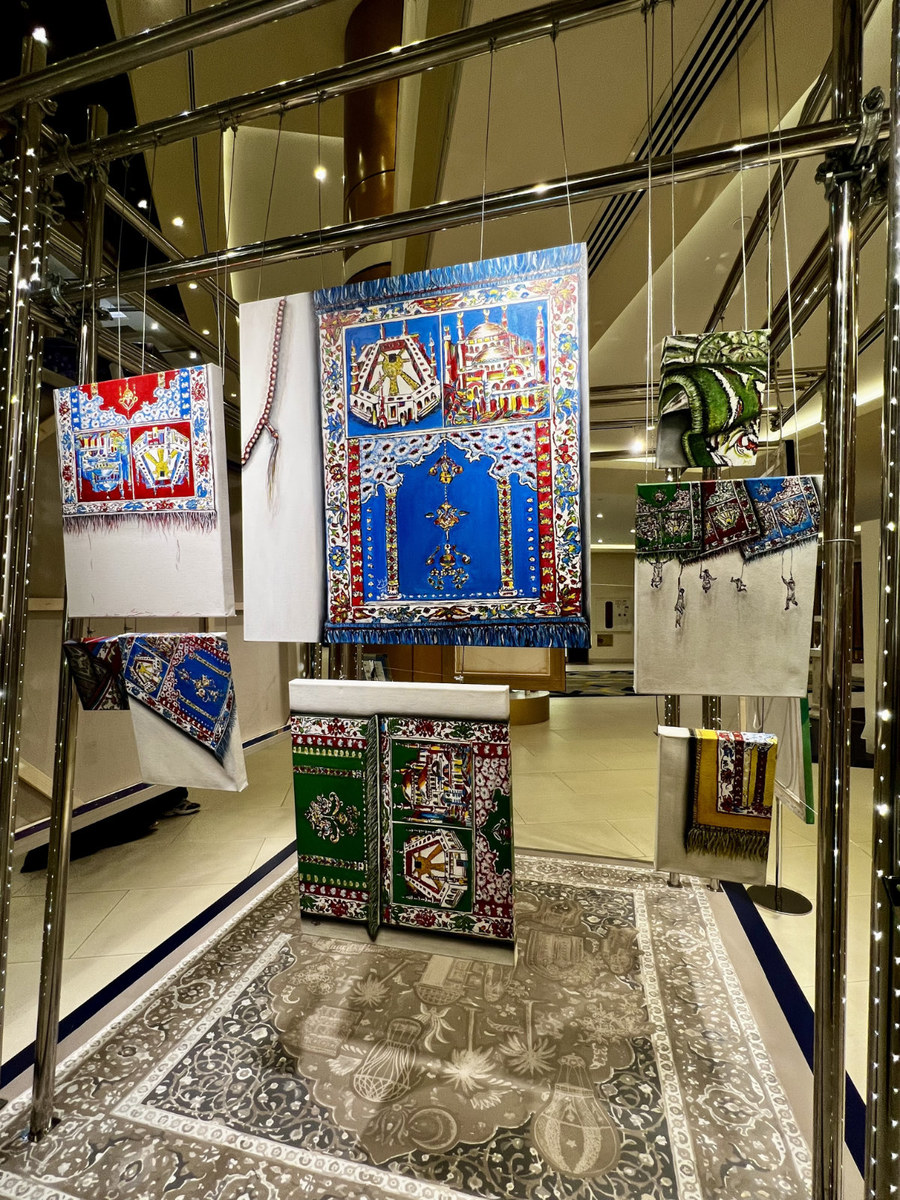
Artist Amal Alem featured 8 paintings of the old prayer rug that was present in all Muslim homes worldwide. (AN photo)
Artist Amal Alem featured eight paintings of prayer rugs, which are present in all Muslim homes around the globe, accompanied by the rosary that accompanies the worshippers throughout their prayers. The prayer mat has become a symbol that reminds people of the universality of Islam.
Alamdar said: “These rugs are our elders’ and the younger generations aren’t aware of it, but we can relay our spirituality and these ideas through art.”
The exhibition, which ended on the 24th day of Ramadan, featured numerous works interpreting the notion of spirituality.


