







RIYADH: The holy month of Ramadan, beginning on March 11 and observed mostly at the end of Saudi Arabia’s winter, has brought cool comfort for fasting Muslims, making it a pleasant experience.
Based on the lunar Hijri calendar, the beginning of the holy month changes every year, determined by sightings of the crescent moon. A Hijri month alternates between 29 and 30 days. This makes a Hijri year about 11 days shorter than the Gregorian equivalent, with one year coming to 354-355 days, hence the days of Ramadan change gradually from year to year.
“Being observed in March for the first time in many years, fasting at the end of winter has made the experience considerably more comfortable and pleasant,” Abdur Rahman Oomeri, a long-time school employee working in Riyadh, told Arab News.
Last year also brought pleasant weather throughout Ramadan due to good rainfall. However, in recent years, the Kingdom has faced the challenge of fasting during long, hot days at the peak of summer, he added.
“The shorter winter days significantly reduce the fasting hours, allowing us to break our fast a bit earlier and provide relief from the scorching sunshine in the summer,” said Abdullah Zeyad, a IT professional in the capital.
“This pleasant change is greatly appreciated, as it lightens the physical burden of fasting. Also, the cooler weather enables engaging in outdoor activities with family and friends during iftar and after.”
Mohammad Saad, a bank employee, echoed Zeyad’s view on fasting during the cooler months, saying the cooler conditions and shorter days made fasting easier.
Najmul Hasan, a taxi driver, said: “It made it easy to fast particularly for those of us who cannot always stop for iftar due to the nature of our work. With passengers, we are outdoors, going to different places. The pleasant weather not only makes fasting less daunting, but also improves our overall well-being, making the spiritual journey more engaging and fruitful.”
Zafar Iqbal, an Indian expat in Riyadh, said that there a many advantages, both in terms of spiritual upliftment and social engagement, when Ramadan is observed in cooler months.
“The confluence of spiritual reflection and favorable weather makes Ramadan a uniquely enjoyable experience. The nights are particularly lively, with traditional decorations and treats drawing more people outdoors than in the hotter days during the summer.”
With milder temperatures, many community organizations are arranging outdoor iftars, enhancing community dining experiences for families and friends, Iqbal said, adding that in the searing heat of summer it is difficult to arrange outdoor iftars.
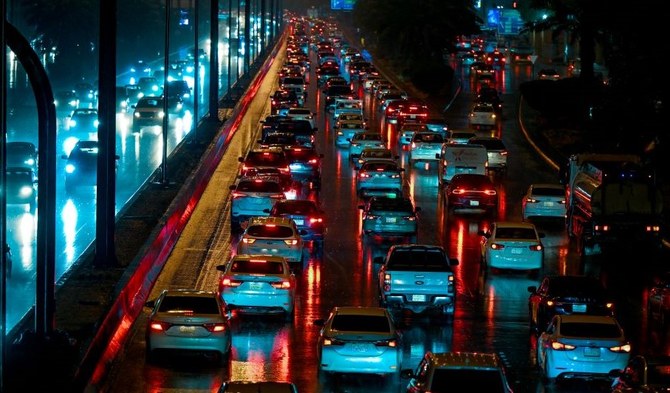
Cloudy conditions and intermittent rain in parts of Saudi Arabia, including the capital, over the past 10 days have brought relief from the heat at the start of Ramadan.
The National Center of Meteorology on Monday said that rainy weather is expected from next Thursday in Riyadh, Qassim, Hail, Najran, Jazan, Asir, Baha, Madinah, Makkah, Tabuk and Aljouf regions.
Cloudy weather is forecast until next weekend, with heavy to moderate rain accompanied by high winds in the cities and rough conditions along the coast.


