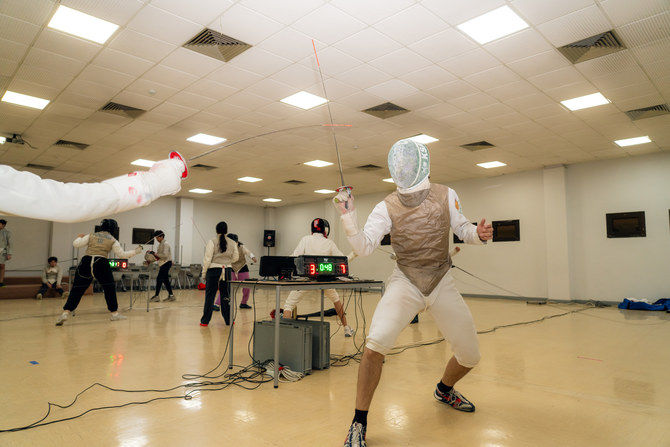

RIYADH: In the heart of Saudi Arabia, sports halls bustle in the evenings with fencers as young as 8 years old, as swordsmanship spreads rapidly across the Kingdom.
It is a testament to the work carried out by the Saudi Arabian Fencing Federation since 2018 that the sport has attracted so many young female and male athletes in recent times.
As its popularity continues to rise, Saudi Arabia is set to host the Junior and Cadet World Fencing World Championship in Riyadh from April 12-20.
Alhasna Al-Hammad, 20, is on the Saudi fencing national team and trains six times a week with her saber sword, balancing her dedication to the sport with the industrial engineering degree she is pursuing at Al-Faisal University.
In 2019, Al-Hammad became the first Saudi female fencer in the country’s history to win a gold medal, achieving the feat at the 6th GCC Women’s Games in Kuwait City.
Since then, she has participated in a number of world championships and added a bronze medal to her cabinet most recently from the 2023 Arab Games.
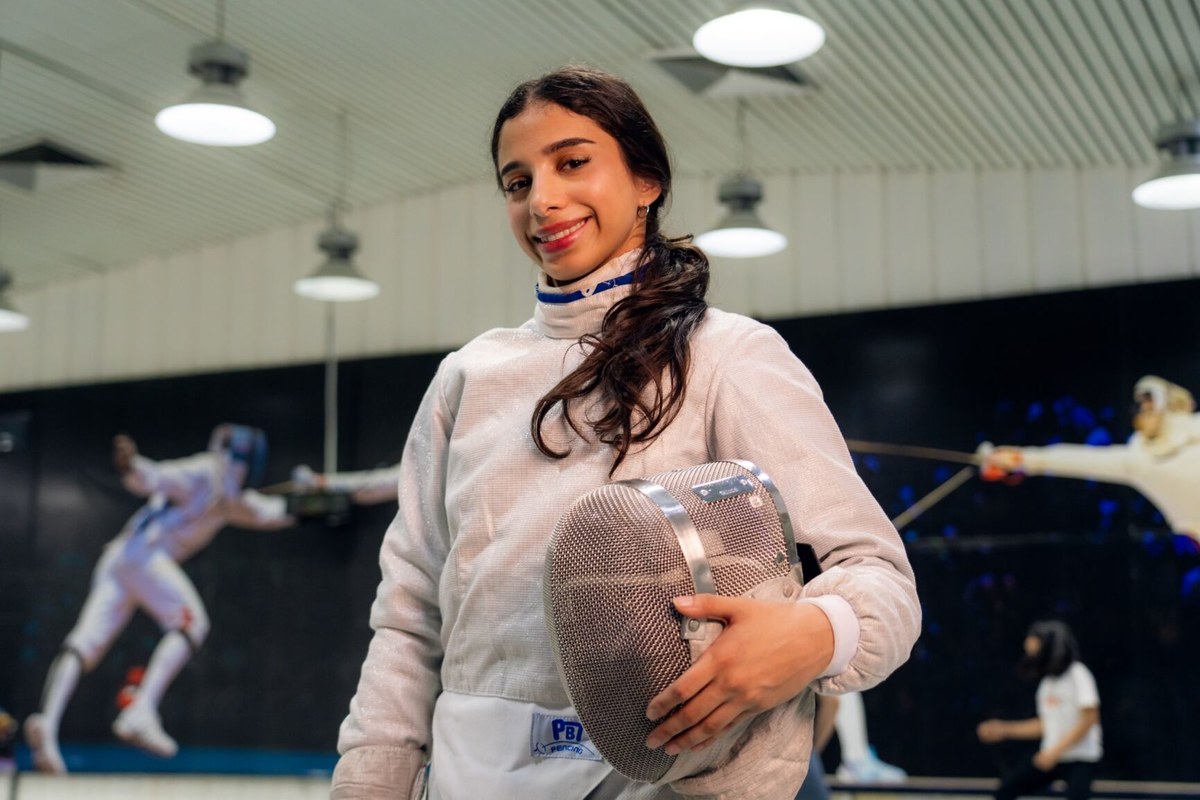
Alhasna Al-Hammad (Arab News)
“One thing that actually inspires me is contributing to raise my country’s name in international forums and making my family proud,” she told Arab News.
It was Al-Hammad’s mother who encouraged her to take up the sport in 2018 after finding out about the launch of the Saudi Arabian Fencing Federation’s academy for women.
“My No.1 supporter is my mother. She’s always with me in championships, and everywhere,” Al-Hammad said.
Despite her success, Al-Hammad still hears remarks that “fencing is not for women” and is often asked why she has chosen this sport.
She said: “I think it’s quite the opposite and it suits women very good.”
Leen Al-Fouzan, an 18-year-old fencer on the Saudi national team, likewise discovered fencing when the women’s program was announced.
“I thought I'd give it a try and I ended up really liking it,” she told Arab News.
Last year, Al-Fouzan came first in the 2023 Saudi Games.
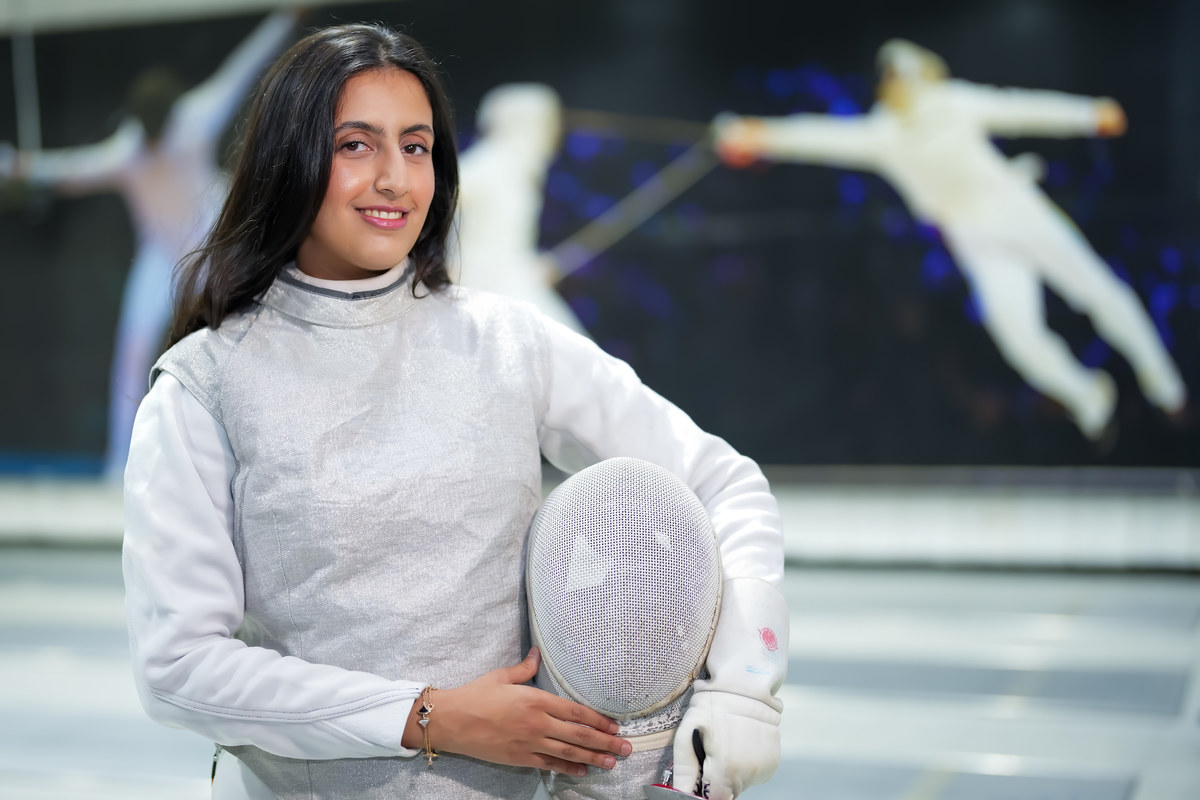
Leen Al-Fouzan (Arab News)
“What made fencing different was the focused and driven community. It was my first time ever joining an academy where people were training for a certain goal. It's either to become Arab champion or, like, participate in the World Cups and the European circuit,” she said.
Al-Fouzan was the first person in her family to take up sports and it quickly had a ripple effect on her cousins, friends, and siblings exploring numerous sporting vocations thereafter.
Her 11-year-old sister, Lama, inspired by her ongoing success, has been training for almost a year with the saber sword.
The history of Saudi fencing dates to the 1960s, during the rule of King Faisal, but there had been no female participation until recent years, following Crown Prince Mohammed bin Salman’s social reforms.
“The first participation or practice of fencing was in the Saba Qusour schools in Jeddah in 1963. In the era of King Saud in 1972, the Saudi federation was established,” Ahmed Al-Sabban, President of the Saudi Arabian Fencing Federation, told Arab News.
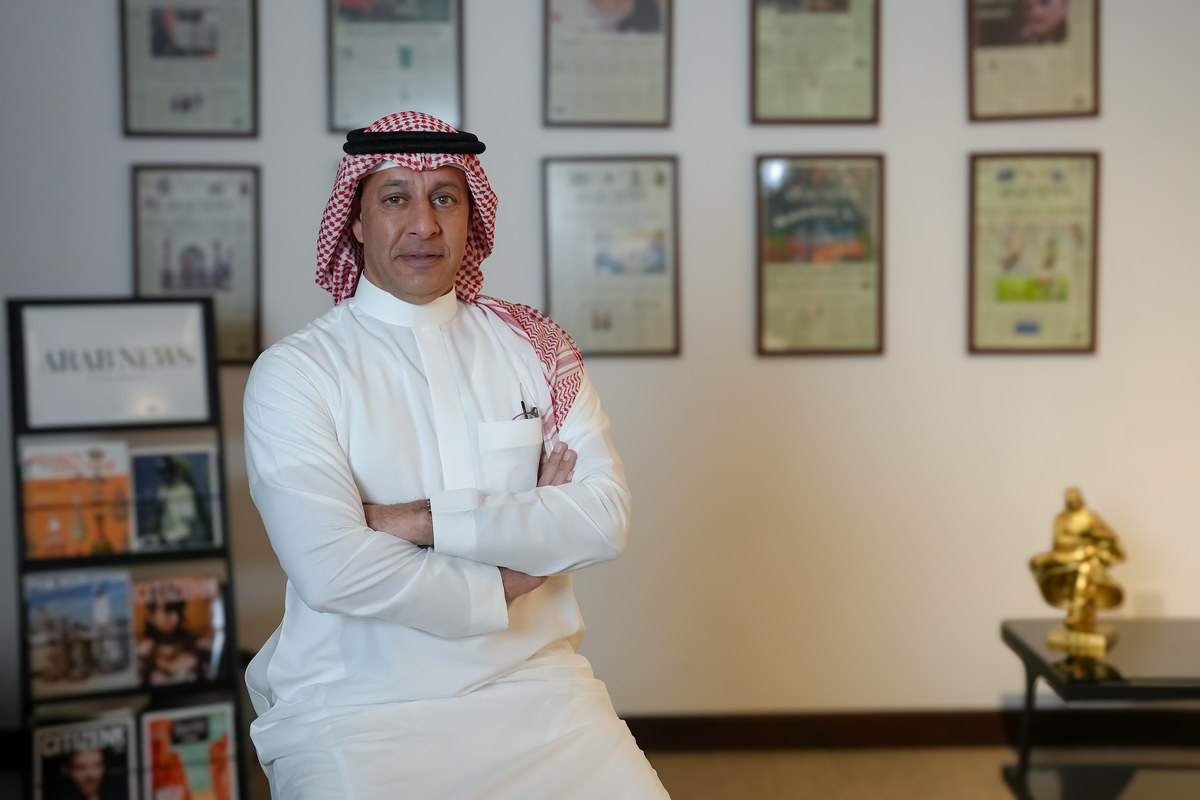
Ahmed Al-Sabban, President of the Saudi Arabian Fencing Federation (Arab News)
Al-Sabban described April 2018 as a historic date: The federation launched their women’s initiative, and for the first time in Saudi history, women and girls would pick up the sport.
He said: “No female fencers ever participated in the past. We had seven clubs back then. Today, we have 55 clubs with 250 (female) players.”
Malak Al-Sultan became Saudi Arabia’s first female fencing referee when she took charge of a bout at the Kingdom Fencing Championships in Dammam in December 2020.
Al-Sabban himself is a Saudi fencing veteran who inherited a passion for the sport from his father as a child and passed it down to his 22-year-old daughter Yasmin who today competes professionally.
Fencing has witnessed rapid growth in the Kingdom since 2017. Today, the federation boasts 3,000 female and male fencers, 1,300 of whom are officially registered with a club.
To preserve the historic sport among different generations, the federation has begun hosting tournaments twice a year, specifically for seniors and seasoned veterans.
Al-Sabban describes being “blessed” with dedicated team members, coaches, players, and the overarching support of the Olympic Committee and Saudi Sports Minister Prince Abdulaziz bin Turki for getting the Saudi fencing scene to where it is today.
Since the sword is a national emblem of Saudi Arabia, there is a natural affinity for fencing that the federation can tap into among the population.
“The sword has a history among the Arabs,” Al-Sabban said.
Ibrahim Nasser Al-Hodaib, a 19-year-old fencer on the Saudi national team, recalls that “10 years ago, nobody was interested in the game the way they (are) today. The sport was not common and only those who practiced fencing knew it existed.”
He said: “(As) with any athlete, our ultimate aspiration is to secure an Olympic medal for our country.”
With the Olympic Games in Paris close by, Al-Sabban shared the federation’s prospects.
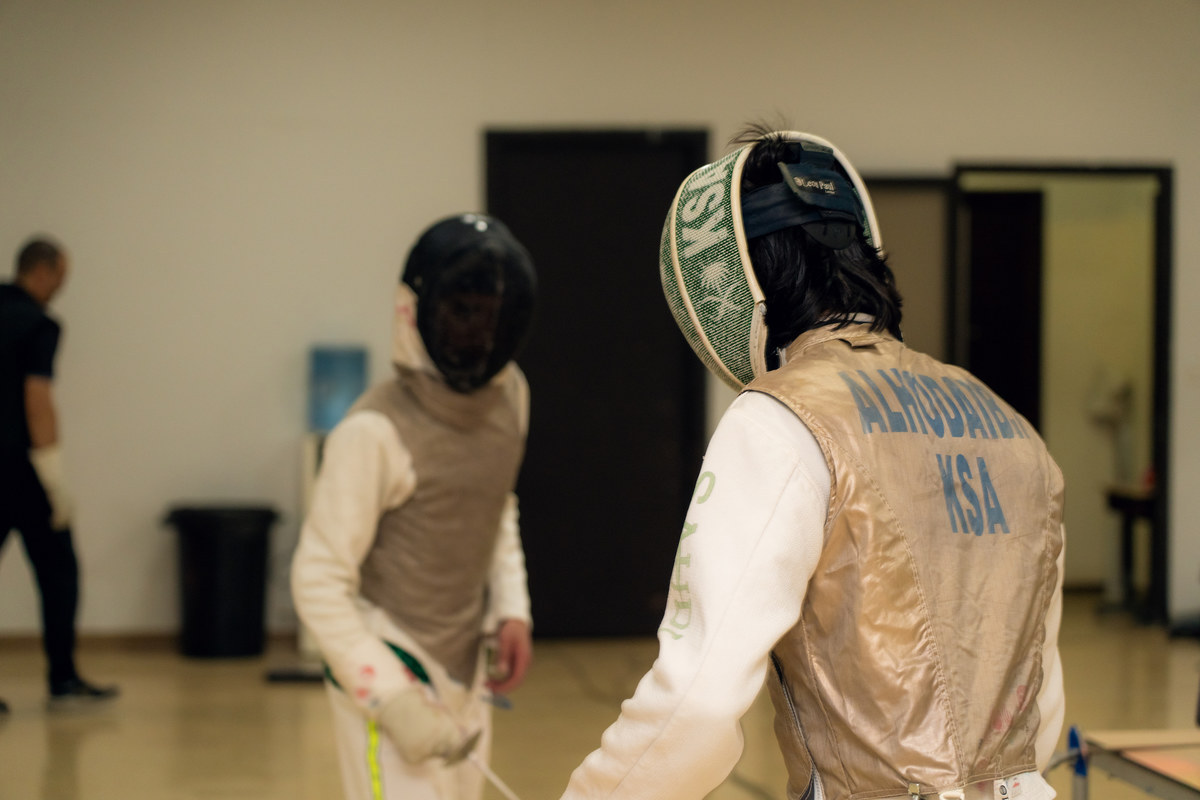
Ibrahim Nasser Al-Hodaib (Arab News)
“The last official qualification was that of Lubna Al-Omair who participated in the Rio Olympics. However, I want a player to be qualified in the playoffs since the championship will take place in April,” he said.” We have players who will participate using two types of fencing blades, epee and saber. I expect to have at least one qualified player.”
All eyes now turn to the Junior and Cadet World Fencing World Championship in Riyadh starting in less than two weeks.
Saudi Arabia’s thriving sports sector is part of a wider mission to debunk negative stereotypes of the country and shift the narrative.
“We will deliver the message that we are the country of peace and the religion of peace,” Al-Sabban concluded.