

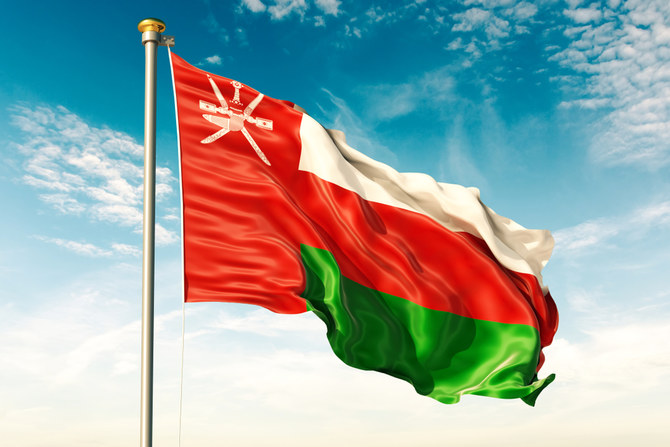
S&P revises Oman’s outlook to positive; affirms credit rating ‘BB+/B’ 

This comes as the agency believes that the Oman government’s fiscal and economic reforms, particularly those targeting operational efficiencies and stronger financial profiles for state-owned enterprises, will continue. Shutterstock
Short Url
Updated 31 March 2024
Follow

S&P revises Oman’s outlook to positive; affirms credit rating ‘BB+/B’ 

RIYADH: Oman’s improved fiscal position prompted international credit rating agency S&P Global to upgrade the country’s outlook from stable to positive.  

It also affirmed the long- and short-term foreign and local currency sovereign credit ratings at “BB+/B,” according to a press release. 

This comes as the agency believes that the Oman government’s fiscal and economic reforms, particularly those targeting operational efficiencies and stronger financial profiles for state-owned enterprises, will continue. 

Additionally, the positive outlook reflects S&P’s view that this would strengthen the economy’s resilience to adverse oil price shocks. 

“The government’s balance sheet will strengthen, and the economic reform program could lead to faster-than-expected deleveraging in many state-owned enterprises, without dampening economic growth outcomes,” the agency stated in a statement. 

It added: “We expect the government’s fiscal and economic reform momentum will continue over 2024-2027.” 

The rating agency also anticipates Oman’s real gross domestic product to grow by approximately 2 percent annually on average from 2024 to 2027. 

Furthermore, S&P projects that Oman’s foreign policy is expected to maintain a broadly neutral stance, with minimal spillover effects on the country in the event of regional geopolitical conflicts. 

In January, Oman forecasted a budget deficit of 640 million rials ($1.66 billion) for 2024, a reversal from a surplus in 2023, attributed to lower oil production and prices impacting public finances. 

Similar to its Gulf oil and gas exporting counterparts, Oman aims to diversify its income sources and economic sectors away from hydrocarbons. However, it remains predominantly reliant on oil revenue. 

In December 2023, further enhancements in Oman’s debt burden prompted US-based Moody’s Investors Service to upgrade its credit rating for the second consecutive time last year, elevating it from “Ba2” to “Ba1.” 

The upgrade in rating at the time was attributed to improvements in debt affordability metrics, as stated in a press release. 

This positive shift, reported at the time, primarily resulted from spending restraints and the utilization of additional revenues to reduce public debt. 

In September 2023, S&P upgraded Oman’s credit rating from “BB” to “BB+” on account of firmer macroeconomic fundamentals. 


Saudi economy grows 4.5% in 2025 as oil, non-oil sectors accelerate 

Updated 21 sec ago
Follow

Saudi economy grows 4.5% in 2025 as oil, non-oil sectors accelerate 

RIYADH: Saudi Arabia’s real gross domestic product expanded by 4.5 percent year on year in 2025, driven by strong growth in both oil and non-energy activities, official data showed. 

According to flash estimates released by Saudi Arabia’s General Authority for Statistics, oil activities in the Kingdom expanded by 5.6 percent in 2025 compared to the previous year, while non-oil operations and government activities rose by 4.9 percent and 0.9 percent, respectively, during the same period. 

The latest report aligns with an October outlook from the International Monetary Fund, which projected Saudi Arabia’s GDP would grow by 4 percent in both 2025 and 2026. 

Earlier this month, the World Bank forecast that the Kingdom’s GDP is projected to expand by 4.3 percent in 2026 and 4.4 percent in 2027, up from an expected 3.8 percent in 2025. 

“The main driver of real GDP growth in 2025 was non-oil activities, which contributed 2.7 percentage points, while oil activities with 1.4 pp, government activities at 0.1 pp and net taxes on products at 0.2 pp, also contributed positively,” said GASTAT.  

Momentum accelerated toward year-end. Real GDP expanded 4.9 percent in the fourth quarter from a year earlier, led by a 10.4 percent surge in oil activities, while non-oil sectors grew 4.1 percent. Government activities contracted 1.2 percent on an annual basis in the quarter. 

“The main driver of growth in real GDP of the fourth quarter of 2025 was oil activities, which contributed 2.5 pp, non-oil activities contributed 2.3 pp and net taxes on products contributed 0.2 pp, while government activities had a negative contribution of 0.2 pp,” added the authority.  

Saudi Arabia’s seasonally adjusted real GDP recorded growth of 1.1 percent in the fourth quarter of 2025 compared to the previous three months.  

In the fourth quarter, oil activities witnessed a quarter-on-quarter growth of 1.4 percent, while non-oil activities expanded by 1.3 percent during the same period.  

Government activities, however, recorded a decline of 0.2 percent in the fourth quarter compared to the previous three months.  

Earlier this month, a separate analysis by Standard Chartered said the Kingdom’s GDP is expected to expand by 4.5 percent in 2026, outperforming the global growth average of 3.4 percent, driven by sustained momentum in both hydrocarbon and non-oil sectors.