



DHAHRAN: In Waad Janbi’s new animated short film, “Mom’s Spaghetti,” which aired this week on MBC Academy, the Saudi creative serves the audience a universal story of overcoming grief after the loss of a loved one, and the importance of feeding your soul — and your stomach.
The animated short follows 14-year-old Amjad as he awkwardly — and delicately — navigates dealing with the loss of his mother by attempting to recreate a beloved dish she used to prepare for him.
The story starts on the first day of Ramadan and he is seen playing ball in front of his home. He interrupts the game when his grandmother gently pokes her head out from the window overlooking the street and tells him to take it easy since it is the first day of fasting in the holy month. He tells his friends he needs to step inside to help his grandmother and cheerfully goes in to support her.
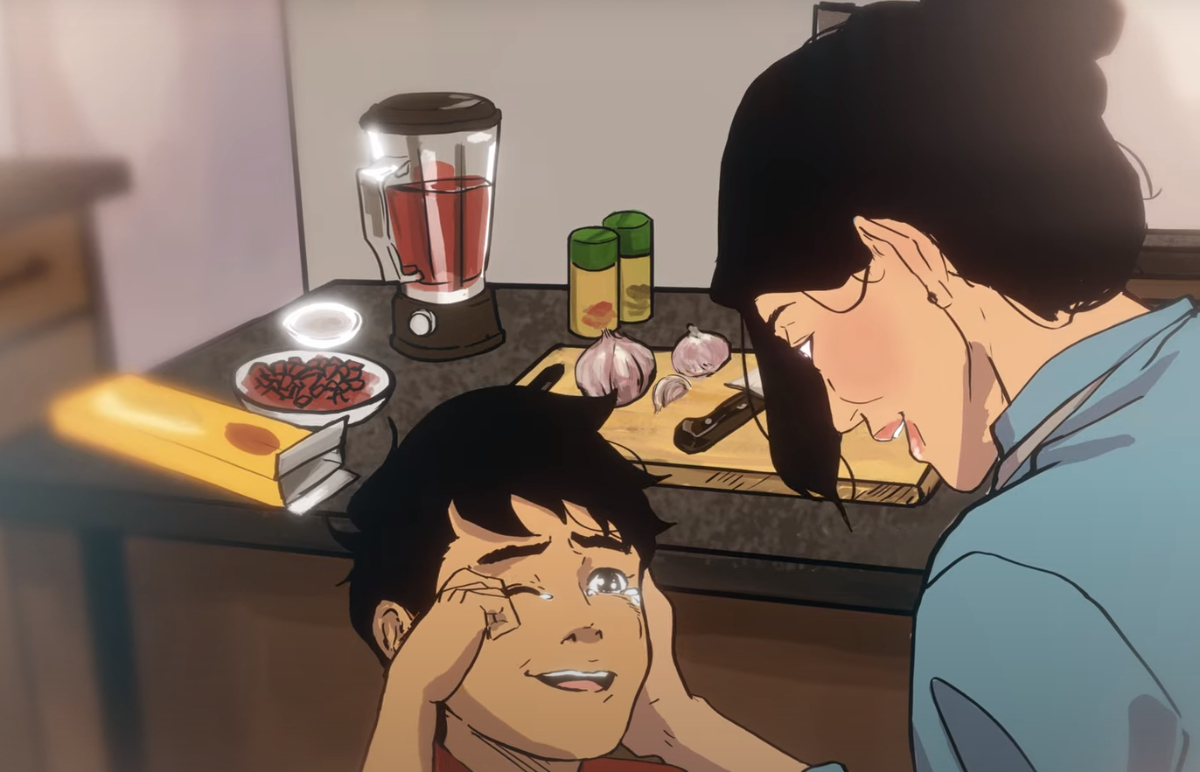
Waad Janbi’s animated short ‘Mom’s Spaghetti’ depicts a grieving teenage boy’s quest recreate a beloved dish his mother used to prepare for him. (Supplied)
Inside, the mood is somber. His father and sister also live with them. They break their fast mostly in silence.
For the next several days, along with his sister and grandmother, he attempts to re-create the favorite spaghetti dish that his mother used to make. They fail. Until one day, Amjad finds a blue notebook with drawings on the cover. It is his mother’s recipe book tucked away in a drawer. They try again. And again. Until one day, it smells and looks the way his mother used to make. Tears fill his eyes as he, and his family, enjoy the dish that their beloved mother used to serve them.
Janbi, who is a filmmaker and writer raised in Makkah and educated in the US, used some of her family’s real story sprinkled into this fictional narrative.
“The real inspiration came from my younger brother, Hamza. When our mother died, he was very athletic so she would prepare vegetables for him — healthy things. Right before she died, she told him that she made him something that she saved in the oven for him. ‘I kept it for you,’ she said,” Janbi told Arab News.

Waad Janbi, Saudi creative
But then she died and the household was overcome with grief. During the funeral, the dish was forgotten. Eventually, Hamza went looking for it and realized that it was gone.
“It likely went bad and someone threw it out while they were cleaning. Hamza was really sad about it, sad how the last thing our mother made for him, he couldn’t taste. So, when I wrote the story, I had him in my mind. This was the last act of love that she made but he couldn’t eat that last dish. That last serving of love was untouched,” Janbi said.
The way mama showed love and what she was most proud of was food.
Waad Janbi, Saudi creative
“Mama was a phenomenal cook. She was famous for her macarona bechamel. Our relatives would flock over just to taste her food. But I guess many don’t make that normally during Ramadan so I switched it the more widely known spaghetti,” she said.
The title was inspired by an unlikely source: the US rapper Eminem, who was popular during Janbi’s youth. In his debut, and critically acclaimeded film, “8 mile,” he famously rapped a lyric where he says: “Mom’s spaghetti.” Janbi, who uses humor to cope with grief, decided to use it.
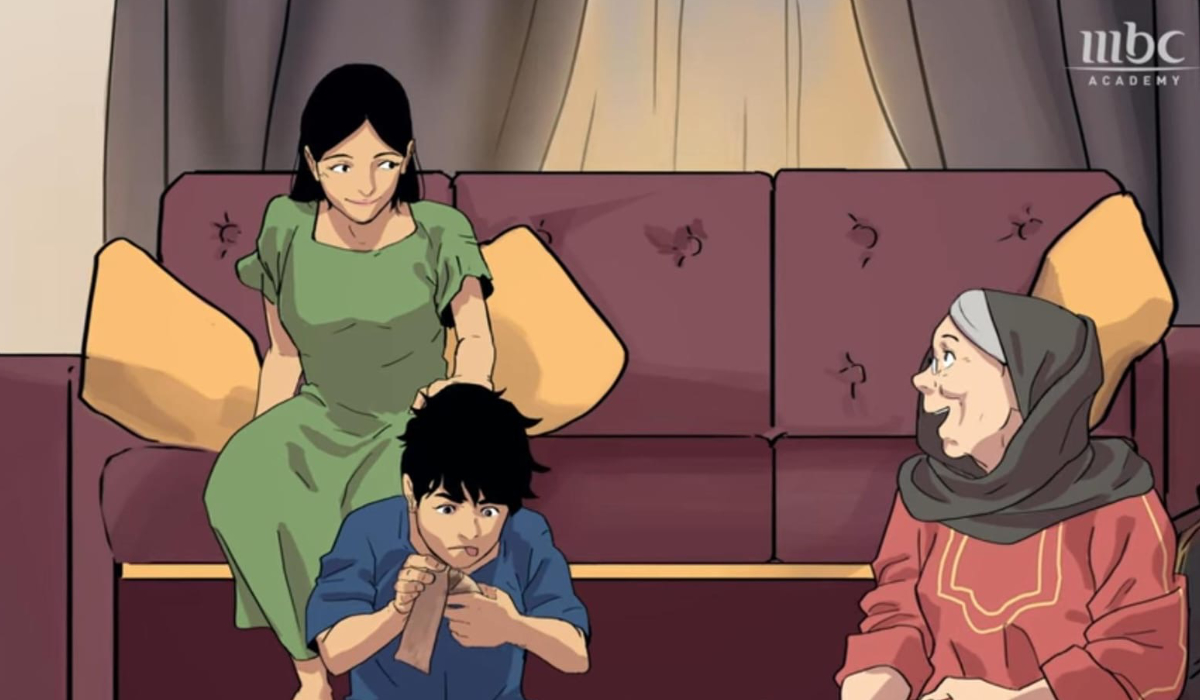
Waad Janbi’s animated short ‘Mom’s Spaghetti’ depicts a grieving teenage boy’s quest recreate a beloved dish his mother used to prepare for him. (Supplied)
“I was being playful with the title. Eminem wasn’t ashamed of his anger, he turned it into art. And, although I’m aware that he was problematic during different times, he was a poet and that line stuck with me and it would make me snicker to myself each time I heard someone mention ‘Mom’s spaghetti’ in my short film’s title,” she said.
This film is a love letter to all the things that inspired Janbi rolled into one.
In the Janbi household growing up, they would watch MBC on the screen while preparing the food and then switch to live footage of the Haram right before Maghreb.
Fast-forward to years later, Janbi enrolled in MBC Academy’s first online cohort dedicated to screenwriting. She then took a more advanced screenwriting course and did on-site training in Dubai. Through a group chat, mentors at MBC Academy encouraged former participants to write and pitch an episode as part of a series that would air during Ramadan. They were told that seven episodes would be selected.
Janbi felt the pull of her mother and was able to scramble together her story in the nick of time. Like her mother, she used a bit of this, a dash of that, and was able to produce a story that she shared with the committee. Her story was selected and was released as the second of the seven stories.
It was important for her to write it from the point of view of a Saudi teen boy, in order to subtly shift the conversation.
“In the story, the boy was trying to learn basic skills, to feed himself and his family. I grew up with very strict rules about gender roles; me as a girl, I’d have to help with the kitchen and my brother had to help feed those fasting with father. I began to understand the pressures my brother had and wanted to let Saudi boys know that they should be active in their own lives. Helping in the kitchen is good, helping your grandmother is good. And they should learn how to feed themselves!” she said.
While food is vital to survival, certain dishes can truly make you feel alive. With curated ingredients and specific spices and herbs mixed just right, that culinary journey can turn that spoon or fork into a sort of time machine. It can bring you back to simpler times.
Janbi’s older sisters still have some of the handwritten recipes that their mother scribbled in loose notebook papers, each fragmented page tells a story of a time long gone but also serves as a treasure map to revive that magic.
“The way mama showed love and what she was most proud of was food. She would never hug us or kiss us or say ‘I love you,’ but she would lovingly prepare the dish you loved and that was her love language,” Janbi said.
Janbi was overwhelmed by the positive reception after her episode aired. Her friends flooded her inbox and tagged her on social media, praising the story that resonated deeply with viewers of all backgrounds. The storytelling was layered and complex but told in a clear way.
“Usually the artist is never satisfied with the final draft but I was happy with the way that the MBC Academy team was able to bring it to life, even though they modified some things and left things out that I was slightly upset about, like in my vision, the mother had different hair … but I also understood their decision,” she said.
Janbi especially wanted to thank MBC Academy’s Munira Altheeb, assistant project manager at MBC Academy Middle East, for her support.
But, most importantly, her family understood what she was trying to achieve. She had told her siblings about the story before it came out and when it was ready, they all watched it. Her brother, the one that inspired the story, was excited. Her older sisters cried. Her youngest sibling, a sister, was slightly upset that the story didn’t seem to include her.
“I told my little sister, ‘Don’t worry, the next film I write will feature a story from your point-of-view,’” Janbi said.
To this day, Janbi’s family have not yet perfected their mother’s green beans with shrimps dish, her favorite. But they will keep on trying.
And Janbi will keep on typing.
The short animated film, which runs just under 10 minutes, can be viewed on MBC Academy’s YouTube channel.


