


DUBAI: Two students from Saudi Arabia are following their dreams to become chefs at Le Cordon Bleu, the renowned French culinary and hospitality institution in Paris.
In an interview with Arab News en Francais recently, Ghadeer Ibn Khamis and Khulood Almukrain said they were grateful to the government for providing them the opportunity to study at the prestigious institution.
“I relocated with my husband to France and decided to take my passion for cooking to the next level,” said Ibn Khamis.
Once in the city of art, culture and gastronomy, Ibn Khamis opted for the Cordon Bleu diploma which provides specialization in cuisine and pastry.
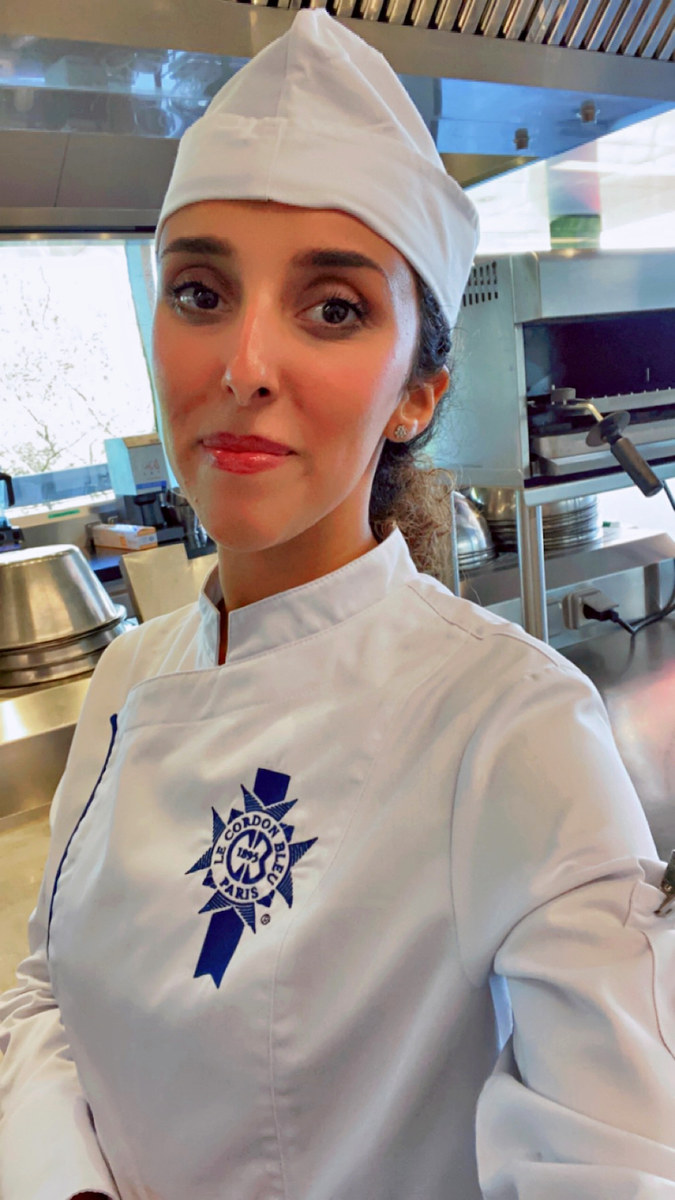
Ghadeer Ibn Khamis in class photo. (Supplied)
“I wanted to shift away from the fast-paced environment of doing business in Riyadh, to focus on a field I love,” added Ibn Khamis.
The two were provided full-time scholarships by Generation 2030, backed by MISK. Generation 2030’s objective is to empower young people in various fields, enhance Franco-Saudi relations in arts, culture and fashion, as well as ensure an exchange of knowledge and talented students.
Known for its vibrant hospitality scene, Saudi Arabia has been attracting fine dining restaurants over the past decade. This is a part of the Vision 2030 plan to grow the tourism industry. Culinary schools are a part of the conversation, and Le Cordon Bleu is expected to open in Riyadh in 2024/2025.
Almukrain said: “I used to work at a bank and I was happy in my role. I applied to Le Cordon Bleu program after watching (the movie) ‘Julie & Julia.’ In a couple of days, I made the decision to enroll. It was nerve-wracking, but I feel I made the right decision.”
Founded in Paris in 1895, Le Cordon Bleu is a large network of culinary and hospitality schools with more than 35 institutes in 20 countries. It has 20,000 students of over 100 nationalities graduating every year with certificates, diplomas, as well as bachelor’s and master’s degrees.
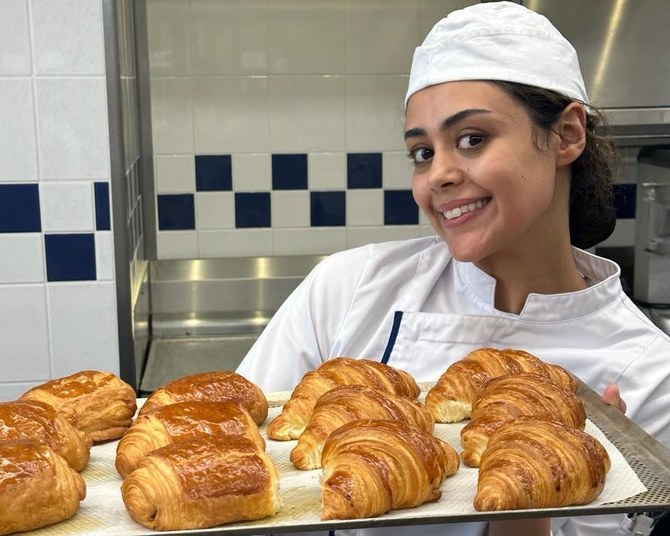
Almukrain added: “In pastry, there are many things I never imagined I would be able to do, I never attempted to make croissants. At Le Cordon Bleu, they put you under pressure, a challenge, where you have to do something you initially feel you won’t be able to do. Now I feel more confident and capable of doing anything, any dish, any dessert.”
The two students highlight that French cuisine is about technique and relies on seasonality, good quality products, and a balance of flavors. Blending Saudi Arabia’s flavors with French technique is an attempt to combine innovation and heritage, bridging cultures and reconciling tastes and preferences.
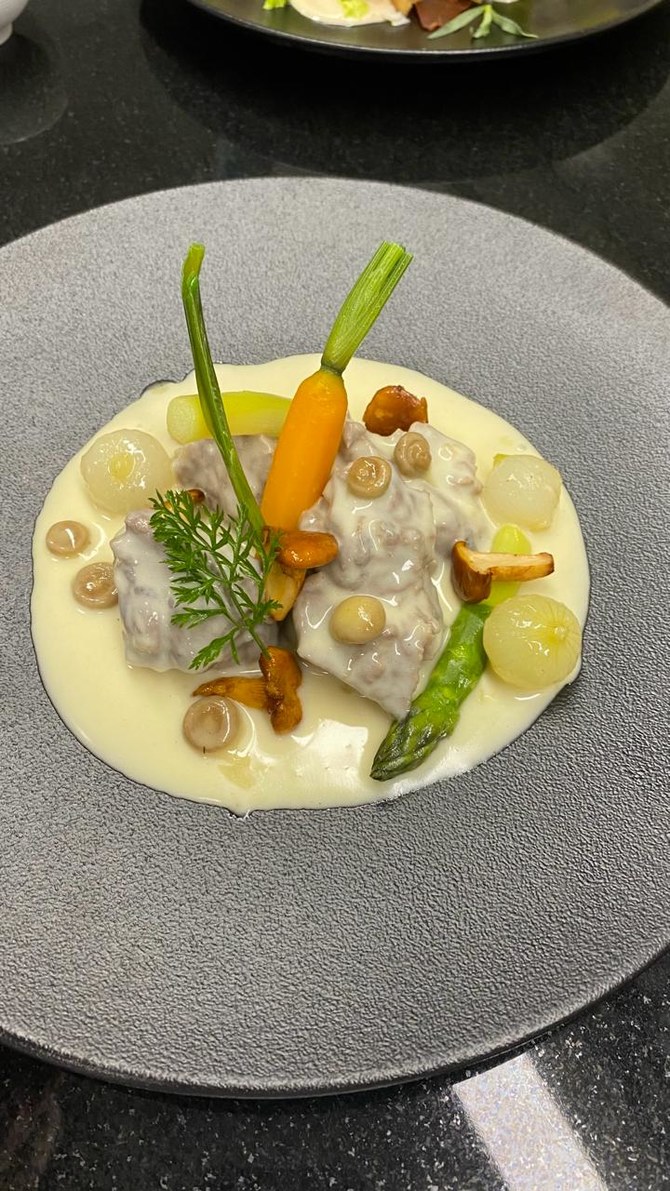
Ibn Khamis said: “French cuisine relies on veal meat, like Blanquette de veau which is also the case in Saudi Arabia … In adapting French cuisine to the Saudi taste, I don’t change the dish itself, I incorporate indirect changes. It is not easy, but it is doable.”
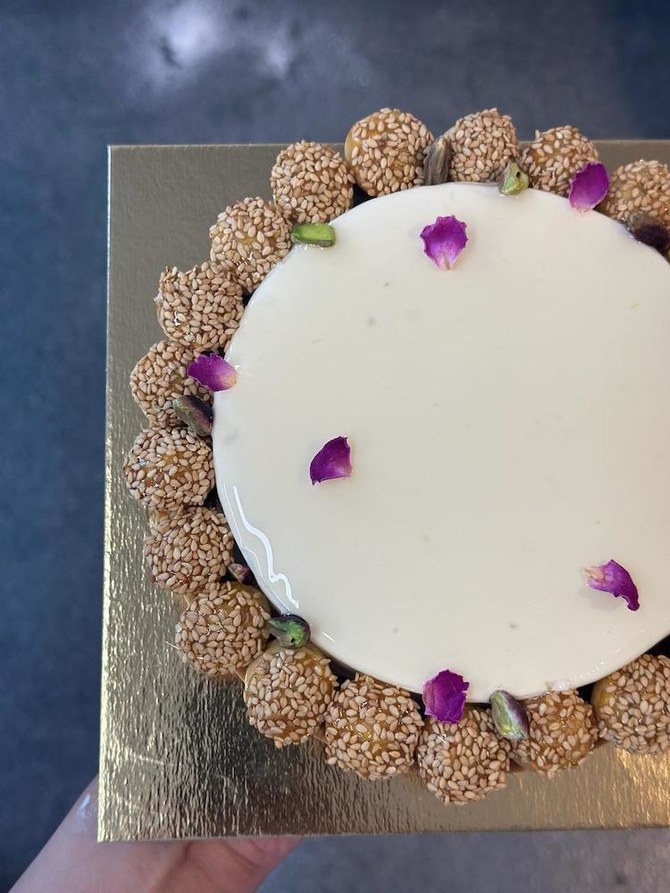
For her “make your own tart” exam, Almukrain brought Arabic flavors to the production.
“The tart was inspired by the simsimiya. Applying the techniques of cream and dough-making, coulis, and crust preparation, my idea was to deliver a tart with pistachio, simsimiya and rose water, surrounded by choux pastry, filled with creme patissiere, pistachio praline and tahini,” said Almukrain.
Ibn Khamis said Le Cordon Bleu is a place for learning, commitment and discipline.
“I used to be late, and not finish my plates on time … Then I started delivering my plates among the first in my class. The best part about my experience is seeing progress over time, till I reached a point where the chef does not comment on the plating and the presentation of my dish.”
For Almukrain, Le Cordon Bleu allowed her to meet people from different cultures and learn about their dishes.
“It is my first time travelling and living on my own, which is an experience by itself. The exposure, the amount of information I received, I am happy to learn and implement. You exceed your own expectations and your self-confidence increases,” said Almukrain.
“French cuisine is the most technical cuisine. When you go to any other cuisine, having a French cuisine and techniques background will help you a lot,” she added.
Students receive the Grand Diplome upon completion of the culinary program, followed by a second diploma in restaurant management. The objective is to help students develop their business idea, and learn about budgeting, marketing, financing and designing menus.
“There is a lot more to learn, an infinite room for creativity, and a sense of achievement with the positive feedback and support of family and friends,” added Ibn Khamis.
Wearing the Le Cordon Bleu chef’s hat is the upcoming milestone before carrying the French experience back to Riyadh, where the two are looking to head into food consultancy and restaurant management.


