- The companies have demanded Pakistan authorities come up with new security plans before reopening the sites
- The security of Chinese workers, who are frequently targeted by militants, is a major concern to both countries
PESHAWAR: Chinese contractors have halted construction on two major dam projects in Pakistan after a suicide bomber killed five Chinese engineers and a Pakistani driver this week, a provincial official told AFP on Friday.
The companies have demanded that Pakistan authorities come up with new security plans before reopening the sites where around 1,250 Chinese nationals are working, the official said.
The security of Chinese workers is a major concern to both countries, with nationals frequently targeted by militants hostile to outside influence.
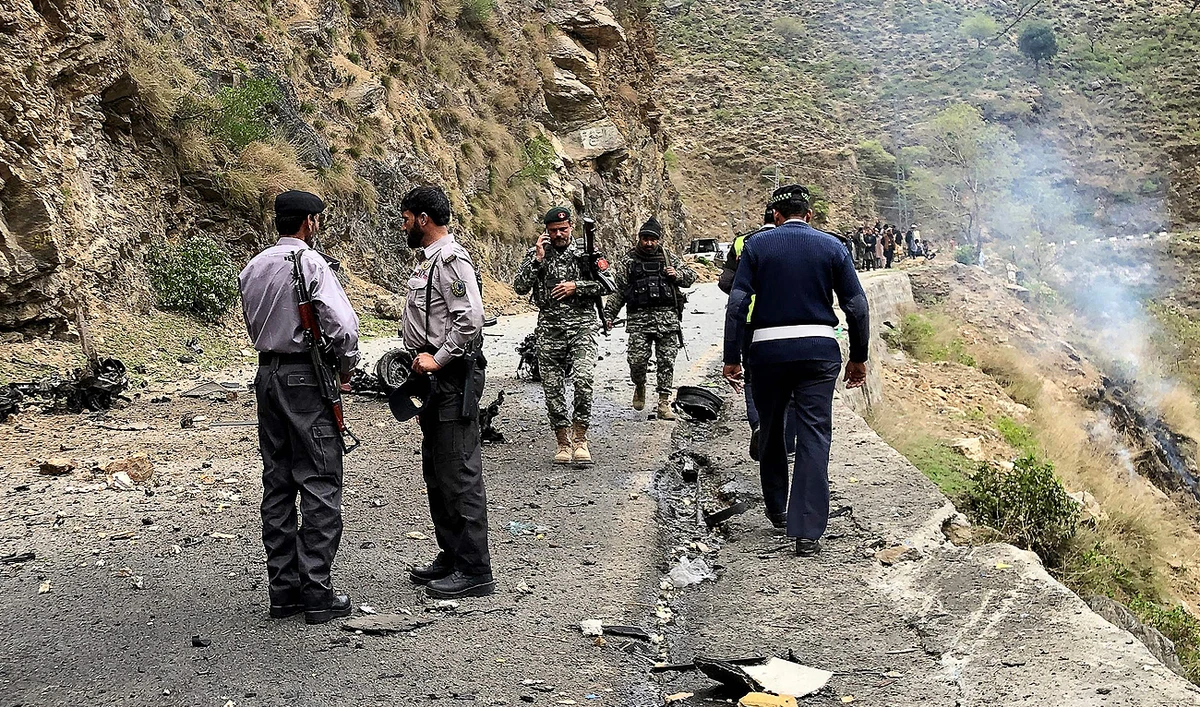
The workers were targeted on Tuesday by a suicide bomber who rammed into their vehicle on a mountainous road near one of the dam sites.
He detonated his explosives on impact, plunging their vehicle into a deep ravine.
A senior official from the Khyber Pakhtunkhwa interior department told AFP on condition of anonymity that since Wednesday, China Gezhouba Group Company has halted work on the Dasu dam in the province and Power China has stopped work on Diamer Bhasha dam, which straddles two provinces.
“They have demanded new security plans from the government,” he said.
“Around 750 Chinese engineers are engaged in the Dasu Dam project, while 500 are working on the Diamer Bhasha Dam,” he added.
He said the movement of Chinese engineers has been restricted to the compounds where they live, close to the sites.
China has not commented, but this week repeatedly urged Pakistan to ensure the safety of its nationals.
Beijing is Islamabad’s closest regional ally, readily providing financial assistance to bail out its often-struggling neighbor.
China has inked more than two trillion dollars in contracts around the world under its Belt and Road investment scheme, with billions pouring into infrastructure projects in Pakistan.
But Pakistanis have long complained that they are not getting a fair share of jobs or wealth created by the projects.
Tuesday’s attack sparked a flurry of diplomatic activity at the Chinese embassy in Islamabad, with Prime Minister Shehbaz Sharif and the foreign and interior ministers offering condolences in quick succession.
China’s foreign ministry declared the countries “iron-clad friends” but asked Pakistan to “take effective measures to ensure the safety and security of Chinese nationals, projects, and institutions.”
Tuesday’s attack came just days after militants attempted to storm offices of the Gwadar deepwater port in the southwest, considered a cornerstone of Chinese investment in Pakistan.
In 2019, gunmen stormed a luxury hotel in Balochistan province overlooking the flagship Chinese-backed deepwater seaport in Gwadar that gives strategic access to the Arabian Sea — killing at least eight people.
In June 2020, Baloch insurgents targeted the Pakistan Stock Exchange, which is partly owned by Chinese companies, in the commercial capital of Karachi.