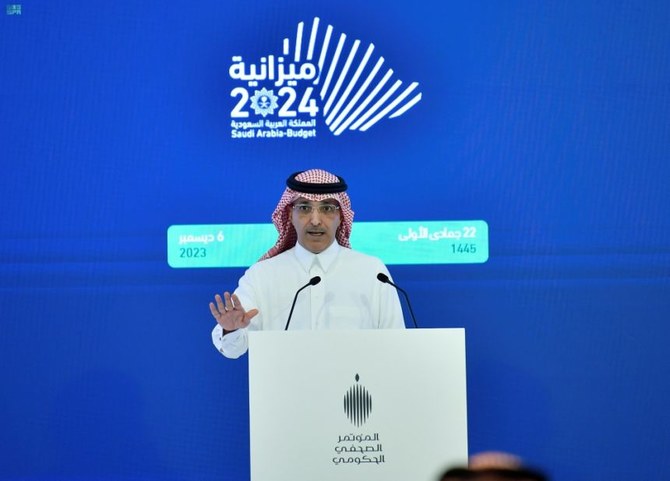
RIYADH: Saudi Finance Minister Mohammed Al-Jadaan on Tuesday said the Kingdom is intentionally running a budget deficit to achieve its development goals.
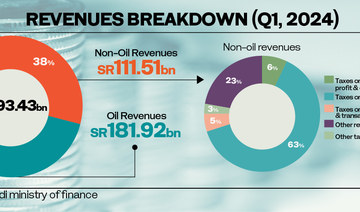
The Finance Ministry announced the quarterly budget performance report on Sunday. As per the report, the Kingdom posted a deficit of SR12.4 billion ($3.3 billion) in Q1, marking the sixth consecutive quarterly deficit with revenues amounting to SR293.4 billion and expenditures hitting a record SR305.8 billion.
“We’re intentionally running a sustainable deficit for economic development, contrasting with mandatory borrowing in some nations for essential but unproductive expenses,” the minister told Al-Eqtisadiyah in an interview.
He said the deficit is not merely a consequence but an attempt to achieve development goals. The minister said the government prioritizes spending to accelerate the implementation of its development strategies and projects.
Al-Jadaan also shed light on the overall situation of the global economy and how Saudi Arabia’s prudent fiscal policies have supported growth and enhanced the Kingdom’s resilience in dealing with changes.
HIGHLIGHTS
Efforts are underway to attract domestic and foreign investments that stimulate economic growth and contribute to reducing the budget deficit.
Strategic spending has a multiplier effect on the economy, like creating jobs and enhancing trade through infrastructure investments.
Saudi Arabia is committed to optimizing government expenditures by directing them toward promising strategies.
Regarding the budget deficit and its potential impact on the economy, he reassured citizens that managing the budget deficit is a top priority.
The minister clarified that as long as the deficit is directed toward productive expenses, the government views it as acceptable, as it generates economic returns that exceed the cost of debt.
Highlighting sustainable financial policies, Al-Jadaan cited the government’s efforts to reduce its reliance on oil revenues by diversifying sources of income.
He said non-oil revenues made up 38 percent of the total income in 2023, compared to 9 percent in 2015. The minister said the ratio of non-oil revenues to covering expenditure ceilings was about 17 percent in 2015 and surged to reach 35 percent in 2023.
Al-Jadaan said: “Financial policies can enhance financial inclusion and access to funding, both vital for supporting entrepreneurship, small and medium-sized enterprises, and innovation. This contributes to achieving the goals of Saudi Vision 2030, which has succeeded in unprecedented achievements across various sectors.”
He also addressed the efficiency of government spending and its pivotal role in fostering economic development and bolstering economic resilience.
“We are committed to optimizing government expenditures by directing them toward promising strategies aimed at diversifying the economic base,” the official added.
He said by the end of 2023, total government spending had reached approximately SR1.29 trillion, reflecting continued progress in implementing initiatives and structural reforms.
These initiatives include regional and sectoral strategies supportive of structural transformation for comprehensive sectoral development and economic diversification, Al-Jadaan added.
Moreover, the finance minister revealed that active efforts are underway to attract both domestic and foreign investments that stimulate economic growth and contribute to reducing the budget deficit.
Commenting on the impact of strategic spending on the national economy, he said it “involves directing and allocating financial resources toward specific goals and priorities that align with long-term economic objectives.”
This is achieved by strategically guiding funds, enabling governments and institutions to stimulate economic growth and development, foster innovation, and enhance productivity, he explained.
The minister went on to say that for instance, investments in additional industrial zones, expanding ports’ capacities, and investing in roads have led to significant growth in industrial investments and logistics services, creating business opportunities and employment for many citizens.
“This supports economic activity and raises the non-oil gross domestic product, thereby increasing non-oil revenues and covering additional debt costs,” he added.
Al-Jadaan said that strategic spending has a multiplier effect on the economy, like creating jobs and enhancing trade through infrastructure investments.
The minister also highlighted Saudi Arabia’s remarkable international presence over the past seven years.
He emphasized that Saudi Vision 2030 has positioned the Kingdom as a preferred and leading destination worldwide.
Al-Jadaan explained: “The foreign direct investment as a percentage of GDP reached 2.4 percent, which stimulated economic growth and bolstered the Kingdom’s competitiveness in the global market, leading it to advance seven positions to become one of the top 20 countries in the Global Competitiveness Report for the year 2023.”
Additionally, Saudi Arabia participated in regional economic integration initiatives, strengthened close economic relations with neighboring countries, and capitalized on regional markets to achieve mutual benefits.
“The Ministry of Finance has undertaken the task of enhancing international cooperation in financial policies through fostering international economic and trade partnerships, exchanging expertise, and promoting development at both regional and global levels,” the minister said.
Al-Jadaan emphasized Saudi Arabia’s commitment to promoting international dialogue. “We take pride in the Kingdom’s strong relations with international organizations, believing in the importance of international cooperation to achieve development, enhance peace and international security, promote human rights, combat climate change, and foster economic collaboration.”
Saudi Arabia chaired the G20 meetings, the most important global economic forum, in 2020 and effectively managed global consensus on addressing the COVID-19 pandemic.
He emphasized that the Kingdom has presented initiatives that are still being implemented globally, including the Debt Service Suspension Initiative for the benefit of poor countries, further enhancing its international standing.
Moreover, Saudi Arabia won the bid to host the 2030 International Expo, further solidifying its international position. The Kingdom’s nominees also secured victories in several international organizations.
In terms of financial and monetary policy, Saudi Arabia’s recent successes and its active participation in local, regional, and international events led the IMF to choose the Kingdom to chair the International Monetary and Financial Committee.
“This reflects the close and long-standing relationship between the two sides, affirming the Kingdom’s commitment to actively participate in shaping and implementing international financial and economic policies,” Al-Jadaan added.
The minister highlighted the IMF’s Riyadh-based regional office and said: “The opening of the IMF’s regional office in Riyadh is a strategic move that reflects the Kingdom’s commitment to enhancing international cooperation and promoting economic stability at the regional level.”