‘The Jinn Daughter’: A hauntingly inimitable debut by Rania Hanna

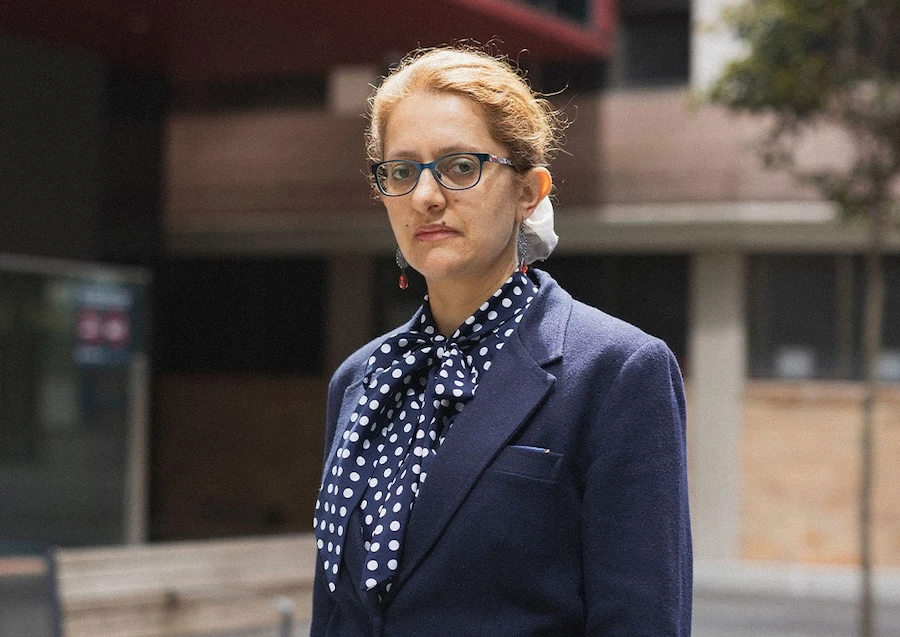
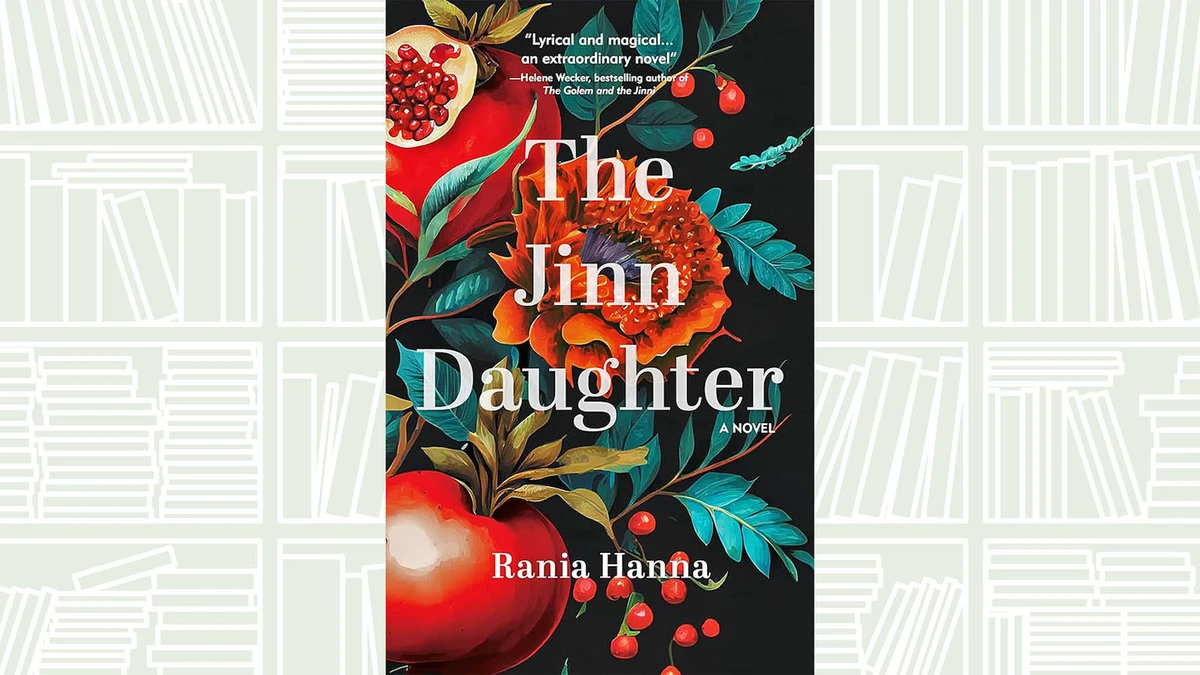
“The Jinn Daughter” is a hauntingly inimitable debut by US Syrian writer Rania Hanna. (Supplied)
Short Url
Updated 27 March 2024
Follow

‘The Jinn Daughter’: A hauntingly inimitable debut by Rania Hanna

CHICAGO: Set to be published in April 2024, “The Jinn Daughter” is a hauntingly inimitable debut by US Syrian writer Rania Hanna that weaves fantasy with Middle Eastern mythology and folklore in a story that centers around a mother’s struggle to save her daughter. Nadine is a Hakawati Jinn, someone who collects seeds of dead souls and documents their lives before they pass on. One morning she finds herself in the middle of a disaster when the seeds of the dead stop falling. With no souls able to pass, they will remain on Earth and turn into ghouls. But when Death comes to her with a proposal, Nadine’s task becomes clearer and more dangerous. She must outmaneuver death and use her magic to save her daughter Layala and the world as she knows it.

Nadine and Layala live on the outskirts of town and society. Jinns are not welcome among humans. Most were imprisoned or killed during the Jinn Wars, but Nadine is the town’s Hakawati Jinn and therefore she must stay. But her life has never been easy, especially with her only daughter being half-jinn and half-human. Her husband is no longer living with them, and her 14-year-old daughter Layala asks incessant questions about Nadine’s life, duties, and whether or not Layala is destined to follow in her mother’s footsteps. Managing human deaths, a teenage daughter, and angry townsfolk already weighs Nadine down, but when Kamuna, the guardian of the underworld, visits her and asks for Layala to take her place, Nadine knows her troubles have only just begun.

With the use of her own physical strength, the magic she possesses, and her quick wit, Nadine must do everything in her power to keep her daughter safe. And while Layala has always listened to her mother, when things begin to change, Layala questions what she’s been told as truths begin to unravel.

Bridging life and death with intimate relationships, grief, loss, hope, and love, Hanna’s novel develops ominously from its first sentence. Her characters’ lives are riddled with obstacles as they serve as the viceregents of opposing worlds, attempting to live some semblance of the lives they have inherited. And as a mother is pushed to the brink of the world for her daughter, the heart of the story is about love and sacrifice.

Art Cairo spotlights pioneering artist Inji Efflatoun

Updated 23 January 2026
Follow

Art Cairo spotlights pioneering artist Inji Efflatoun

CAIRO: Art Cairo 2026 returned to Egypt’s bustling capital from Jan. 23-26, with visitors treated to gallery offerings from across the Middle East as well as a solo museum exhibition dedicated to pioneering Egyptian artist Inji Efflatoun.

While gallery booths hailed from across the Arab world, guests also had the chance to explore the oeuvre of the politically charged artist, who died in 1989.

Many of the pieces in the 14-work exhibition were drawn from the collection of the Egyptian Museum of Modern Art and cover four main periods of the artist’s work, including her Harvest, Motherhood, Prison and Knoll series.

While gallery booths hailed from across the Arab world, guests also had the chance to explore the oeuvre of the politically charged artist, who died in 1989. (Supplied)

Efflatoun was a pivotal figure in modern Egyptian art and is as well known for her work as her Marxist and feminist activism.

“This is the third year there is this collaboration between Art Cairo and the Ministry of Culture,” Noor Al-Askar, director of Art Cairo, told Arab News.

“This year we said Inji because (she) has a lot of work.”

Born in 1924 to an affluent, Ottoman-descended family in Cairo, Efflatoun rebelled against her background and took part heavily in communist organizations, with her artwork reflecting her abhorrence of social inequalities and her anti-colonial sentiments.

Many of the pieces in the 14-work exhibition were drawn from the collection of the Egyptian Museum of Modern Art and cover four main periods of the artist’s work, including her Harvest, Motherhood, Prison and Knoll series. (Supplied)

One untitled work on show is a barbed statement on social inequalities and motherhood, featuring a shrouded mother crouched low on the ground, working as she hugs and seemingly protects two infants between her legs.

The artist was a member of the influential Art et Liberte movement, a group of staunchly anti-imperialist artists and thinkers.

In 1959, Efflatoun was imprisoned under Gamal Abdel Nasser, the second president of Egypt. The artist served her sentence for four years across a number of women’s prisons in the deserts near Cairo — it was a period that heavily impacted her art, leading to her post-release “White Light” period, marked dynamic compositions and vibrant tones.

Grouped together, four of the exhibited works take inspiration from her time in prison, with powerful images of women stacked above each other in cell bunkbeds, with feminine bare legs at sharp odds with their surroundings.

Art Cairo 2026 returned to Egypt’s bustling capital from Jan. 23-26. (Supplied)

The bars of the prison cells obstruct the onlooker’s view, with harsh vertical bars juxtaposed against the monochrome stripes of the prison garb in some of her works on show.

“Modern art, Egyptian modern art, most people, they really don’t know it very well,” Al-Askar said, adding that there has been a recent uptick in interest across the Middle East, in the wake of a book on the artist by UAE art patron Sultan Sooud Al-Qassemi.

“So, without any reason, all the lights are now on Inji,” Al-Askar added.

Although it was not all-encompassing, Art Cairo’s spotlight on Efflatoun served as a powerful starting point for guests wishing to explore her artistic journey.