
KARACHI: A Pakistani charity that has faced social media criticism for serving expensive ostrich meat during Ramadan charity food drives says it will continue to dish out lavish food to the poor during the holy month of fasting.
The Jafriya Disaster Management Cell Foundation (JDC) began providing meals to the poor and needy in 2010. Since 2016, its menu for suhoor or pre-dawn meals has included dishes made from ostrich meat, prawn and mutton, as well as dum pukht, a cooking technique associated with the Mughal Empire in which meat and vegetables are cooked over a low flame, generally in dough-sealed containers. All the ingredients as well as pre-cooked dishes are provided by donors, the charity says.
The latest controversy was triggered when JDC volunteers stewed the red ostrich meat in cauldrons and served it in a chickpea curry to more than 500 residents for suhoor on the first day of Ramadan on Mar. 12.
Then, in a video that has since gone viral, JDC founder Zafar Abbas said his donors had paid as much as Rs150,000 to purchase an ostrich to be served up during the charity’s free suhoor meal drive.
The video has generated countless memes, both humorous and critical, with many social media users saying the money spent on “extravagant” meats could help to purchase cheaper ingredients and feed more deserving people.
Ostrich, which is expensive and rarely eaten in Pakistan, is deemed exotic in the South Asian country of over 241 million.
“The intention was neither to mock ostriches nor to create enmity against the donors,” Abbas told Arab News, adding that JDC was “serving humanity” regardless of language, religion or sect.
“We don’t understand why they [social media users] have become our enemies.”

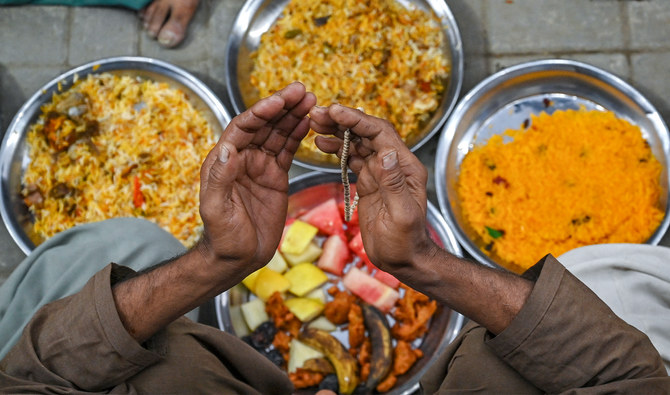
The picture taken on March 23, 2024, shows a driver parking a food truck ahead of the Iftar meal in Karachi, Pakistan. (AN photo)
Abbas said he took pride in the fact that his charity could provide a once-in-a-lifetime experience for thousands of poor people in the southern Pakistani port city of Karachi, where JDC operates.
“If an ordinary person would go to have prawn mandi with his family in a restaurant, the bill could amount to Rs50,000-55,000, if someone would go to eat dum pukht with six people from his family, the bill could amount to Rs40,000,” Abbas added.
“We have served all these dishes here that everyone cannot afford.”
JDC’s initiative doesn’t only have critics. Ostrich farmers and traders see the spotlight put on ostrich meat by the charity as an opportunity to boost ostrich farming in Pakistan.
“I believe the current debate may be helpful in reviving ostrich farming,” said Raja Tahir Latif, president of the Pakistan Ostrich Association.
In 2016, Latif said, the government in Pakistan’s Punjab province initiated a project for the promotion of ostrich meat and 440 farms were established. But the policy was not pursued, he lamented.
“Birds were ready for meat, people were made aware, and people understood how to rear them,” Latif said, adding that the new government in 2018 scrapped the policy.
Meanwhile, Abbas said he was committed to keep serving unique and lavish dishes to the needy, and was not “bothered” by the negative comments on social media.
“Here, any well-off person can come with any dish, whether it’s ostrich, mutton mandi, prawn mandi or fish,” Abbas said. “Our table is spread, enjoy it.”