

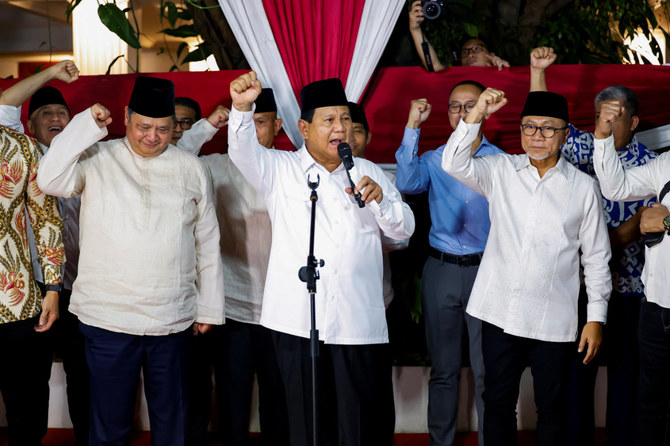
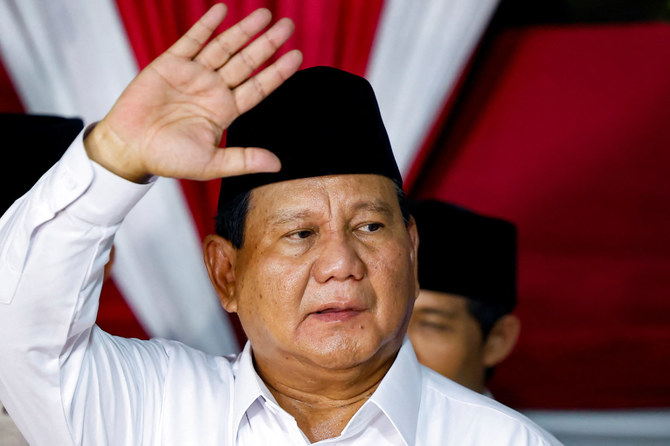

JAKARTA, Indonesia: Indonesian Defense Minister Prabowo Subianto was announced the winner of the presidential election in the world’s third-largest democracy Wednesday over two former governors who vow to contest the result in court over alleged irregularities.
Subianto, who was accused of abuses under the past dictatorship and chose the son of the popular outgoing president as his running mate, won 58.6 percent of the votes. Former Jakarta Gov. Anies Baswedan received 24.9 percent and former Central Java Gov. Ganjar Pranowo got 16.5 percent, the General Election Commission said. It posted polling stations’ tabulation forms on its website, allowing for independent verification.
Subianto said he will respect those who made different choices in the vote.
“We call on all Indonesian people to look to the future together,” he told a news conference. “We must unite and join hands because our challenges as a nation are very big.”
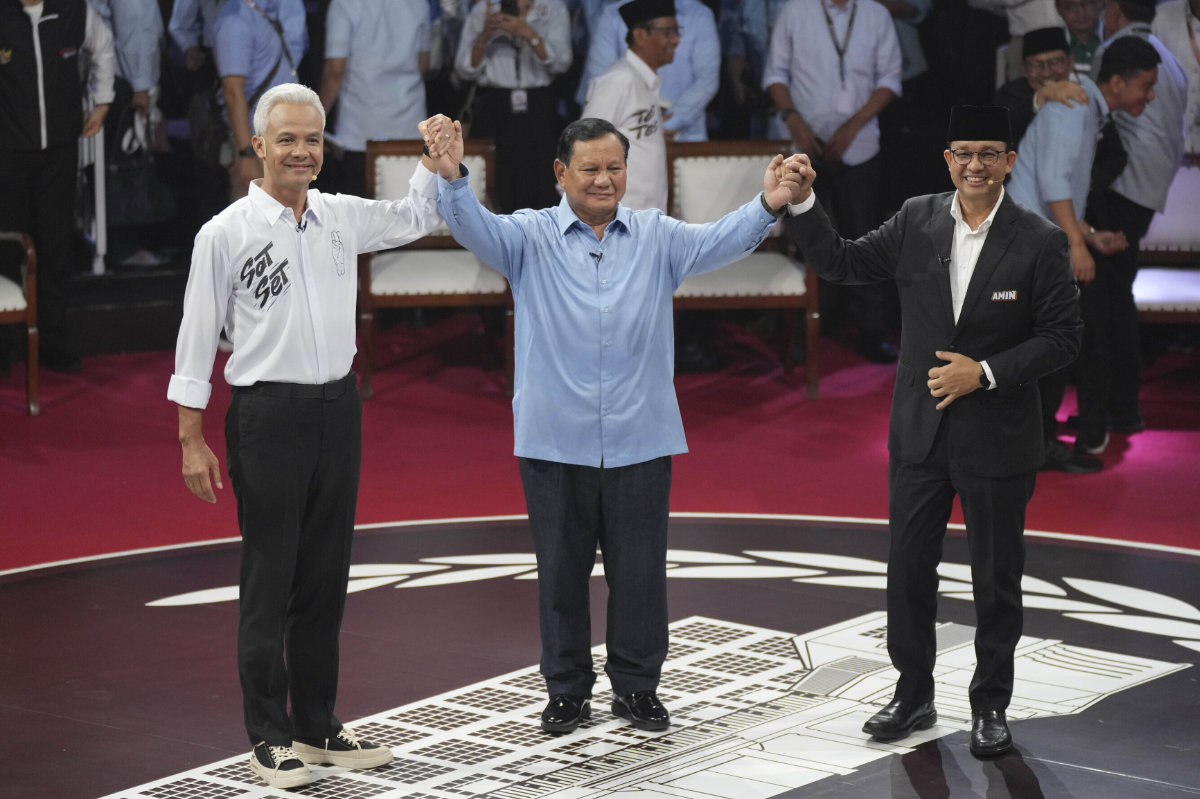
Presidential candidates, from left, Ganjar Pranowo, Prabowo Subianto and Anies Baswedan hold hands as they pose for photographers after the first presidential candidates' debate in Jakarta, Indonesia, on Dec. 12, 2023. (AP/File)
Subianto has received congratulatory messages from other Southeast Asian nations as well as the Chinese, Russian, French, Dutch and British governments, who all expressed their wishes to work with his new government.
“We look forward to partnering closely with President-elect Subianto and his Administration when they take office in October,” US State Secretary Antony J. Blinken said after his victory was confirmed.
About 300 demonstrators held banners and signs criticizing outgoing President Joko Widodo for supporting Subianto and alleging widespread fraud. They burned photos of the president with trash near the election commission’s compound.
The second- and third-place finishers have refused to concede. On Thursday morning, Baswedan’s lawyers filed a challenge to the results in the Constitutional Court. Pranowo also plans a court challenge.
“We do not want to let these various deviations from democracy pass without historical records and set a bad precedent for future election organizers,” Baswedan said after final results were announced.
They have alleged fraud, citing the vice presidential candidacy of Widodo’s son. Widodo could not run again, and his son’s candidacy has been seen as a sign of his tacit backing of Subianto.
Widodo’s son, Gibran Rakabuming Raka, is 37 but became Subianto’s running mate after the Constitutional Court made an exception to the minimum age requirement of 40 for candidates. The court’s chief justice, who is Widodo’s brother-in-law, was then removed by an ethics panel for failing to recuse himself and for making last-minute changes to election candidacy requirements.
The new president will be inaugurated on Oct. 20 and will have to appoint a Cabinet within two weeks.
Subianto had claimed victory on election day last month after unofficial tallies showed he was winning nearly 60 percent of the votes.
Voter turnout was about 80 percent, the election commission said.
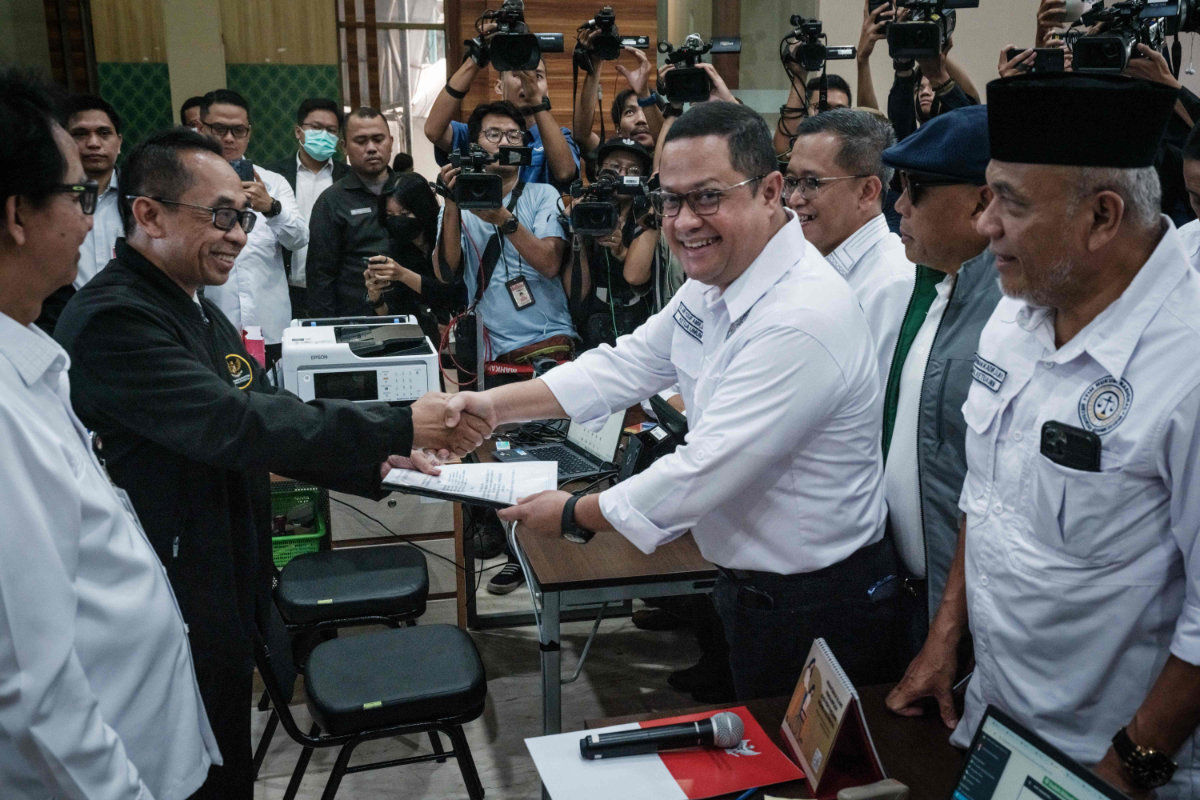
Members of the legal team of Indonesia's presidential election challenger Anies Baswedan file at the Constitutional Court in Jakarta on March 21, 2024, a petition over the February 2024 elections, which was won decisively by Defenae Minister Prabowo Subianto amid allegations of irregularities and fraud. (AFP)
Subianto won in 36 of 38 provinces and received 96.2 million votes compared to 40.9 million for Baswedan, who won in two provinces. Baswedan, the former head of an Islamic university, won a massive majority in the conservative westernmost province of Aceh.
Pranowo, the candidate of the governing Indonesian Democratic Party of Struggle, received 27 million votes and did not win any provinces.
Todung Mulya Lubis, a prominent lawyer who represents Pranowo, asserted that election irregularities occurred before, during and after the polls.
Widodo has dismissed the fraud allegations, saying the election process was watched by many people including representatives of the candidates, the election supervisory agency and security personnel.
“Layered supervision like this would eliminate possible fraud,” Widodo told reporters last month. “Don’t scream fraud. We have mechanisms to solve the fraud. If you have evidence, take it to the Election Supervisory Agency. If you have evidence, challenge it to the Constitutional Court.”
The campaign teams of Baswedan and Pranowo said they would provide evidence for their claims.
But Lubis said his team has had difficulty getting witnesses to testify in court due to alleged intimidation by authorities. He acknowledged that successfully challenging the election result with such a wide official margin of victory will be difficult.
The ethics panel that removed Anwar Usman as the court’s chief justice allowed him to remain on the court under certain conditions, including banning him from involvement when the court adjudicates election disputes this year.
That means any such cases brought to the court would be decided by eight justices instead of all nine members.
Subianto’s campaign highlighted the Widodo administration’s progress in reducing poverty and vowed to continue the modernization agenda that has brought rapid growth and vaulted Indonesia into the ranks of middle-income countries.
But Subianto has laid out few other concrete plans for his presidency, leaving observers uncertain about what his election will mean for the country’s growth and its still-maturing democracy.
Subianto lost two previous presidential elections to Widodo, and the Constitutional Court rejected his bids to overturn those results because of unfounded fraud allegations.
This time, Subianto embraced the popular leader and styled himself as his heir. His choice of Widodo’s son as his running mate raised concerns about an emerging dynastic rule in Indonesia’s 25-year-old democracy.
Subianto comes from one of the country’s wealthiest families. His father was an influential politician who was a government minister under both the dictator Suharto and the country’s first president, Sukarno.
Questions also are still unanswered about Subianto’s alleged links to torture, disappearances and other human rights abuses in the final years of the brutal Suharto dictatorship, in which he served as a special forces lieutenant general.
Subianto was expelled by the army over accusations that he played a role in the kidnappings and torture of activists and other abuses. He never faced a trial and vehemently denies any involvement, although several of his men were tried and convicted.
It’s not clear how Subianto will respond to political dissent, street protests and critical journalism. Many activists see his links to the Suharto regime as a threat.


