Ramadan operations running smoothly at Jeddah airport: Transport minister

1 / 3
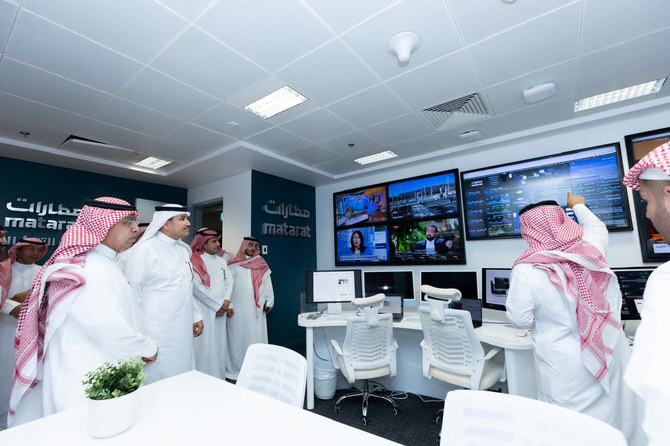
Transport Minister Saleh bin Nasser Al-Jasser, accompanied by civil aviation and airport officials, stressed the effective implementation of plans for the Umrah season during Ramadan 2024 in his inspection visit at the King Abdulaziz International Airport in Jeddah. (Supplied)
2 / 3
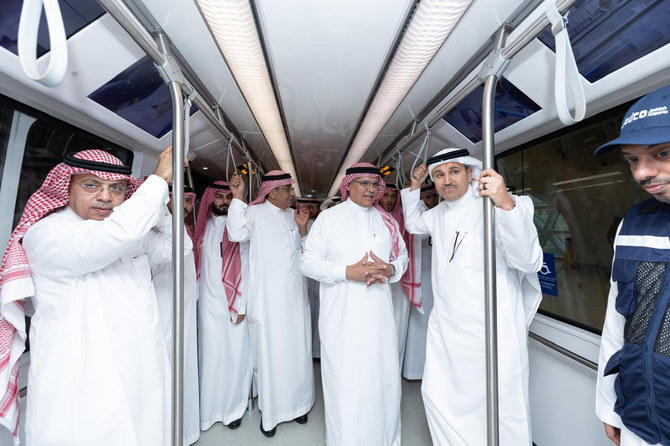
Transport Minister Saleh bin Nasser Al-Jasser, accompanied by civil aviation and airport officials, stressed the effective implementation of plans for the Umrah season during Ramadan 2024 in his inspection visit at the King Abdulaziz International Airport in Jeddah. (Supplied)
3 / 3
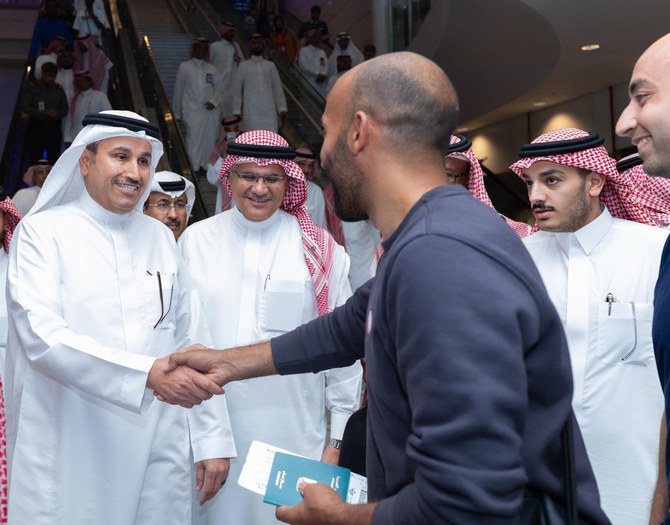
Transport Minister Saleh bin Nasser Al-Jasser, accompanied by civil aviation and airport officials, stressed the effective implementation of plans for the Umrah season during Ramadan 2024 in his inspection visit at the King Abdulaziz International Airport in Jeddah. (Supplied)
Short Url
Updated 21 March 2024
Follow

Ramadan operations running smoothly at Jeddah airport: Transport minister

  • Minister, officials inspect King Abdulaziz International Airport
  • Over 5.4m passengers arrived, departed from Feb. 11 to March 20

JEDDAH: Saudi Arabia’s Transport Minister Saleh bin Nasser Al-Jasser on Wednesday inspected Jeddah’s King Abdulaziz International Airport to ensure operations were running smoothly for Ramadan.

Al-Jasser, who is also chairman of the General Authority of Civil Aviation, said the aim is “to provide top-notch services that would enhance guests’ comfort and convenience.”

More than 27 government and security bodies are involved in operations at the airport, he was quoted as saying by the Saudi Press Agency.

From the beginning of the month of Sha’ban (Feb. 11) until Ramadan 10 (March 20), KAIA recorded the arrival and departure of over 5.4 million passengers on 30,572 flights. The airport’s busiest day was on Sha’ban 21 last year (March 13, 2023), involving 157,800 passengers.

Al-Jasser was accompanied by several officials including GACA President Abdulaziz Al-Duailej; CEO Mohammed bin Abdullah Al-Mughlooth of MATARAT Holding, which oversees the development of Saudi Arabia’s airports; Chairman Raed Al-Mudaiheem of the Jeddah Airports company’s board of directors; and Jeddah Airports CEO Mazen Johar.

He toured Terminal 1, the Northern Terminal and the Hajj Terminal Complex.

The inspection began with an overview of the baggage-handling area, followed by a visit to the air-conditioned lounges, which can accommodate 6,000 passengers per hour.

Al-Jasser then proceeded to the Northern Terminal to review the sorting area, which spans 1,430 square meters, and which has a waiting area for 522 passengers.

At Terminal 1, the minister inspected the 24,000-square-meter sorting area, the waiting area for 1,800 passengers per hour, and parking facilities for 83 buses. He also visited the Operations and Control Monitoring Center, the automated passenger transport facility, and various lounges.


Prince Faisal: Saudi Arabia’s UAE relationship ‘critically important’ for regional stability

Saudi Arabia’s Foreign Minister Prince Faisal bin Farhan and Poland’s Foreign Affairs Minister (unseen) give a press conference.
Updated 6 sec ago
Follow

Prince Faisal: Saudi Arabia’s UAE relationship ‘critically important’ for regional stability

LONDON: The UAE’s withdrawal from Yemen is the “building block” for a strong relationship with Saudi Arabia that will help regional stability, the Kingdom’s foreign minister said on Monday.
Prince Faisal bin Farhan said there had been a “difference of view” between the two countries over Yemen but insisted their relationship was “critically important.”
“It is an important element of regional stability and therefore the Kingdom is always keen on having a strong, positive relationship with the UAE as a important partner within the GCC,” Prince Faisal told a press conference during his visit to Poland.
“Obviously, when it comes to Yemen there is a difference of view. The UAE has now decided to leave Yemen, and I think if that indeed is the case and the UAE has completely left the issue of Yemen, then the Kingdom of Saudi Arabia will take responsibility.
“I think that will be the building block for making sure that the relationship with UAE continues strong and continues to serve the interest not just of both countries but the region.”