


Ramadan operations running smoothly at Jeddah airport: Transport minister

1 / 3
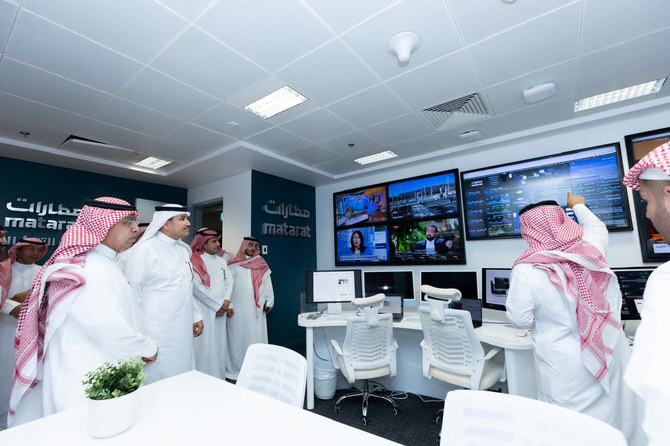
Transport Minister Saleh bin Nasser Al-Jasser, accompanied by civil aviation and airport officials, stressed the effective implementation of plans for the Umrah season during Ramadan 2024 in his inspection visit at the King Abdulaziz International Airport in Jeddah. (Supplied)
2 / 3
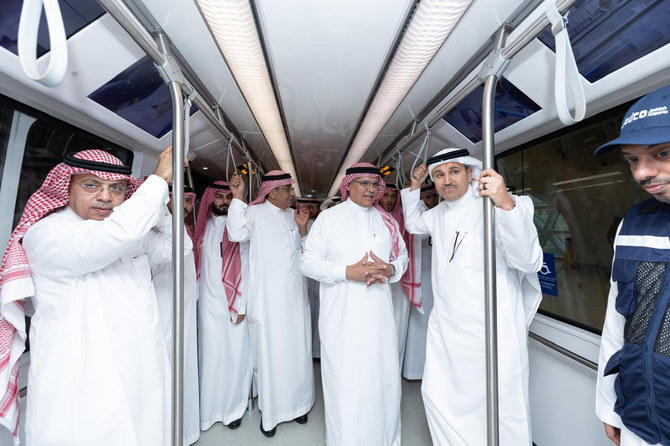
Transport Minister Saleh bin Nasser Al-Jasser, accompanied by civil aviation and airport officials, stressed the effective implementation of plans for the Umrah season during Ramadan 2024 in his inspection visit at the King Abdulaziz International Airport in Jeddah. (Supplied)
3 / 3
Transport Minister Saleh bin Nasser Al-Jasser, accompanied by civil aviation and airport officials, stressed the effective implementation of plans for the Umrah season during Ramadan 2024 in his inspection visit at the King Abdulaziz International Airport in Jeddah. (Supplied)
Short Url
Updated 21 March 2024
Follow

Ramadan operations running smoothly at Jeddah airport: Transport minister

  • Minister, officials inspect King Abdulaziz International Airport
  • Over 5.4m passengers arrived, departed from Feb. 11 to March 20

JEDDAH: Saudi Arabia’s Transport Minister Saleh bin Nasser Al-Jasser on Wednesday inspected Jeddah’s King Abdulaziz International Airport to ensure operations were running smoothly for Ramadan.

Al-Jasser, who is also chairman of the General Authority of Civil Aviation, said the aim is “to provide top-notch services that would enhance guests’ comfort and convenience.”

More than 27 government and security bodies are involved in operations at the airport, he was quoted as saying by the Saudi Press Agency.

From the beginning of the month of Sha’ban (Feb. 11) until Ramadan 10 (March 20), KAIA recorded the arrival and departure of over 5.4 million passengers on 30,572 flights. The airport’s busiest day was on Sha’ban 21 last year (March 13, 2023), involving 157,800 passengers.

Al-Jasser was accompanied by several officials including GACA President Abdulaziz Al-Duailej; CEO Mohammed bin Abdullah Al-Mughlooth of MATARAT Holding, which oversees the development of Saudi Arabia’s airports; Chairman Raed Al-Mudaiheem of the Jeddah Airports company’s board of directors; and Jeddah Airports CEO Mazen Johar.

He toured Terminal 1, the Northern Terminal and the Hajj Terminal Complex.

The inspection began with an overview of the baggage-handling area, followed by a visit to the air-conditioned lounges, which can accommodate 6,000 passengers per hour.

Al-Jasser then proceeded to the Northern Terminal to review the sorting area, which spans 1,430 square meters, and which has a waiting area for 522 passengers.

At Terminal 1, the minister inspected the 24,000-square-meter sorting area, the waiting area for 1,800 passengers per hour, and parking facilities for 83 buses. He also visited the Operations and Control Monitoring Center, the automated passenger transport facility, and various lounges.


Saudi Arabia launches initiative to reroute Gulf cargo to Red Sea ports

Updated 13 March 2026
Follow

Saudi Arabia launches initiative to reroute Gulf cargo to Red Sea ports

  • The initiative comes as shipping through the Strait of Hormuz has been severely disrupted by the widening conflict in the region
  • Since the US and Israel struck Iran last month, Tehran has moved to restrict passage through the waterway


RIYADH: Saudi Arabia has launched an initiative to redirect shipping from ports in the Arabian Gulf to its Red Sea ports amid the ongoing US-Israel-Iran war.

Transport Minister Saleh Al-Jasser, who also chairs the Saudi Ports Authority (Mawani), launched the Logistics Corridors Initiative alongside Zakat, Tax and Customs Authority Governor Suhail Abanmi, Mawani President Suliman Al-Mazroua, and other officials, the Saudi Press Agency reported.

The initiative will establish dedicated operational corridors to receive containers and cargo redirected from ports in the Kingdom's Eastern Region and other Gulf Cooperation Council states to Jeddah Islamic Port and other Red Sea coast ports.

Al-Jasser said the Kingdom was committed to ensuring supply-chain stability and the smooth flow of goods through global trade routes. Jeddah Islamic Port and other west coast ports, he added, were already playing a key role in accommodating shipments redirected from the east, while also linking Gulf cargo to regional and international markets.

The initiative comes as shipping through the Strait of Hormuz has been severely disrupted by the widening conflict in the region. Iran has long threatened to close the strait — the world's most critical oil and gas chokepoint, through which roughly a fifth of global oil supplies pass — in the event of a war.

Since the US and Israel struck Iran last month, Tehran has moved to restrict passage through the waterway, sending freight rates soaring and forcing shipping companies to seek alternative routes.

Saudi Arabia's Red Sea ports offer a viable bypass, connecting Gulf cargo to global markets without passing through the strait.