Saudi Cabinet hails economic progress after non-oil activity boost

1 / 4
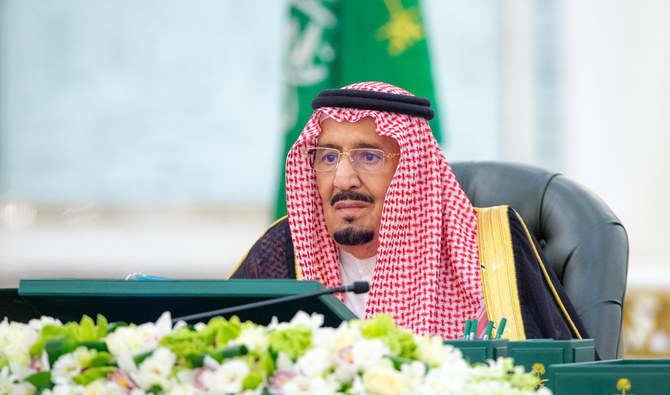
The Cabinet session was chaired by King Salman in Jeddah on Tuesday. (SPA)
2 / 4
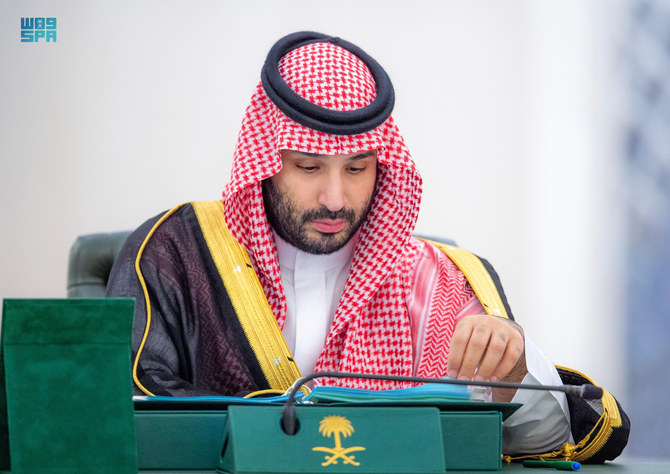
The Cabinet session was chaired by King Salman in Jeddah on Tuesday. (SPA)
3 / 4
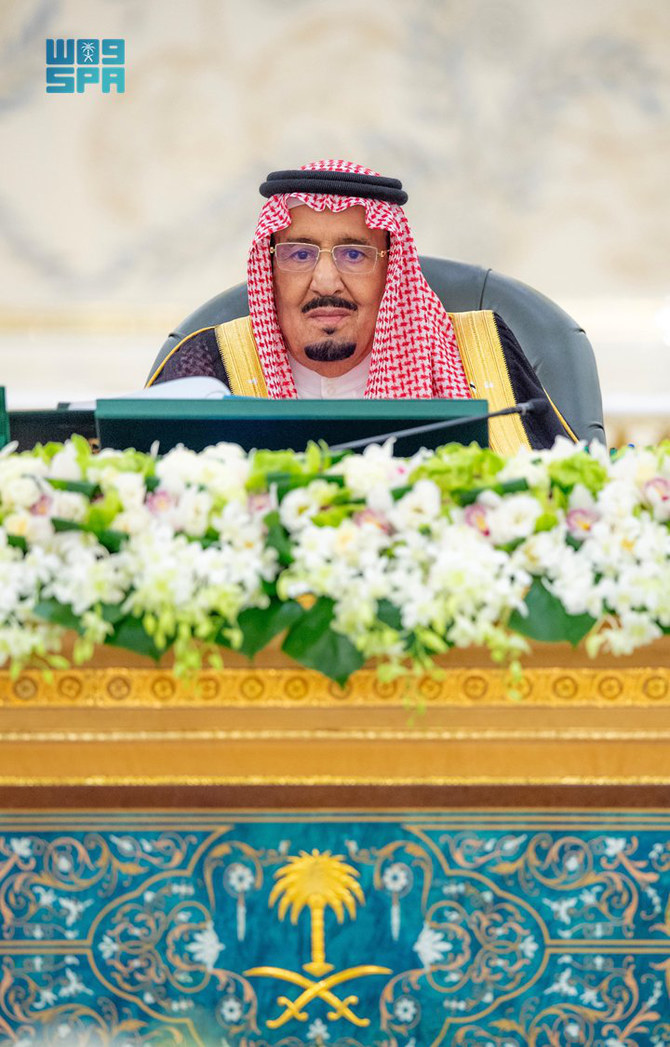
The Cabinet session was chaired by King Salman in Jeddah on Tuesday. (SPA)
4 / 4
The Cabinet session was chaired by King Salman in Jeddah on Tuesday. (SPA)
Short Url
Updated 20 March 2024
Follow

Saudi Cabinet hails economic progress after non-oil activity boost

RIYADH: Saudi ministers hailed the country’s economic progress after last week’s announcement that non-oil activity made up half of the Kingdom’s gross domestic product in 2023.

Meeting for a cabinet session on Tuesday chaired by King Salman in Jeddah, the government said the landmark achievement was in line with the Kingdom’s Vision 2030 objectives to achieve a prosperous economy by diversifying growth sources.

The Ministry of Economy and Planning said on Thursday that non-oil activity contributed to 50 percent to the GDP, the highest level ever.

There was an unprecedented performance in non-governmental investments over the past two years, with a growth rate of 57 percent, bringing their value in 2023 to a historically high level of $255 billion.

Arts and entertainment led the growth in non-oil activity, more than doubling in value in 2021-2022. Other activities such as accommodation, food, transport and storage services recorded strong growth rates of 77 percent and 29 percent respectively.

Separately, the Cabinet commended the UN General Assembly adoption of a resolution on measures to combat Islamophobia, and the appointment of a UN special envoy concerned with combating it.

The ministers reiterated the Kingdom’s support for international efforts aimed at combating extremist ideas, and its keenness to encourage and adopt the values of peace and dialogue, and to promote a culture of coexistence among peoples.

Ministers also welcomed the outcomes of the international conference organized by the Muslim World League in Makkah under the title “Building Bridges Between Islamic Sects.”

On local affairs, ministers praised the great participation in the fourth Saudi annual national campaign for charitable activities that was launched last Friday, which raised over a billion riyals on it’s opening night. King Salman and Crown Prince Mohammed bin Salman contributed SR40 and SR30 respectively.

Ministers signed off on a new regional office for the International Monetary Fund to be established in Riyadh.

The ministers also approved designating the 27th of March each year as an official day for the Saudi Green Initiative.


WHO to accredit Asir region for governance and public services

The WHO will accredit several areas in Asir region for the quality of their governance and integrated services. (SPA)
Updated 16 sec ago
Follow

WHO to accredit Asir region for governance and public services

  • Praise for community participation, education, health
  • Asir can be used as model for other areas, says WHO

RIYADH: The World Health Organization will accredit several areas in Asir region for the quality of their governance and integrated services, the Saudi Press Agency reported on Wednesday.

During a recent visit, the WHO delegation rated the cities of Abha, Tareeb, and Muhayil Asir, as well as King Khalid University.

The delegation praised the level of institutional performance of the Healthy Cities and Quality of Life Program Office at Asir principality, describing it as an advanced national model in governance and cross-sectoral integration.

The assessment was part of a field visit by the delegation from Dec. 14 to 22. The WHO officials were accompanied by a team from the Ministry of Health.

The delegation recorded positive impressions regarding the level of community participation, the integration of health with quality of life, and pride in local identity.

The delegation recommended continued support of Asir’s Healthy Cities and Quality of Life Program Office as a national center of expertise, completion of the accreditation procedures for the cities, and building on developmental observations.

It also called for Asir region to be used as a model for other areas.

The visit included a review of health, education and community initiatives and tours of government entities and municipalities.