


Madinah governor inaugurates Al-Safiyyah Museum and Park

1 / 4
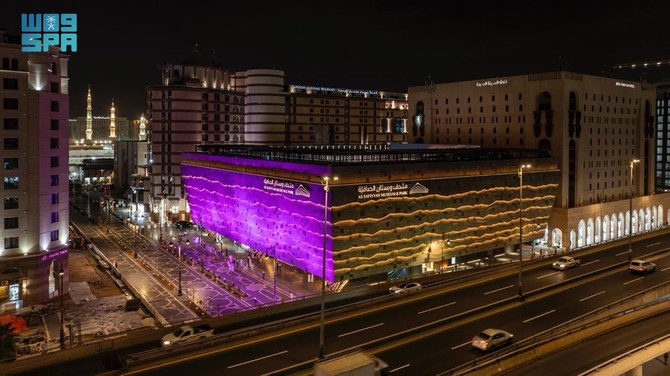
The event was attended by Prince Saud bin Khalid Al-Faisal, deputy governor of Madinah, and Tawfiq Al-Rabiah, minister of Hajj and Umrah. (SPA)
2 / 4
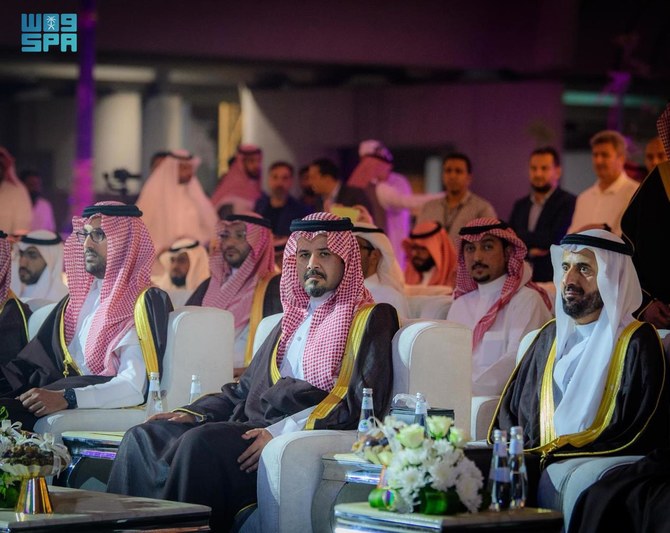
The event was attended by Prince Saud bin Khalid Al-Faisal, deputy governor of Madinah, and Tawfiq Al-Rabiah, minister of Hajj and Umrah. (SPA)
3 / 4
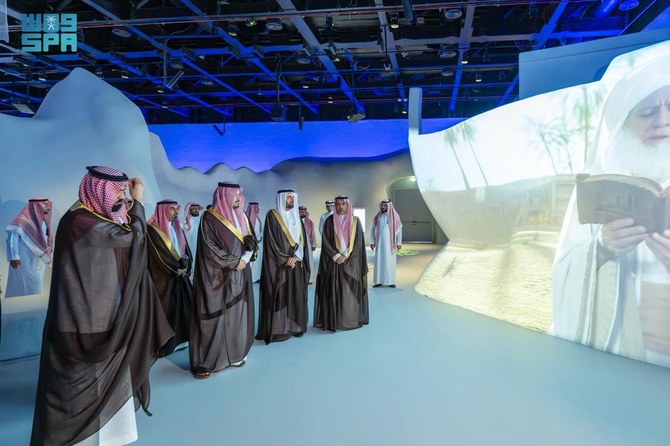
The event was attended by Prince Saud bin Khalid Al-Faisal, deputy governor of Madinah, and Tawfiq Al-Rabiah, minister of Hajj and Umrah. (SPA)
4 / 4
Short Url
Updated 19 March 2024
Follow

Madinah governor inaugurates Al-Safiyyah Museum and Park

RIYADH: Prince Salman bin Sultan, Madinah governor and chairman of the Madinah Region Development Authority (MDA), inaugurated the Al-Safiyyah Museum & Park in the presence of Prince Saud bin Khalid Al-Faisal, deputy governor of Madinah and deputy chairman of the authority.

The project was built on an area exceeding 4,400 square meters in the southern central area, to enrich and deepen the cultural experience of the visitors at the Prophet’s Mosque.

During the opening ceremony, Prince Salman bin Sultan was briefed on the Al-Safiyyah Museum & Park’s facilities. He viewed the cultural garden and waterways and listened to an explanation about the exhibition and museum area, in addition to the areas of shops, restaurants, cafes and other recreational services.

He inspected the Story of Creation Museum, which offers an integrated presentation on the story of creation from the beginning of the universe using audiovisual technologies, through the stories of the prophets and messengers. The museum relies on the narrative cognition that visitors experience inside the museum. Prince bin Sultan also saw a range of museum exhibits and rare collections.

The ceremony began with the playing of the royal anthem and the reciting of verses from the Holy Qur’an, then the attendees watched an introductory film about the Al-Safiyyah Museum & Park’s project. Following that, Fahad Albulihshi, CEO of the authority, delivered the opening speech, in which he emphasized that the project is one of the distinctive development projects that will contribute to enriching and deepening the cultural and knowledge experience of visitors to the Prophet's Mosque. It will improve the residents of Madinah’s quality of life, as part of the goals of Saudi Vision 2030, thus showing the civilized image that the Saudi government reflects in serving the two holy mosques and their visitors.

Albulihshi indicated that the Al-Safiyyah Museum & Park represents a new source of civilization and knowledge and a distinctive mark in the history of Madinah. The land was developed in partnership with the private sector, to make it an attractive tourist destination enhanced with cultural, recreational and commercial elements for the visitors to the Prophet's Mosque, in an environment inspired by Madinah’s urban identity.

At the end of the opening ceremony, Madinah gov. received a commemorative gift on this occasion; a Qur'anic panel written in Thuluth script dating to more than 130 years.

The Al-Safiyyah Museum & Park comes within the framework of the efforts of the Madinah Region Development Authority, in complementarity with Samaya Investment and its partners in the private sector, to enrich and deepen the cultural and religious experience of the visitors to the Prophet's Mosque. This comes as part of the projects to rehabilitate and activate Islamic history sites and destinations, to provide exceptional services and enhance their historical dimension and cultural value, in accordance with the highest standards, thus reflecting the aspirations of the leadership within the objectives of the ambitious Saudi vision.


Saudi authority sets new standards for beach operators on the Red Sea

Updated 19 January 2026
Follow

Saudi authority sets new standards for beach operators on the Red Sea

JEDDAH: The Saudi Red Sea Authority has announced a new regulatory framework for beach operations, redefining beaches as managed operating sites rather than informal recreational spaces, the Saudi Press Agency reported.

The framework introduces standardized requirements for beach operators, focusing on licensing, safety, risk management and service quality across coastal tourism activities.

Under the regulations, beach operations will be permitted only through licensed entities, with license issued for two-year periods. 

Renewal applications must be submitted at least 30 days before expiration. The authority said the system is intended to bring consistency to beach management and provide operators with clearer operational timelines.

The framework applies along more than 1,800 km of Red Sea coastline and establishes a unified national approach to regulating beach activities. The authority said no beach operation will be allowed without an official license. 

The initiative supports the authority’s broader objectives to develop a coastal tourism sector that contributes SR85 billion ($22.66 billion) to GDP by 2030, creates approximately 210,000 jobs, and attracts 19 million visitors, the SPA noted. 

To ensure a smooth transition, the regulations will come into effect one month after their announcement, while existing operators will be granted a one-year grace period to comply. 

Safety forms a central pillar of the new framework. Licensing conditions include environmental permits, insurance coverage, approved safety plans, defined activity zones, and assessments of beach capacity.

Operators will also be required to provide licensed lifeguards, safety equipment, and systems for incident reporting and analysis.

The requirements extend to infrastructure and operation standards, including compliance with the Saudi Building Code to ensure accessibility for people with disabilities and structural safety.

Operators are also encouraged to align with international benchmarks such as Blue Flag standards and the ISO 13009:2024 for beach management, the SPA added.

The authority said this framework is designed to reduce operational risks, improve oversight and support the sustainable development of coastal tourism.

Unified requirements reduce operational risks, minimize inconsistencies, and improve the sector’s ability to attract financing and scale sustainably.