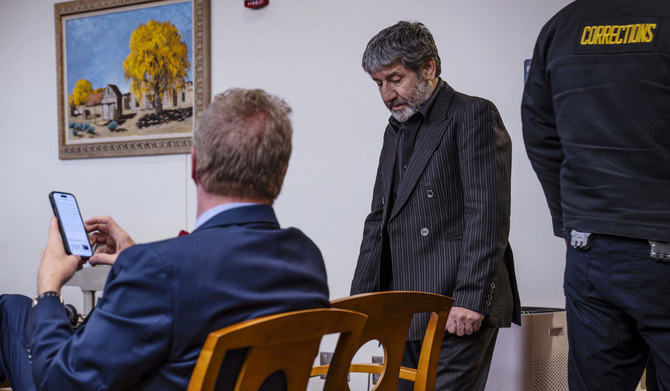
ALBUQUERQUE, N.M.: An Afghan refugee was found guilty Monday of first-degree murder in one of three fatal shootings that shook Albuquerque’s Muslim community during the summer of 2022.
Muhammad Syed faces life in prison for killing 41-year-old Aftab Hussein on July 26, 2022. He also will stand trial in the coming months in the other two slayings.
During the trial, prosecutors presented cellphone data that showed his phone was in the area when the shooting occurred, and a ballistics expert testified that casings and projectiles recovered from the scene had been fired from a rifle that was found hidden under Syed’s bed.
Defense attorneys argued that prosecutors had no evidence that Syed was the one who pulled the trigger. They said others who lived in his home could also access his phone, the vehicle and the rifle.
The defense called no witnesses; Syed tearfully declined to testify in his own defense.
Prosecutors on Monday said they were pleased that jurors agreed it was a deliberate killing. However, they acknowledged that no testimony during the weeklong trial nor any court filings addressed a possible motive or detailed any interactions that Syed might have had with Hussein before the killing.
“We were not able to uncover anything that we would indicate would be a motive that would explain this,” Deputy District Attorney David Waymire said outside the courthouse. “As best we can tell, this could be a case of a serial killer where there’s a motive known only to them and not something that we can really understand.”
Defense attorneys said the conviction would be appealed once the other two trials are complete. They too said a motive has yet to be uncovered.
The three ambush-style killings happened over the course of several days, leaving authorities scrambling to determine if race or religion might have been behind the crimes. It was not long before the investigation shifted away from possible hate crimes to what prosecutors described to jurors as the “willful and very deliberate” actions of another member of the Muslim community.
Syed, who speaks Pashto and required the help of translators throughout the trial, settled in the US with his family several years before the killings. Prosecutors described him during previous court hearings as having a violent history. His public defenders argued that previous allegations of domestic violence never resulted in convictions.
Syed also is accused of killing Muhammad Afzaal Hussain, a 27-year-old urban planner who was gunned down Aug. 1, 2022, while taking his evening walk, and Naeem Hussain, who was shot four days later as he sat in his vehicle outside a refugee resettlement agency on the city’s south side.
Muhammad Afzaal Hussain’s older brother, Muhammad Imtiaz Hussain, was there Monday to hear the verdict. He has been following the cases closely and like others in the community is troubled that there’s still no answer as to why his brother and the others were targeted.
A student leader at the University of New Mexico who was active in politics and later worked for the city of Española, Muhammad Afzaal Hussain had a bright future, his brother said. They had come to the United States from Pakistan for educational and economic opportunities.
He said the life they had planned was just starting to come to fruition when his brother was killed.
“It was a big loss,” he said.
Police also identified Syed as the suspect in the killing of another Muslim man in 2021, but no charges have been filed in that case.
Authorities issued a public plea for help following the third killing in the summer of 2022. They shared photographs of a vehicle believed to be involved in the crimes, resulting in tips that led to Syed.
Syed denied involvement in the killings after being stopped more than 100 miles (160 kilometers) from Albuquerque. He told authorities he was on his way to Texas to find a new home for his family, saying he was concerned about the killings in Albuquerque.
The judge prohibited prosecutors from directly introducing as evidence statements Syed made to a detective while being questioned. Defense attorneys argued that Syed’s rights were violated because the detective, through an interpreter, did not adequately inform Syed of his right to a court-appointed attorney.
During the trial, prosecutors gave jurors a rundown of what happened the night of the first killing: Hussein parked at his apartment complex at around 10 p.m. and had just stepped out of his vehicle with his keys still in his hand when gunfire erupted.
“He stood no chance,” prosecutor Jordan Machin said during closing arguments. Machin said Syed had been lying in wait and that he continued to shoot even as Hussein lay on the ground.
Officers found Hussein with multiple wounds that stretched from his neck down to his feet. Investigators testified that some of the high-caliber rounds went through his body and pierced the car.
Prosecutors showed photos of Hussein’s bullet-riddled car and said the victim was killed nearly instantly.


![]()

Afghan refugee convicted in murder case that shocked Albuquerque Muslim community
Short Url
https://arab.news/8u8r9
Afghan refugee convicted in murder case that shocked Albuquerque Muslim community
- Muhammad Syed faces life in prison for killing Aftab Hussein in 2022
- Syed also will stand trial in the coming months for two other slayings
Latest updates


© 2026 SAUDI RESEARCH & PUBLISHING COMPANY, All Rights Reserved And subject to Terms of Use Agreement.