

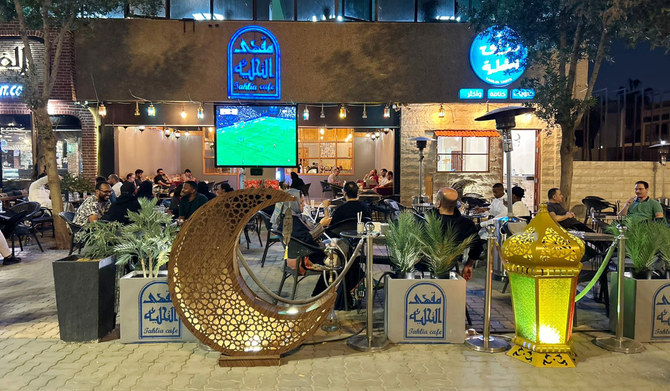

RIYADH: For many people in Saudi Arabia, the nights of Ramadan are a vibrant combination of social activity and spirituality.
Roads, neighborhoods and cities come alive, joining together to celebrate the holy month with shared devotion, feelings of brotherhood and cultural richness.
The nights are filled with religious activities, beginning when the Muʼathen announces it is time to break the fast through the call to Maghrib prayer.
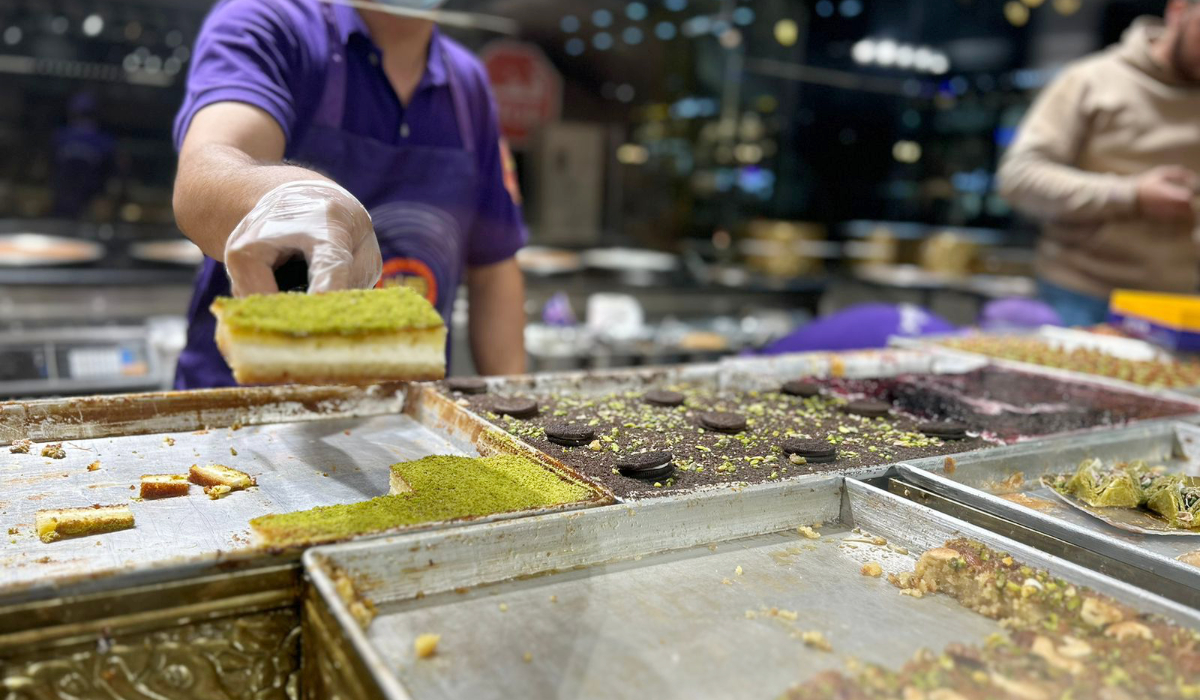
The aroma of delicious dishes fills the air, ranging from dates and samosas to rich stews and sweet desserts. (Photo by Haifa Alshammari)
Families and communities come together to enjoy iftar. The aroma of delicious dishes fills the air — dates, samosas, rich stews and sweet desserts mingle. Sharing a meal during iftar not only satisfies the body but also nourishes the soul, providing a profound sense of communal togetherness.
In some cities, it is the norm to open doors to neighbors, friends and even strangers, offering a warm welcome and abundant hospitality. Hosting an iftar feast at least once during Ramadan is a common part of the culture.
Soon after Isha comes the call to Taraweeh prayer. People head to their nearest mosque, gathering in large numbers, creating a profound sense of unity and reverence; such times strengthen the connection between individuals in an atmosphere of calmness and peace.
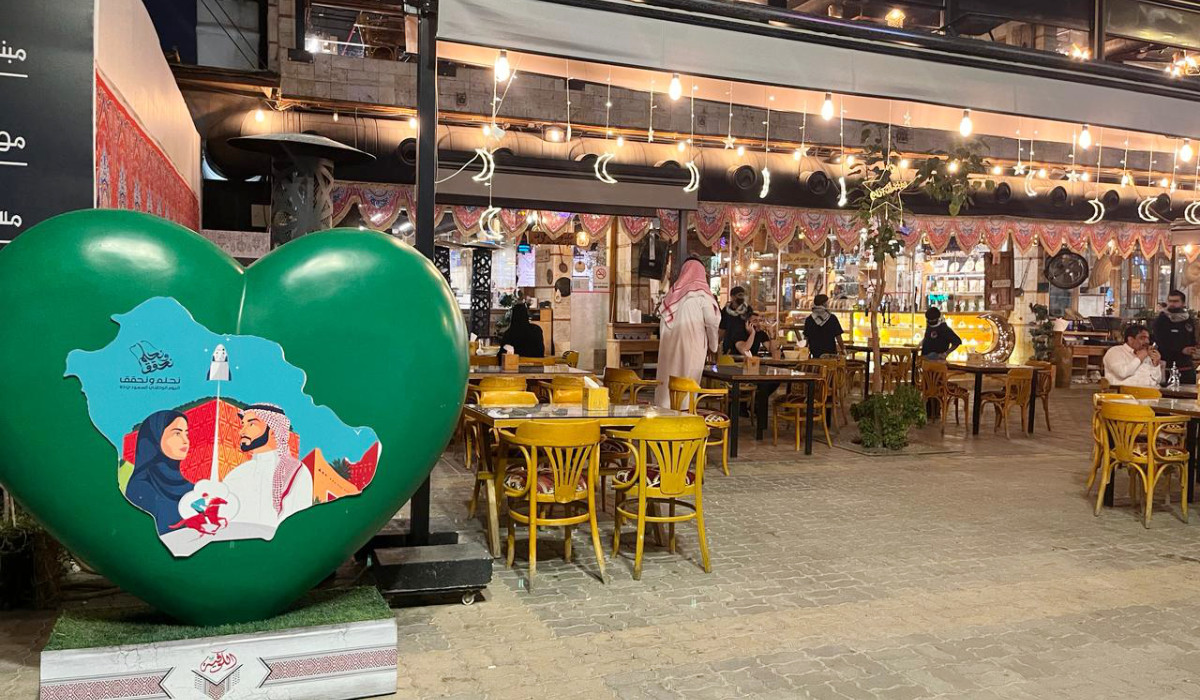
Local coffee shops are decorated with twinkle lights and Crescent. (Photo by Haifa Alshammari)
“Some families gather first for coffee, but the tradition in my family is that we serve iftar first. My uncles and my aunts, we all gather every evening in Ramadan for iftar,” said Sara Ahmed, who lives in the Kingdom’s southern region.
A special feature at this time is the Ramadan tent. These are set up in various locations, including public areas, shopping malls and hotels, and are a space for people to socialize through cultural activities such as theatrical performances, storytelling sessions and art exhibitions.
Noor Yousef, a visitor to the Kingdom from Egypt, said she was finding the atmosphere very similar to that of her homeland.
“You don't want to sleep so you don't waste any minute of the nights of Ramadan, you stay up late,” she said. “The vibes, the streets, even the people change during Ramadan.”
Bustling shopping areas are another feature of nights during Ramadan. Traditional markets, or souqs, serve as social hubs and offer goods ranging from clothing, spices, and local coffee to handicrafts and traditional delicacies. People hang out with friends and loved ones to enjoy the lively yet relaxing ambiance.
Some people enjoy volunteering with local organizations, distributing meals to those in need and supporting charities. Such initiatives reflect the spirit of compassion and generosity that characterizes Ramadan in Saudi Arabia, promoting a strong sense of community and togetherness.
The nights of Ramadan end with sahoor, a final meal to prepare for the day ahead. Similar to iftar, friends and family often gather in homes or at local eateries to share a variety of dishes and enjoy entertaining conversations and games.
“We gather with friends at home, we do a potluck, and we enjoy an iftar together,” said Judy Sabbagh, a mother of three who lives in Riyadh.
These nights are a window into the country's social lifestyle, highlighting spirituality, community and cultural richness. From the serenity of Taraweeh prayers to the warmth of sahoor gatherings, people embrace the meaning of this holy month with open hearts and doors.
By sharing meals and cultural festivities, and engaging in acts of charity, the Kingdom’s communities demonstrate genuine connections and joy. They are a testament to the enduring values of faith, togetherness and compassion.


