Saudi Food and Drug Authority explores investment prospects with US healthcare firms 

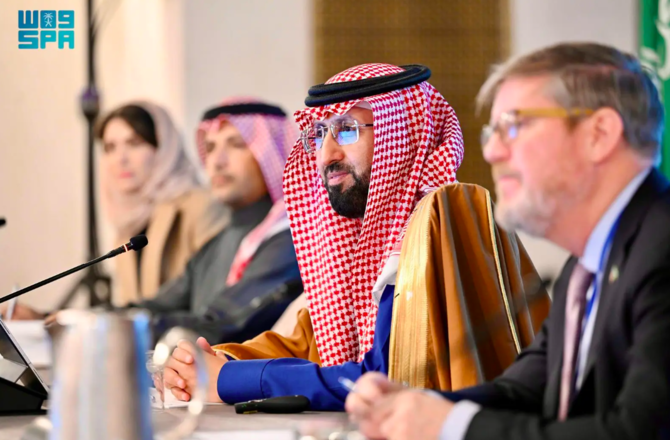
CEO of the Saudi Food and Drug Authority Hisham bin Saad Aljadhey met with several officials from US companies. SPA
Short Url
Updated 14 March 2024
Follow

Saudi Food and Drug Authority explores investment prospects with US healthcare firms 

RIYADH: Saudi Arabia’s food, drug, medical devices, and equipment sectors are on track to prosper amid meetings with US healthcare firms to explore investment opportunities between the two countries.   

The Saudi Press Agency reported that the CEO of the Saudi Food and Drug Authority, Hisham bin Saad Aljadhey, met with several officials from American companies on the sidelines of the 25th session of the International Medical Device Regulators Forum, being held in Washington DC, from March 11 to 15.   

This falls in line with SFDA’s endeavor to enhance funding opportunities as well as engage in the know-how dynamics of the industry and the challenges facing investors and the business community.

This also aligns well with the organization’s mission to safeguard public health by guaranteeing the protection, quality, and efficacy, as well as the accessibility, of both human and veterinary medicines and vital products.

They also tackled the organization’s support of the private sector in light of the promising development prospects available in the Kingdom, primarily those related to the localization of the drug and pharmaceutical industries as well as food safety and genetics technologies sectors.

In February, Saudi healthcare saw an advancement in medical interventions after US-based Johnson & Johnson’s technology firm, J&J MedTech KSA, launched its direct operations in the Kingdom.    

The company aims to bring customers closer to a more streamlined experience as it provides high-tech medical and surgical equipment, according to a statement released at the time.    

The move aligns with the firm’s commitment to enhancing medical interventions and improving clinical outcomes and reflects the company’s ongoing investment in the future of Saudi healthcare, it added.    

Drug production in the Kingdom is also set for enhancement following the signing of four agreements in January to foster partnerships between Saudi Arabia’s public and private sectors.     

The Local Content and Government Procurement Authority signed the deals for the localization of industry and knowledge transfer, SPA reported.   

The agreements were “based on the principle of cooperation and integration to enhance health and pharmaceutical security and development” in Saudi Arabia, the authority said.


Saudi Arabia heading toward growth exceeding global average: McKinsey partner

Updated 5 sec ago
Follow

Saudi Arabia heading toward growth exceeding global average: McKinsey partner

RIYADH: Saudi Arabia is expected to achieve growth that exceeds the global average, thanks to Vision 2030 projects, particularly in the industrial sector, which is being fueled by the metals and mining sector, according to Jeffrey Lorsch, partner at McKinsey & Co., in comments to Al-Eqtisadiah. 

He cited the growth of the mining sector as a driver, as it is linked to strategic projects, including automotive, aerospace, space, and defense industries.

A large part of its expansion depends on these projects, according to Lorsch, who stated that the available opportunities will support Saudi Arabia in achieving an annual growth rate that exceeds the global average.

However, he also warned of the negative impact of geopolitical tensions around the world on the metals sector.

“The government of Saudi Arabia’s outlook for the mining sector is quite robust,” Lorsch said. “We’ve seen a significant uptick in the sector in the last 10 years. The output of the sector has doubled or tripled since 2015, which reflects the investor confidence that we see.”

Seeking multilateral solutions

Global geopolitical tensions form the general framework for this year’s Future Minerals Forum, according to Lorsch. They are also a key factor shaping the methodology of the Future Minerals Forum Barometer, which was launched to monitor global transformations in the mining sector.

Lorsch emphasized that the large attendance at the conference clearly reflects the growing importance of critical minerals in the context of geopolitical tensions.

One of the forum’s most prominent efforts is to find multilateral solutions to develop the mining sector, both within Saudi Arabia and globally.

The FMF Barometer will analyze the impact of these tensions on mineral value chains, including the development of local and regional supply chains, after a historical reliance on global supply chains, according to Lorsch.

The McKinsey partner also emphasized the importance of involving the “super region” to ensure that the development of mineral resources in Global South countries genuinely contributes to their growth and leads to industrial development.

The barometer does not cover Saudi Arabia alone but includes the global market, where there is a massive need to significantly increase mineral supplies.

Strong future prospects for the mining sector in Saudi Arabia

Regarding the Kingdom, Lorsch confirmed that the future prospects for the mining sector are very strong, noting that the past 10 years have seen a remarkable increase in the sector’s performance.

He expected similar growth in the gold sector. “Looking forward, we’re going to see similar growth in the gold sector,” Lorsch added, pointing to Maaden’s announcement of additional gold resources that will lead to increased production capacity, alongside significant growth opportunities in phosphate, aluminum, and steel.

The McKinsey partner described the overall outlook for the sector as “very optimistic.”

Globally, Lorsch explained that McKinsey adopts a balanced approach in its growth forecasts.

“From a global economic growth perspective, I think we’re taking a fairly balanced approach. We see growth much more centered in the 2 to 3 percent, we see the Kingdom having more of a robust outlook,” he said.