Jeddah’s date markets buzzing as Ramadan nears

1 / 3
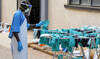
The most in-demand types of dates are Qassim’s Sukkari dates and Madinah’s Ruthana dates (Supplied)
2 / 3
The most in-demand types of dates are Qassim’s Sukkari dates and Madinah’s Ruthana dates (Supplied)
3 / 3
The most in-demand types of dates are Qassim’s Sukkari dates and Madinah’s Ruthana dates (Supplied)
Short Url
Updated 10 March 2024
Follow

Jeddah’s date markets buzzing as Ramadan nears

  • Dates hold significant importance on the iftar table for fasting individuals

Jeddah: Date markets in the city of Jeddah and its centers have witnessed an active supply movement and demand from citizens and residents who seek to purchase the finest varieties of dates from markets and shops ahead of Ramadan.

Date sellers ensure the availability of large quantities of various types sourced from cities and governorates that export dates.

As dates hold significant importance on the iftar table for fasting individuals, these commercial stores compete to offer a diverse range of dates including Khalas, Sukkari, Ruthana, Barhi, Al-Saqi and Al-Safari.

According to the Saudi Press Agency report, several sellers have explained that the selling prices per kg range from SR25 for Al-Saqi dates, SR20 for Safawi dates, and SR70 for Ajwa dates.

Meanwhile, a box of fresh dates is priced between SR30 to SR45, Al-Ahsa’s Khalas for SR60, and Al-Qassim’s Khalas for SR120.

Many shoppers said that the most in-demand types of dates are Qassim’s Sukkari dates and Madinah’s Ruthana dates. They noted that date prices are on the rise as Ramadan approaches, emphasizing their significance not only as a source of nutritional value but also due to their connection to social values, customs and traditions passed down through generations.

Additionally, the association of the Ramadan table with the presence of dates follows the Prophet’s Sunnah.

The Supreme Court has urged all Muslims in the Kingdom to observe the Ramadan crescent on Sunday and has requested that individuals who spot it, either with the naked eye or through binoculars, inform the nearest court to officially record their testimony or contact the nearest center for assistance in reaching the closest court.


Pioneering electric bus service takes to the road in Makkah

Updated 44 min 21 sec ago
Follow

Pioneering electric bus service takes to the road in Makkah

  • The bus rapid transit project, a system designed to have higher capacity and reliability than conventional bus services, is said to be the first of its kind in the Kingdom
  • The vehicles operate in dedicated bus lanes within a network that includes two main bus stations and 11 stops along the route connecting them

MAKKAH: A pioneering electric bus service took to the road in Makkah this week.

Electromin, the developer and operator of the service in partnership with Umm Al-Qura for Development and Construction, said it is expected to serve more than 125 million passengers over the next 15 years, while cutting carbon dioxide emissions by more than 31,500 tonnes compared with traditional vehicles.

The bus rapid transit project, a system designed to have higher capacity and reliability than conventional bus services, is said to be one of the first of its kind in the Kingdom. It was inaugurated on Wednesday by Amr Al-Dabbagh, chairperson of Al-Dabbagh Group; Samir Nawar, managing director of Petromin; and Yasser Abu Ateeq, CEO of Umm Al-Qura.

The bus rapid transit project is designed to have higher capacity and reliability than conventional bus services. (Supplied)

Electromin, a subsidiary of Petromin specializing in energy and mobility solutions, said the new service, which forms part of the Masar Destination mixed-use real estate development project in Makkah, is one the first transport networks of its kind in the country, and represents a significant shift toward a cleaner, more efficient urban transport model.

It operates in dedicated bus lanes, connecting key hubs within Masar and providing safe, reliable and environmentally friendly transportation for residents and visitors, the company added. The network includes two main bus stations and 11 stops along the route connecting them. It has been designed to serve more than 5 million visitors and pilgrims annually, and to be easily accessible to all users.

Operators say the service is designed as a foundation for Makkah’s future transportation system, through its integration with the broader Masar project, which includes pedestrian walkways, more than 5,000 parking spaces, metro services and other urban infrastructure.