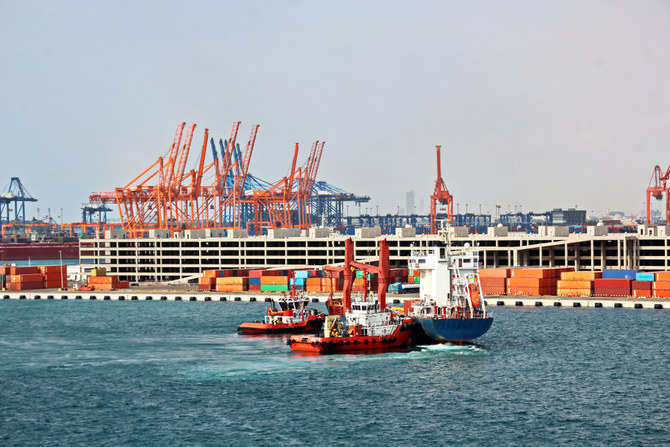

RIYADH: Saudi Arabia’s global logistics services are set to improve following the launch of a new system by the Kingdom’s maritime body, which aims to provide over 250 e-services at its ports.
The Saudi Ports Authority, also known as Mawani, announced the Port Community System on the sidelines of the third edition of LEAP.
The PCS, under Mawani’s unified logistics window “Logisti,” reflects the body’s commitment to leveraging technology to serve the maritime transport system, enhance the operational efficiency of the Saudi ports network, and facilitate procedures to boost the logistics services sector and maritime transport, according to Omar Hariri, president of Mawani.

Mawani president Omar Hariri. (Supplied)
He stated that this qualitative achievement represents a developmental step toward achieving common economic and social targets through the establishment of a unified digital platform.
According to the statement, the undertaking was designed in accordance with international standards, adding that it consolidates administrative transactions between stakeholders in both the public and private sectors under one system.
The authority further stated that the objective of PCS is to automate all operational processes within ports, establish connectivity among pertinent entities to streamline data exchange between the government and private sectors, as well as standardize procedures across Saudi marine terminals, and enhance operational mechanisms between users and service providers within the government division. According to the statement, the undertaking was designed in accordance with international standards, adding that it consolidates administrative transactions between stakeholders in both the public and private sectors under one system.
The authority further stated that the objective of PCS is to automate all operational processes within ports, establish connectivity among pertinent entities to streamline data exchange between the government and private sectors, as well as standardize procedures across Saudi marine terminals, and enhance operational mechanisms between users and service providers within the government division.
The authority recently received the “Best Contributor to Economic Infrastructure Development” award at the International Finance Awards ceremony in Dubai. The award acknowledged Mawani’s efforts in continuously developing port infrastructure and attracting investments.
In 2023, Mawani laid the foundation for upgrading and operating two container terminals at King Abdulaziz Port in Dammam, with an investment value of more than SR7 billion ($1.9 billion). Additionally, strategic projects were inaugurated at Jubail Commercial and Industrial Ports to increase capacity. Mawani has also signed agreements and inaugurated logistics parks and hubs, with investments exceeding SR6 billion. These initiatives will offer investment opportunities in the logistics sector to the private sector, in line with the National Transport and Logistics Strategy.
Mawani has taken significant steps in support of global trade and to solidify the Kingdom’s position as an international logistics hub bridging three continents. These include facilitating export and import procedures, enhancing logistics services, and partnering with major international shipping lines to add 28 new maritime services in 2023. These services link Saudi ports with those in the East and West. Furthermore, Mawani has signed several agreements with international ports and national entities across public and private sectors, aiming to boost the standing of Saudi ports in the maritime transport sector, both regionally and globally.