

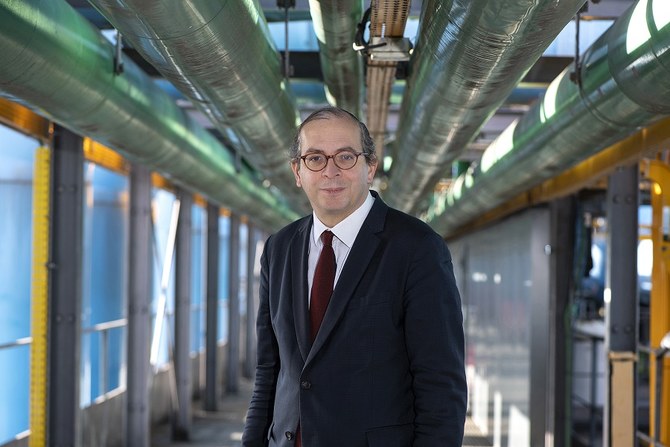

DUBAI: The art world was set alight when Saudi Arabia’s Royal Commission for AlUla and leading French cultural institution the Centre Pompidou signed an agreement to develop a contemporary art museum in the Kingdom in 2023 — and although the opening date is yet to be announced, the president of Centre Pompidou, Laurent Le Bon, spoke to Arab News about the vision for the space.
Le Bon is no stranger to Saudi Arabia and was most recently in the Kingdom to attend the inaugural AlUla Future Culture Summit, held at the end of February. It was an experience that “was important” due to the need for experts to “discuss the challenges facing contemporary museums and their future,” he said.
Speaking on the upcoming contemporary art museum in AlUla, which was designed by award-winning Lebanese architect Lina Ghotmeh and is headed by Candida Pestana, Le Bon said: “The aim of this partnership project is to create a venue with a strong, specific identity, for which the Centre Pompidou will make its expertise available, but at the service of an institution that will operate autonomously — this will not be an outpost of the Centre Pompidou.
“This project is being driven by highly professional teams within the RCU who already have a clear artistic vision of what they want to propose for this site. The Centre Pompidou is supporting this move with its scientific and cultural expertise, particularly in the fields of artistic orientation, collections management and publishing.
“The Centre Pompidou could also provide support for the organization of cultural programming and events, in a spirit of reciprocity and exchange,” he added.
On the museum’s aims, Le Bon said: “The museum’s ambition is to make contemporary art accessible to the AlUla community as well as to the Saudi public, especially young people, while offering programming of international standard. It will showcase Saudi artists, and bring them into dialogue with regional and international artists.”
These plans are being made in the context of deepening Saudi-French cultural ties, which are being forged after years of collaboration on archaeological research in the Kingdom.
“Relations between Saudi Arabia and France have gained momentum in recent years, as the country opens up to the outside world, attracts international visitors and promotes its rich cultural heritage,” Le Bon said, adding: “French cultural expertise had already been involved in archaeological research projects for a long time, but this collaboration has been strengthened with the intergovernmental agreement between the two countries for the development of AlUla signed in 2018.”
On the AlUla Future Culture Summit, Le Bon shared his hopes for increased dialogue in the future.
“I believe that this fruitful dialogue with our Saudi colleagues will enable us to create an original, high-quality cultural offering, particularly for young national audiences, which is the ambition of our partnership,” he said.


