


On Feb. 23, I participated in the inaugural gathering of the Cricket Research Network. This has been initiated by a group of British academics whose research specializations focus on cricket. Their focus is to bring together researchers, writers on cricket, journalists and others with an interest in the game. Their purpose is to provide a forum for disseminating research results to a wider audience than achieved currently on a fragmented basis. It is hoped that a more coordinated approach may lead to a greater voice and input into decision making by the game’s policymakers.
Although there were several papers on issues in other countries, the focus at this stage is on cricket in England and Wales. In that sense, it was fitting that the venue for the conference was Sophia Gardens, Cardiff, the home of the only non-English county cricket club, one fiercely proud of its heritage. This was well exemplified by the displays on view in the Museum where the sessions were held. Proceedings were well-mannered, the only hints of discord arising in relation to two of English and Welsh most emotional topics — The Hundred and structural racism in the game.
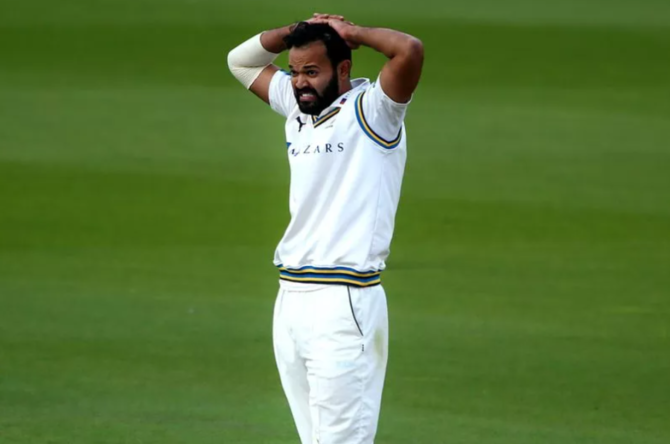
The latter had been given an adrenaline shot three days before the conference took place. This was in the form of a hearing of the Parliamentary Select Committee for Culture, Media and Sport, which was continuing the work it began in 2021. At its first hearing, on Nov. 16, 2021, Azeem Rafiq testified about his experiences at Yorkshire County Cricket Club.
Earlier, in March 2021, the England and Wales Cricket Board announced the setting up of the Independent Commission for Equity in Cricket to look at issues of diversity, inclusion and equity in cricket, at all levels and in all roles. Terms of reference were established in July 2021, followed by an online call for evidence in November 2021 that generated about 4,200 responses. A call for written evidence in March 2022 resulted in 150 responses. The findings, based on the evidence and underpinning research, were published in June 2023.
No punches were pulled by the commission, which concluded that “structural and institutional racism” exists within the game, women are treated as “subordinate” to men at all levels of the sport, Black cricket has been failed, and there is a prevalence of “elitism and class-based discrimination.” It was left to the ECB, under new leadership, to formulate how it would respond and draw up measures to address the ICEC’s recommendations.
A major part of the select committee hearing last week, also under new leadership, was to explore how much progress has been made since June 2023. In the first part of the hearing, three ICEC commissioners reported that the ECB had accepted all of their findings, most of their recommendations, along with displaying a commitment to tackle the issues. However, several press headlines focussed on the disappointment that the ICEC chair expressed about Lord Botham’s disparaging response to the report, given that he chairs a county cricket club.
In the second part of the hearing, the ECB’s chair revealed that he had spoken privately to Lord Botham to say that he did not agree with his views. It may safely be assumed that they would not be welcomed by the ECB’s leadership. They are faced with a herculean task to implement the ICEC’s recommendations. Failure to do so will pose questions about the board’s fitness for purpose and caliber of personnel. Finance is also an issue. In the last cycle up to 2024, sale of media rights accounted for 75 percent of the ECB’s income, about $260 million. In his testimony to the select committee, ECB’s chair said that in the new cycle to 2028, media rights have been sold that equate to around 90 percent of income.
This is a highly vulnerable, seemingly unavoidable, position. The need to attract additional funding into the game, partly in order to finance the ICEC’s recommendations, is encapsulated in the conundrum of The Hundred. It is now highly probable that private investment will be allowed into the competition using a model that is still to be finalized. Into this equation steps the returning Chair of YCCC, Colin Graves. He accepted an invitation to appear in front of the select committee for the third part of its hearing, alongside YCCC’s retiring chair. Cricket’s ability to polarize views seems to know no bounds, and Graves is a potent example. Even the committee chair remarked that he is “a gentleman who divides opinions.”
This potential was aptly demonstrated in response to a question asking why he had not picked up the phone to apologize to Rafiq. Graves’ response was that he “did not feel that was appropriate at the time.” Graves was executive chair of YCCC between 2012 and 2015, before becoming ECB chair between 2015 and 2020. It has always been difficult to understand why, during those years, he claims to have been unaware that racism might exist in cricket. He says that he “read about the complaints in the papers, just like everyone else.”
This has been and still is a sordid affair, which is not yet over. My sense, from listening and taking to people in the game, is that English and Welsh cricket is tired of the matter. They feel that the issue is being addressed, so leave us alone. Rafiq is branded as a controversial character. He is now exiled from the UK. Graves has returned to be in charge of YCCC. Where, one might ask, is the equity in this? Money, power and control appear to rule the roost.
In late April a book is due to be published under Rafiq’s name, chronicling his unsavory journey. It is likely to have lessons for others. One such lesson is that someone who has the bravery to stand up for their cause may, not for the first time, be downed by those with vested interest. It is for this reason, alone, that racism in sport is a global matter.


