



LONDON: When exploring East London, a vibrant display of creativity and dissent is evident.
Amid the backdrop of coffee shops spinning vinyl records and speakeasies tucked away in butcher shops, the streets have become a canvas for an array of art voicing solidarity with the Palestinian people.
The latest addition has been the “Heroes of Palestine” project, a collection of nine graffiti murals celebrating the resilience of frontline workers in Gaza.
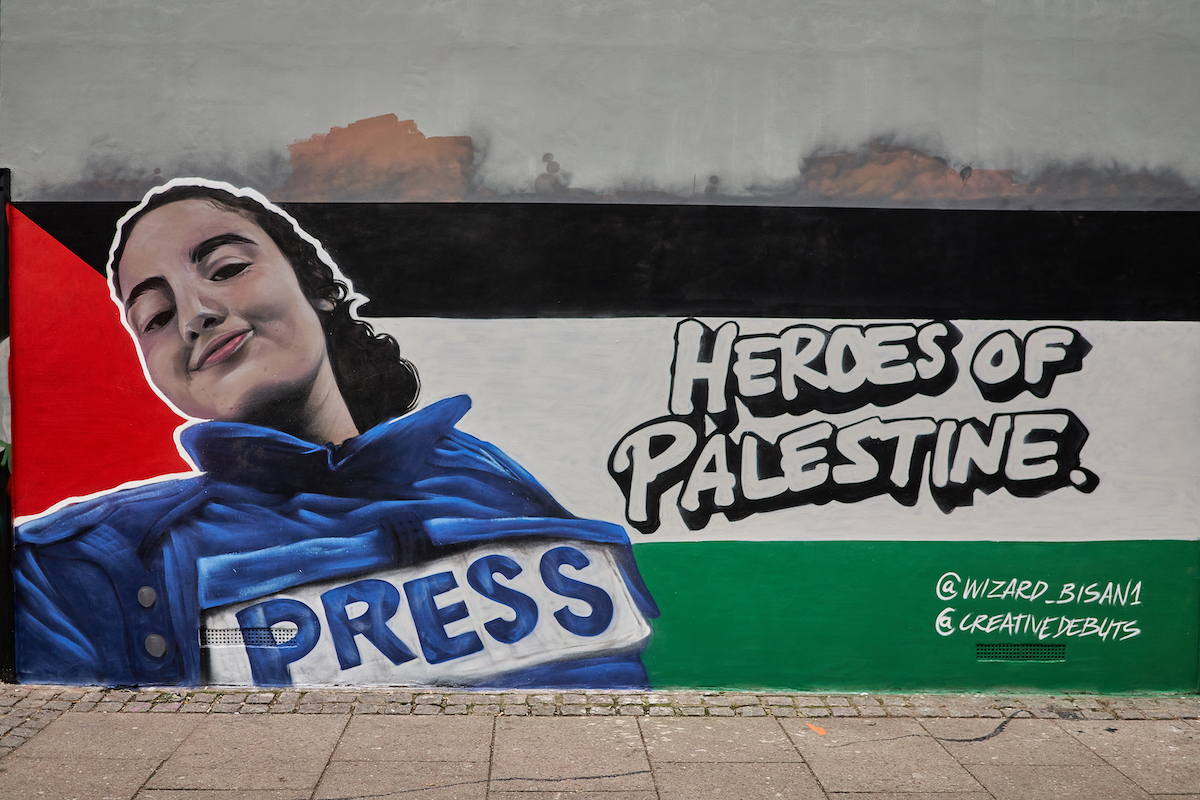
A mural of Palestinian journalist Bisan Owda in London by Lours. (Creative Debuts)
First launched by the art platform Creative Debuts in January, each mural spotlighted a civilian journalist along with their Instagram handle. They include Motaz Azaiza, Wael Dahdouh, Plestia Al-Aqad, Bisan Owda, Hind Khoudary, and Doaa Al-Baz.
Citizen journalists, who are risking their lives to document Israel’s bombardment and military invasion of Gaza, have played a crucial role in humanizing Palestinians.
Through platforms like Instagram, they have forged deep emotional bonds with a global audience, drawing attention to the death and destruction brought on by the war.
“The murals bring it back to the human beings on the ground and the fact that there’s a huge, tremendous loss of life,” Creative Debuts founder Calum Hall told Arab News.
“There’s a horrendous amount of casualties, with 90 percent of the population displaced. There’s obviously the situation happening in Rafah at the moment, which is devastating,” he added.
The community-driven project has captured the attention of both the local community and a global audience, with Hall noting that “as far as social media goes, the murals are by far the most engaged pieces we’ve ever done.”
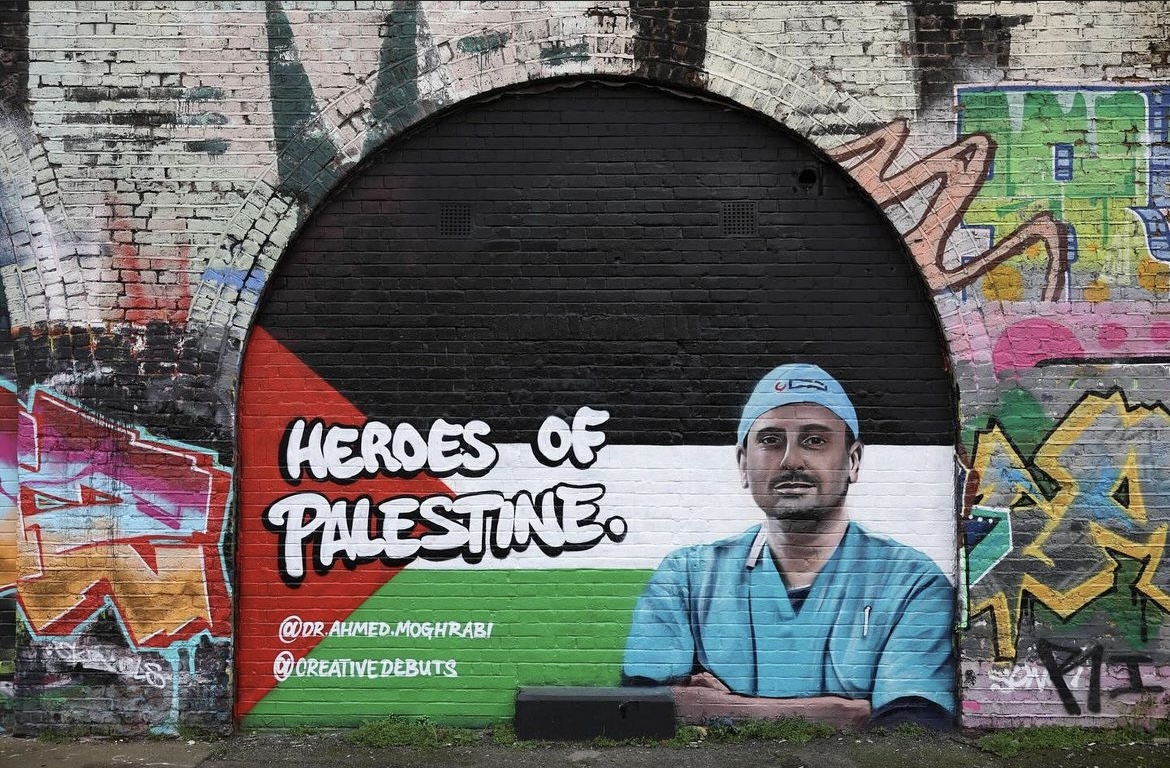
A mural of Palestinian doctor Ahmed Moghrabi spray painted in Peckham, London. (Creative Debuts)
Following the campaign’s initial success, Creative Debuts expanded their project in February to include a tribute to Gaza’s doctors.
Hall says the murals, which have all been seen by their subjects in Gaza via social media, also serve to boost morale.
“Particularly, with the medical professionals, they’re dealing with such harrowing circumstances all the time. So, if we can even provide a 1 percent bit of hope, encouragement, and love, that has a knock-on effect for the people around them.
“We want the people out there to know they’re being seen, know they’re being heard, and know they’re being loved.”
Meanwhile, Hall advocated for the use of street art as a form of activism, a conduit for dialogue, and a tool to connect communities.
“Street art is for the people. It’s the most accessible art form, so it very much should be depicting what’s going on in society.
“Everyone loves it, taking photos, engaging with it. But it is a form of rebellion, it is a form of activism in itself and it’s the perfect way for us to get this campaign out.”
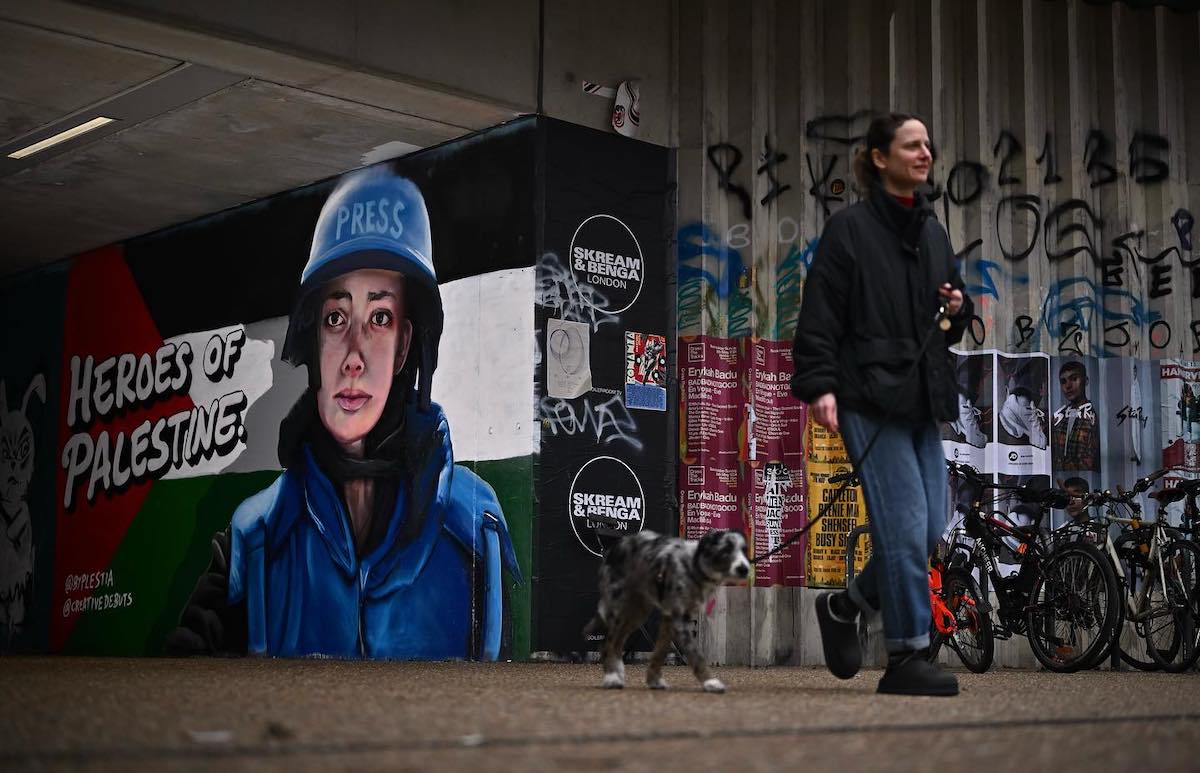
A mural of Palestinian journalist Plestia Alaqad in London painted by Ed Hicks. (Creative Debuts)
Israel’s brutal war on Gaza, now in its sixth month, has killed nearly 30,000 people, the majority of whom are women and children.
As of Feb. 15, a YouGov poll indicates that 66 percent of Britons want Israel’s war to stop. However, the UK government has not called for an immediate ceasefire, nor has it halted the transfer of arms to Israel amid concerns that they might be used to commit “war crimes” against Palestinians.
London has witnessed some of Europe’s largest pro-Palestine protests since October, with regular marches on Saturdays, drawing hundreds of thousands.
“What seems to be really apparent is there’s a disconnect between how serious the issue is, how the politicians are handling it, and what the public thinks,” Hall said.
“I think that’s creating a bigger fissure between the public and the people in charge in this country,” he added.
The founder concluded: “The murals are an important legacy for all of us, to rally behind the people in Gaza but to also let our politicians know that we’re not happy about it.
“We’re not happy seeing this destruction and devastation in real time on our social media; it’s unavoidable. History will judge us all.”
Creative Debuts has launched a GoFundMe to continue the creation and documentation of the “Heroes of Palestine” murals, with funds directly allocated to the artists, materials, and the photographer.


