

Best of the East: Saudi artists on show at Riyadh’s Diriyah Contemporary Art Biennale

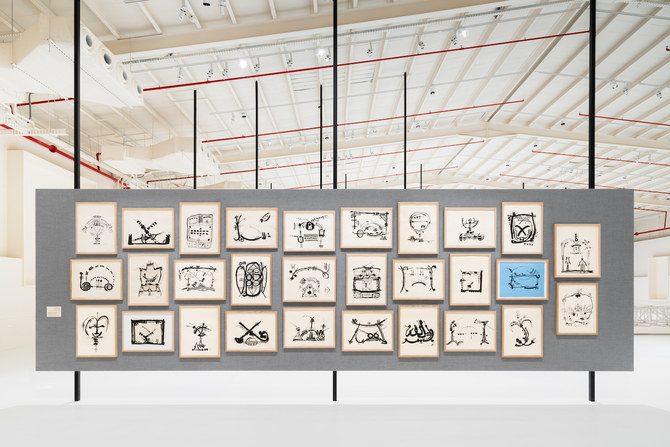
Abdulrahman Al-Soliman. (Supplied)
Short Url
Updated 28 February 2024
Follow

Best of the East: Saudi artists on show at Riyadh’s Diriyah Contemporary Art Biennale

  • Diriyah Contemporary Art Biennale celebrates work from around the world
  • Many pieces being shown for the first time in public

RIYADH: Work by several of the best artists from the Kingdom’s Eastern Province will be among the offerings at this year’s international Diriyah Contemporary Art Biennale in Riyadh.

Among them is Abdulrahman Al-Soliman, who has been a force in the Saudi art world for many decades. He has also written several books on the subject, including his 2000 work, “The Journey of the Saudi Fine Arts Movement.”

At the exhibition, which has the theme “After Rain,” his series of ink drawings, titled “Palm, Bow and Fragments” (1990-91) is on show for the very first time.


Mohammad Al-Faraj. (Supplied)

Born in 1954 in Al-Ahsa, Al-Soliman told Arab News he created the collection during the Gulf War, more than 30 years ago, and that the paintings reflected the unfolding chaos that engulfed neighboring Kuwait.

“I lived with the side effects of the Kuwaiti conflict and its liberation. I started organically, I didn’t know it would become a series,” he said.

“I’ve always loved drawing since I was young, I would scribble daily, it is part of my life. At school, I was good at art only, nothing else.


Mohammad Al-Faraj. (Supplied)

“Since 1970, I have been making art. And this series on display at the biennale — some in color, some not — I rolled them up and put them aside. This is the first time anyone has seen them displayed, even my family at home didn’t see this. The curators came to my studio and selected them,” he said.

Another Eastern Province artist whose work is on show is Nabila Al-Bassam, who founded the Arab Heritage Gallery in Alkhobar in 1979. She also is also showcasing previously unseen works at the event.

“I was invited to join the biennale and said yes because I am an artist and I have a lot of artwork and no one has seen it,” she told Arab News.
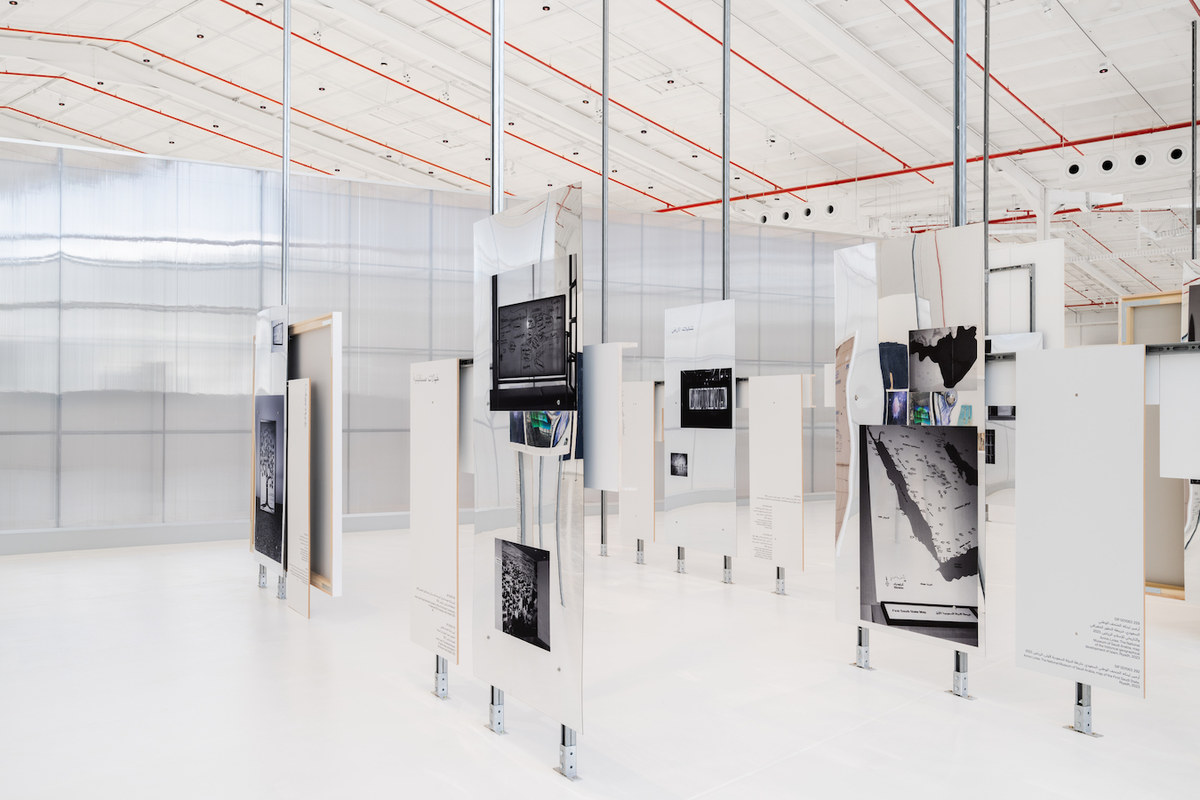


Armin Linke and Ahmed Mater. (Supplied)

“I have my own gallery. It was one of the first in the Kingdom and it’s still working, so I’m very happy about it. But I don’t really exhibit a lot of my own work, I exhibit other people: Saudi artists and others who draw about the Middle East.”

Al-Bassam is a mixed-media artist who uses traditional textile-making processes to produce and create multi-layered collages. She said she was delighted to be among the artists on show.

“What stood out to me at the biennale was the works of Saudi women artists, I really was surprised,” she said.
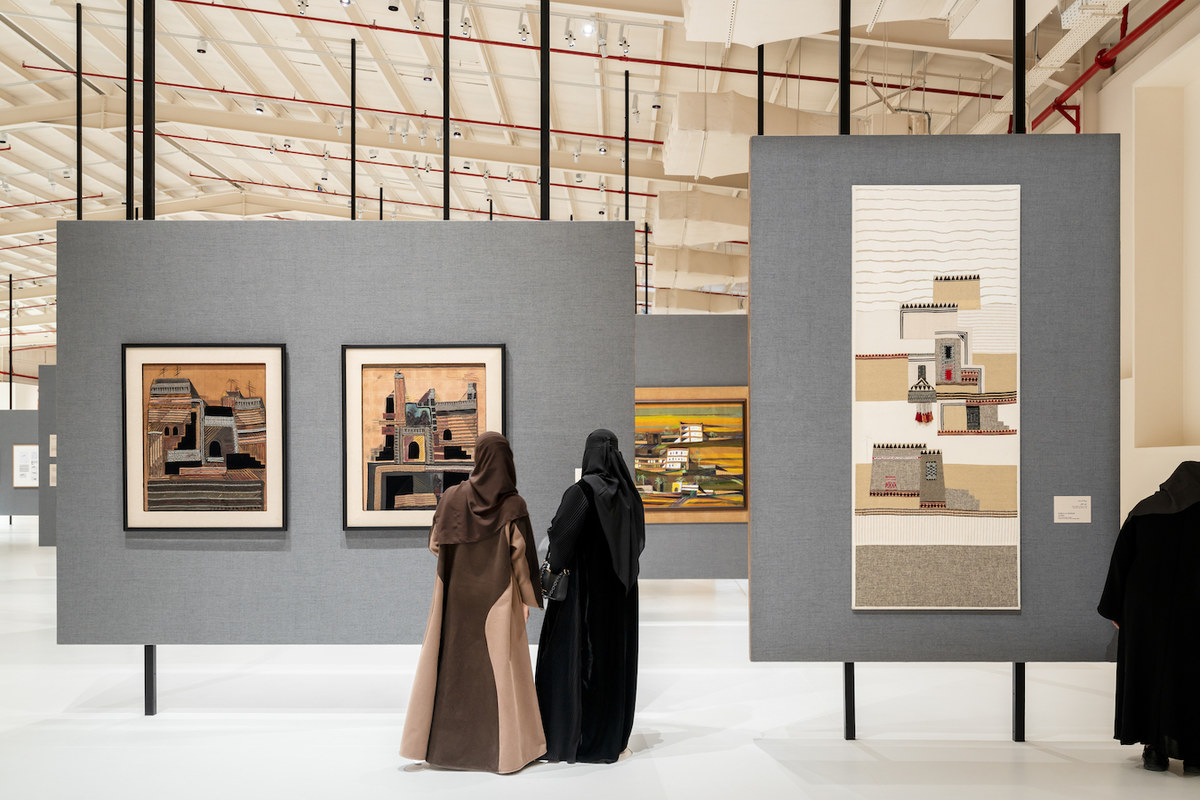


Nabila Al-Bassam. (Supplied)

“I’ve seen many beautiful works. The installations, the hangings — very, very interesting, made out of metal and things like this. There’s a lot to be excited about. They were large works and they were new works, completely new, modern and a new way of thinking.”

Several of the younger generation of Eastern Province artists are also exhibiting in Riyadh.
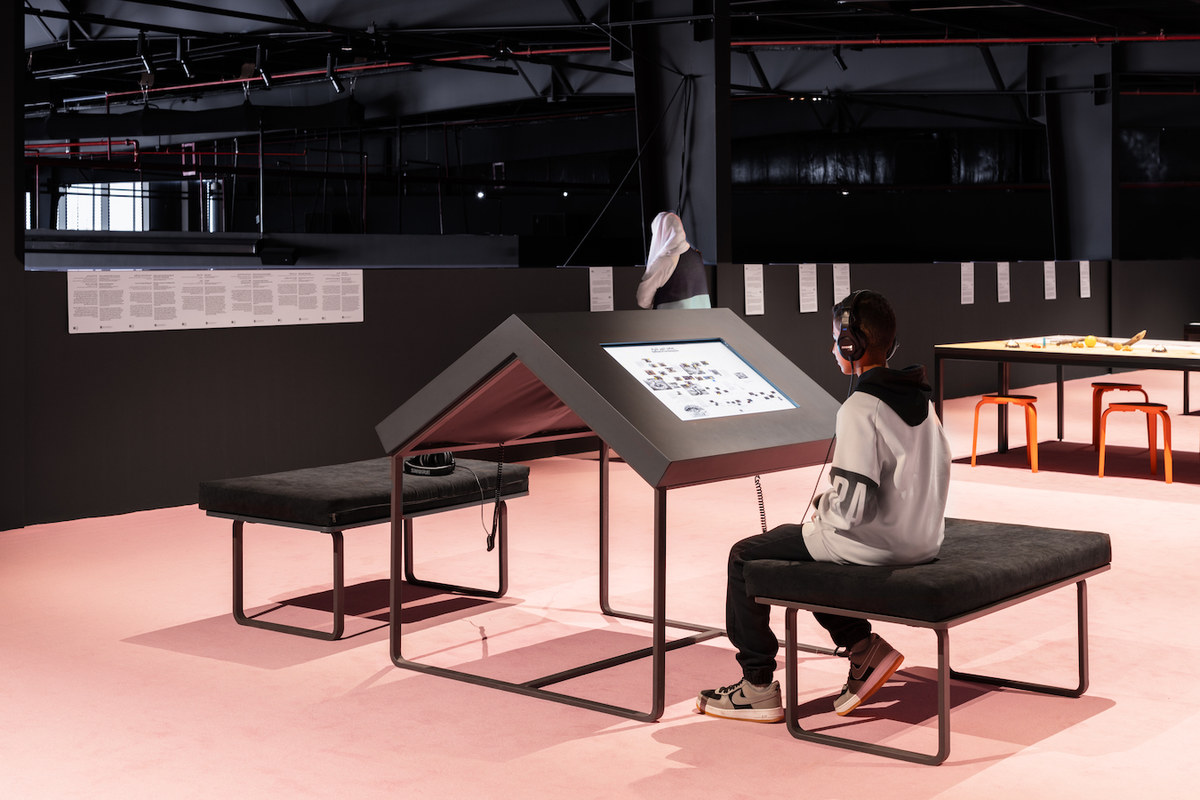


Tara Aldughaither. (Supplied)

Among them is Tara Aldugaither, 34, who grew up in Dhahran and in 2020 founded Sawtasura — “voice of the image” — a community-based platform that collects and reimagines the musical histories of Arab women.

Another is Mohammad Al-Faraj, a 31-year-old from Al Ahsa whose work reflects his environment. His playful pieces regularly feature palm trees.

The Diriyah Contemporary Art Biennale is being held in the city’s JAX district and runs until May 24.


Cairo book fair breaks visitor records

Updated 03 February 2026
Follow

Cairo book fair breaks visitor records

  • Strong Saudi participation underscores KSA’s prominent role in Arab cultural landscape
  • Egyptian writer Naguib Mahfouz, who was awarded the Nobel Prize in Literature in 1988, was selected as the fair’s featured personality

CAIRO: The 57th edition of the Cairo International Book Fair has attracted record public attendance, with the number of visits reaching nearly 6 million, up from a reported 5.5 million previously.

Egypt’s Minister of Culture Ahmed Fouad Hanou said: “This strong turnout reflects the public’s eagerness across all age groups to engage with the exhibition’s diverse cultural and intellectual offerings.”

Hanou said the event included “literary and intellectual activities, meetings with thinkers and creative figures, and thousands of titles spanning various fields of knowledge.”

The Egyptian writer Naguib Mahfouz, who was awarded the Nobel Prize in Literature in 1988, was selected as the fair’s featured personality, coinciding with the 20th anniversary of his death.

The exhibition’s official poster features a famous quote by Mahfouz: “Who stops reading for an hour falls centuries behind.”

A total of 1,457 publishing houses from 83 countries participated in the fair. Mahfouz’s novels occupied a special place, as Egypt’s Diwan Library showcased the author’s complete works, about 54 books.

“The pavilion of the Egyptian National Library and Archives witnessed exceptionally high attendance throughout the fair, showcasing a collection of rare and significant books.

Among the highlights was the book “Mosques of Egypt” in Arabic and English, Dr. Sherif Saleh, head of financial and administrative affairs at the Egyptian National Library and Archives, told Arab News.

The fair ended on Tuesday with a closing ceremony that featured a cultural performance titled “Here is Cairo.”

The event included the announcement of the winners of the fair’s awards, as well as the recipient of the Naguib Mahfouz Award for Arabic Fiction.

Organizers described this year’s edition as having a celebratory and cultural character, bringing together literature, art, and cinema.

Romania was the guest of honor this year, coinciding with the 120th anniversary of Egyptian-Romanian relations.

At the Saudi pavilion, visitors were welcomed with traditional coffee. It showcased diverse aspects of Saudi culture, offering a rich experience of the Kingdom’s heritage and creativity.

There was significant participation from Saudi Arabia at the event, highlighting the Kingdom’s prominent role in the Arab cultural arena.

Saudi Arabia’s participation aimed to showcase its literary and intellectual output, in alignment with the objectives of Vision 2030.

The Kingdom’s delegation was led by Saudi Arabia’s Ambassador to Egypt Saleh bin Eid Al-Hussaini. Also in attendance were Dr. Abdul Latif Abdulaziz Al-Wasel, CEO of the Literature, Publishing and Translation Commission, and Dr. Hilah Al-Khalaf, the commission’s director-general.

The King Abdulaziz Public Library placed the Encyclopedia of Saudi Arabia in a prominent position at the pavilion. The encyclopedia, consisting of 20 volumes, is organized according to the Kingdom’s culturally diverse regions.

Founded in 1980 by King Abdullah, the library was established to facilitate access to knowledge and preserve heritage collections. Over the years, it has grown into one of the Kingdom’s most important cultural institutions.

Internationally, the library has strengthened ties between Saudi Arabia and China, including the opening of a branch at Peking University and receiving the Crown Prince Mohammed bin Salman Award for Cultural Cooperation between the two nations.

Regionally, the library has played a pivotal role in the Arab world through the creation of the Unified Arabic Cataloging Project, one of the most important initiatives contributing to knowledge accessibility and alignment with global standards.