

Pakistan has resolved three of five operational issues for KE stake sale — Al-Jomaih official

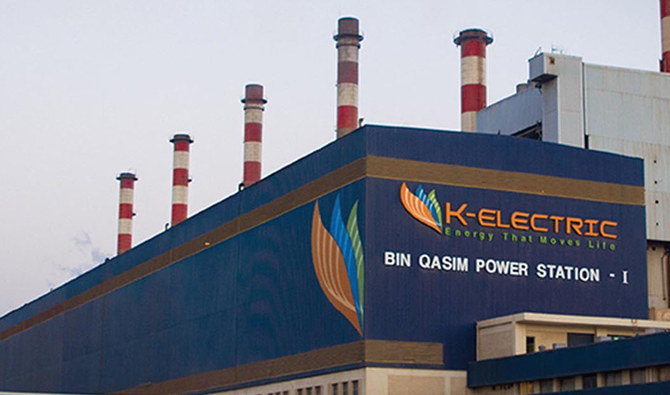
An undated file photo of a Karachi Electric power station in Karachi, Pakistan. (Photo courtesy: K-Electric/Facebook)
Short Url
Updated 26 February 2024
Follow

Pakistan has resolved three of five operational issues for KE stake sale — Al-Jomaih official

  • Al-Jomaih bought 66.4 percent share in KE in 2005 along with Abraaj Group and Kuwait’s National Industries Group
  • In 2016, consortium decided to sell stake to Shanghai Electric but sale stuck due to regulatory and other issues

KARACHI: The top official of a consortium that owns majority shares of Karachi Electric said on Monday Saudi investors were satisfied with the outcome of a committee formed by the Pakistani government to resolve regulatory hurdles and issues of payables that have been blocking the sale of the Pakistani utility to Chinese powerhouse Shanghai Electric Power (SEP) for years.

Al-Jomaih Holding Group, one of the largest business groups in Saudi Arabia, bought a 66.4 percent share in KE in 2005 as part of a consortium comprising Al-Jomaih, Abraaj Group and Kuwait’s National Industries Group (NIG). In 2016, the consortium decided to sell the stake to China’s Shanghai Electric Power and submitted an application for a National Security Certificate (NSC) to the Pakistani Privatization Commission. However, the group still awaits approval of the deal due to long-standing issues of regulatory approvals and KE’s liquidity constraints as a consequence of mounting circular debt plaguing the country’s power sector.

In January this year, Shanghai Electric reiterated its commitment to the deal. The government of Pakistan currently owns a 24.4 percent stake in K-Electric, which powers the country’s largest city and commercial hub of Karachi.

Shan Abbas Ashary, the Chief Investment Officer (CIO) of Al-Jomaih and a director at KE, said regulatory hurdles and disputes were being addressed at a “high pace” after the Saudi investment minister wrote a letter to the finance minister of Pakistan in December last year.

“After that, we had several meetings and the SIFC [Special Investment Facilitation Council] took up the matter and created a committee of three ministers,” Ashary told Arab News, referring to a civil-military body set up last year to fast-track foreign investments.

“Thanks to the Pakistani government, and thanks to the support from the Saudi government, this interim [Pakistani] government took it [KE’s issues] very seriously,” he said, adding that out of five key issues, three operational issues had been resolved while a committee had been formed to look into the remaining issues and progress was taking place.

“The outcome is satisfactory for us and I have reported it back to Al-Jomaih Group and they understand it and they appreciate it very much that progress is being made by the Pakistan government.”

He said he hoped the issues would be resolved in “several months not several years” due to the seriousness being accorded to the matter by the SIFC, whose committee comprised the ministers of law, energy and privatization.

When asked if Shanghai Electric, which had offered to purchase shares of KE for $1.7 billion six years ago, would revaluate its offer, the Al Jomaih official said:

“Shanghai Electric has just renewed expression of interest …. They will come back, do a complete due diligence because six years have passed, it’s a long time.”


Pakistan forms committee to negotiate financial advisory services for Islamabad airport privatization

Updated 18 February 2026
Follow

Pakistan forms committee to negotiate financial advisory services for Islamabad airport privatization

  • Committee to engage Asian Development Bank to negotiate terms of financial advisory services agreement, says privatization ministry
  • Inaugurated in 2018, Islamabad airport has faced criticism over construction delays, poor facilities and operational inefficiencies

ISLAMABAD: Pakistan’s Privatization Ministry announced on Wednesday that it has formed a committee to engage the Asian Development Bank (ADB) to negotiate a potential financial advisory services agreement for the privatization of Islamabad International Airport.

The Islamabad International Airport, inaugurated in 2018 at a cost of over $1 billion, has faced criticism over construction delays, poor facilities, and operational inefficiencies.

The Negotiation Committee formed by the Privatization Commission will engage with the ADB to negotiate the terms of a potential Financial Advisory Services Agreement (FASA) for the airport’s privatization, the ministry said. 

“The Negotiation Committee has been mandated to undertake negotiations and submit its recommendations to the Board for consideration and approval, in line with the applicable regulatory framework,” the Privatization Ministry said in a statement. 

The ministry said Islamabad airport operations will be outsourced under a concession model through an open and competitive process to enhance its operational efficiency and improve service delivery standards. 

Pakistan has recently sought to privatize or outsource management of several state-run enterprises under conditions agreed with the International Monetary Fund (IMF) as part of a $7 billion bailout approved in September last year.

Islamabad hopes outsourcing airport operations will bring operational expertise, enhance passenger experience and restore confidence in the aviation sector.

In December 2025, Pakistan’s government successfully privatized its national flag carrier Pakistan International Airlines (PIA), selling 75 percent of its stakes to a consortium led by the Arif Habib Group. 

The group secured a 75 percent stake in the PIA for Rs135 billion ($482 million) after several rounds of bidding, valuing the airline at Rs180 billion ($643 million).

Pakistan’s Finance Minister Muhammad Aurangzeb said this week the government has handed over 26 state-owned enterprises to the Privatization Commission.