Armenia has frozen its participation in the Russian-led Collective Security Treaty Organization (CSTO) because the pact had failed the country, Prime Minister Nikol Pashinyan said in an interview broadcast on Thursday.
Pashinyan also said Azerbaijan, with which Armenia has fought two wars over the past three decades, was not adhering to the principles needed to clinch a long-term peace treaty, and suggested Azerbaijan was preparing to launch another attack.
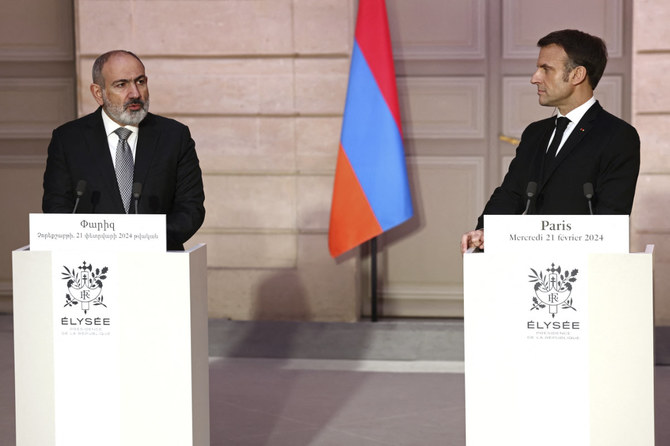
Pashinyan told France 24 television that the CSTO pact, dominated by Russia, had failed Armenia.
“The Collective Security Treaty has not fulfilled its objectives as far as Armenia is concerned, particularly in 2021 and 2022. And we could not let that happen without taking notice,” Pashinyan said through an interpreter.
“We have now in practical terms frozen our participation in this treaty. As for what comes next, we shall have to see.”
He said there was no discussion for the moment of closing a Russian base in Armenia. That was subject to different treaties.
Pashinyan has in recent months expressed discontent with Armenia’s longstanding ties with Russia and said Armenia could no longer rely on Russia to ensure its defense needs. He had suggested its membership of the CSTO was under review.
Other ex-Soviet members of the CSTO include Belarus, Kazakhstan, Kyrgyzstan and Tajikistan.
Azerbaijan recovered swathes of territory in 2020 in the second war over the disputed territory of Nagorno-Karabakh, populated mainly by ethnic Armenians but internationally recognized as part of Azerbaijan.
Last year, Azerbaijan’s military took control of the territory, prompting most of its residents to leave for Armenia.
In his remarks, Pashinyan said prospects for clinching a long-term peace treaty were hurt by Azerbaijani President Ilham Aliyev’s statements which Armenia interpreted as laying claim to large parts of Armenian territory.
“If the principles of territorial integrity and inviolability of borders are not recognized by Azerbaijan, it is simply not possible,” he told France 24.
“Azerbaijan is using the situation to feed its rhetoric. That leads one to think that Azerbaijan is getting ready for a new attack on Armenia.”
Key elements in securing a treaty are demarcation of borders and the establishment of regional transport corridors often through the territory of each others’ territory.
Aliyev has also raised the issue of determining control of ethnic enclaves on both sides of the border.
Pashinyan and Aliyev have discussed moves toward a peace treaty at several meetings, including discussions last week at the Munich Security Conference.


![]()

Armenia freezes participation in Russia-led security bloc
Short Url
https://arab.news/wxruq
Armenia freezes participation in Russia-led security bloc
- Prime Minister Pashinyan says the Collective Security Treaty Organization has failed his country
- Other ex-Soviet members of the CSTO include Belarus, Kazakhstan, Kyrgyzstan and Tajikistan


Latest updates


© 2026 SAUDI RESEARCH & PUBLISHING COMPANY, All Rights Reserved And subject to Terms of Use Agreement.