

Cricket unites South Asian expats in second home Saudi Arabia

1 / 12
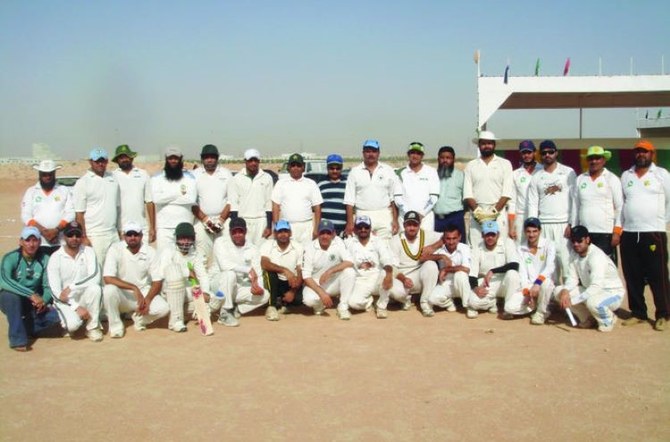
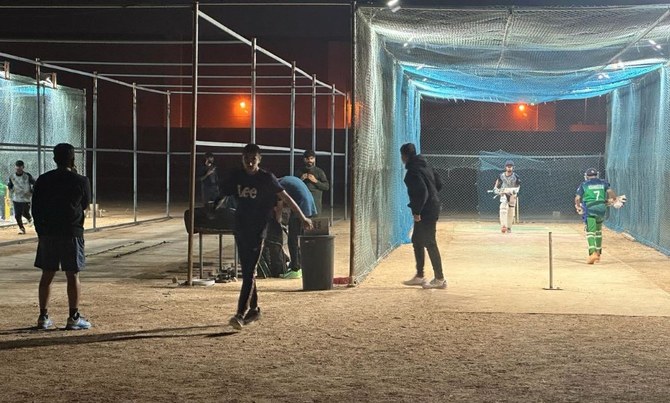
Cricket in Saudi Arabia, for decades, was a game played almost exclusively by the South Asian diaspora, but now it is set to take a giant leap across the country. (Riyadh Cricket Association)
2 / 12
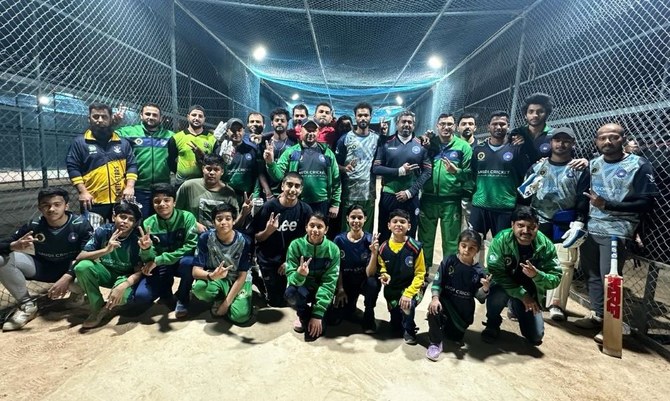
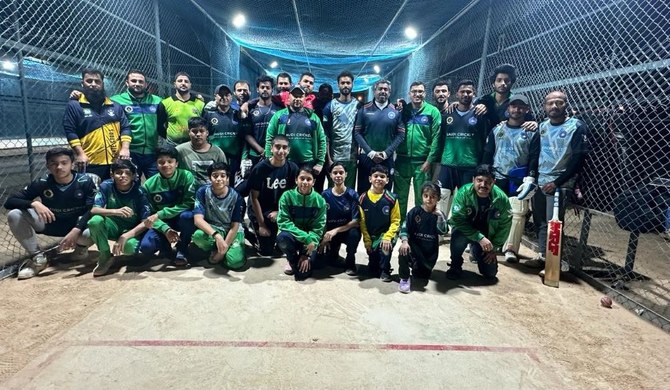
Cricket in Saudi Arabia, for decades, was a game played almost exclusively by the South Asian diaspora, but now it is set to take a giant leap across the country. (AN Photo/Rashid Hassan)
3 / 12
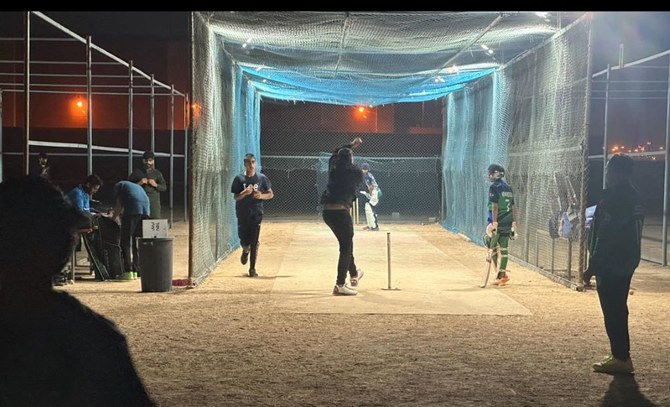
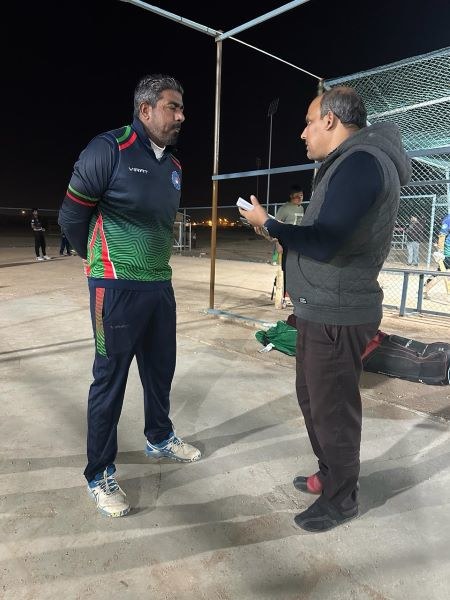
Cricket in Saudi Arabia, for decades, was a game played almost exclusively by the South Asian diaspora, but now it is set to take a giant leap across the country. (AN Photo/Rashid Hassan)
4 / 12
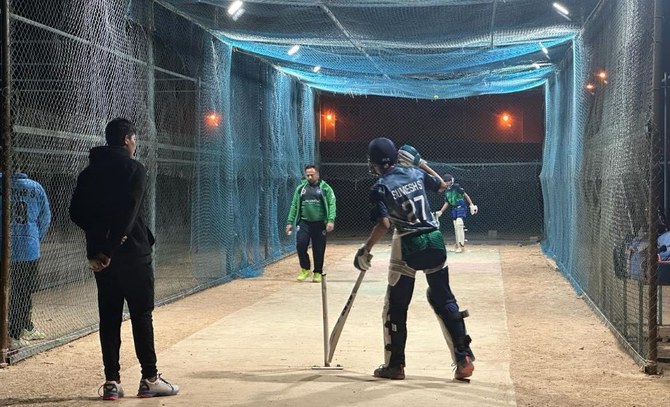
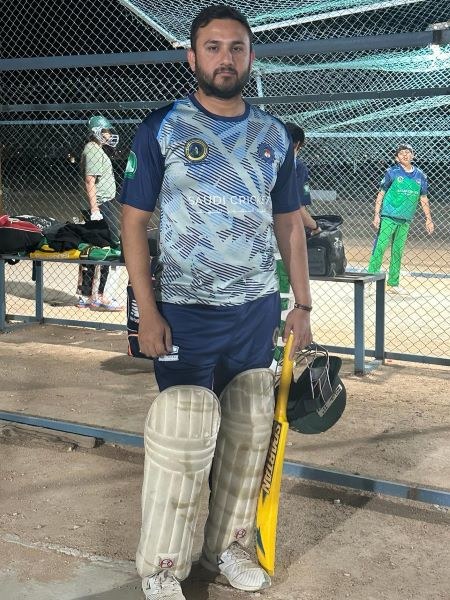
Cricket in Saudi Arabia, for decades, was a game played almost exclusively by the South Asian diaspora, but now it is set to take a giant leap across the country. (AN Photo/Rashid Hassan)
5 / 12
Cricket in Saudi Arabia, for decades, was a game played almost exclusively by the South Asian diaspora, but now it is set to take a giant leap across the country. (AN Photo/Rashid Hassan)
6 / 12
Cricket in Saudi Arabia, for decades, was a game played almost exclusively by the South Asian diaspora, but now it is set to take a giant leap across the country. (AN Photo/Rashid Hassan)
7 / 12
Cricket in Saudi Arabia, for decades, was a game played almost exclusively by the South Asian diaspora, but now it is set to take a giant leap across the country. (AN Photo/Rashid Hassan)
8 / 12
Cricket in Saudi Arabia, for decades, was a game played almost exclusively by the South Asian diaspora, but now it is set to take a giant leap across the country. (AN Photo/Rashid Hassan)
9 / 12
Cricket in Saudi Arabia, for decades, was a game played almost exclusively by the South Asian diaspora, but now it is set to take a giant leap across the country. (AN Photo/Rashid Hassan)
10 / 12
Cricket in Saudi Arabia, for decades, was a game played almost exclusively by the South Asian diaspora, but now it is set to take a giant leap across the country. (AN Photo/Rashid Hassan)
11 / 12
Cricket in Saudi Arabia, for decades, was a game played almost exclusively by the South Asian diaspora, but now it is set to take a giant leap across the country. (AN Photo/Rashid Hassan)
12 / 12
Cricket in Saudi Arabia, for decades, was a game played almost exclusively by the South Asian diaspora, but now it is set to take a giant leap across the country. (AN Photo/Rashid Hassan)
Short Url
Updated 22 February 2024
Follow

Cricket unites South Asian expats in second home Saudi Arabia

  • SACF has lined up several programs to promote the sport in KSA
  • Pakistani greats Wasin Akram and Shoaib Akhter have been in Riyadh and met the SACF chief

RIYADH: Cricket is a game that has an almost magical ability to unite South Asian expatriates in their second home Saudi Arabia.

On every weekend and whenever there is a time to play, mostly on public holidays, they gather at some grounds, parks and open spaces to play street cricket.

For decades, early-morning gatherings were the only way for the South Asian diaspora to play cricket.

Expatriates from India, Pakistan, Sri Lanka and Bangladesh had few entertainment options other than cricket in the Kingdom before social reforms in line with Saudi Vision 2030 were unveiled in 2016, so would play friendly matches.

For decades, cricket in Saudi Arabia was a game played almost exclusively by the South Asian diaspora, but now it is set to take a giant leap across the country, with the game’s ruling body in the Kingdom introducing a series of competitions and programs to encourage the nation’s youth to take up one of the world’s oldest and most popular sports.

The Saudi Arabian Cricket Federation, established in 2020, has lined up a series of major programs to promote the game among Saudis and expatriates in the Kingdom.

With Prince Saud bin Mishal Al-Saud as chairman of the federation, long-term plans have been put in place to ensure that Saudi Arabian national teams can compete with the world’s best in the future.

Arab News, in an exclusive interview, spoke to the diaspora from India, Pakistan, Sri Lanka, Bangladesh, and Afghanistan who shared their memories and experiences of playing cricket in Saudi Arabia.

Mohammed Azimooddin Abdul Rahiman Karajagi, who is an ICC-certified curator and umpire, and head coach of the Riyadh Cricket Association, told Arab News: “I have seen cricket being played in this region for almost 25 years now. In the beginning there was very limited opportunity to play the game by expatriate communities from the South Asian countries, they would gather at some open space for a friendly match. Then club cricket started and now the SACF headed by Prince Saud is doing a lot for the development of cricket in the Kingdom, starting with the National Cricket Championship, the biggest ever cricket tournament in the history of Saudi Arabia.”

He added: “As result of the mega-competition a formidable Saudi national cricket team was formed and they went on to lift ACC Men’s Challenger Cup consecutively, last year and this year, taking the game to another level (and) now will play the Premier Cup to qualify for the Asia Cup.

“We, the cricket lovers in the Kingdom, congratulate the SACF for taking initiatives to develop the game; we are delighted to see that world-class cricketers are emerging from the Kingdom, and wish all the best to the Saudi team qualify not only to the Asia cup but also to the Cricket World Cup,” he said.

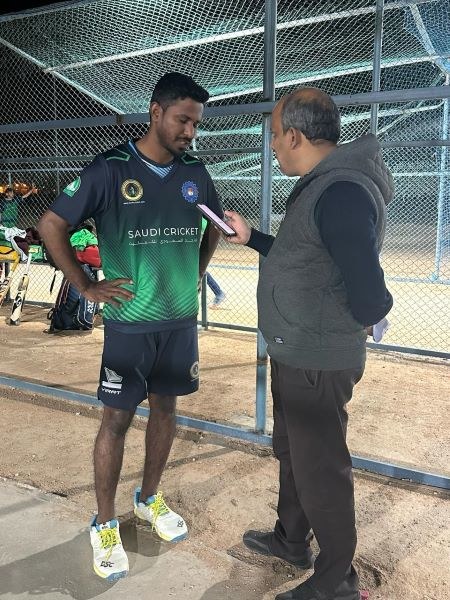
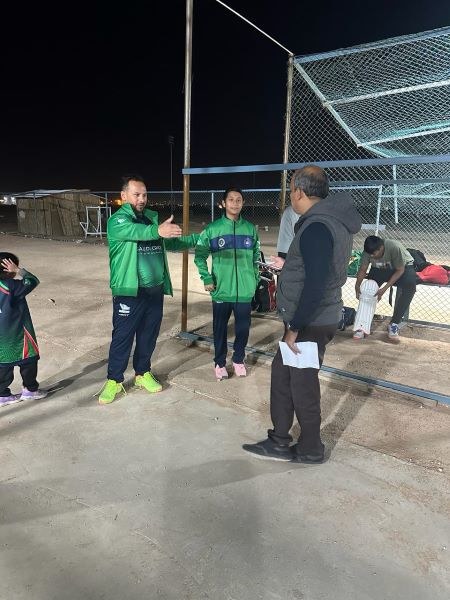
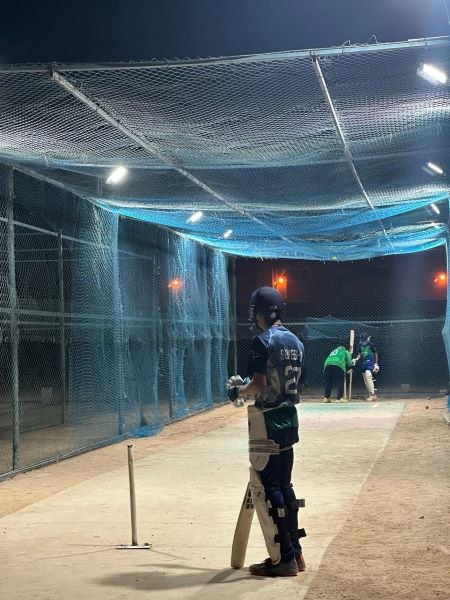
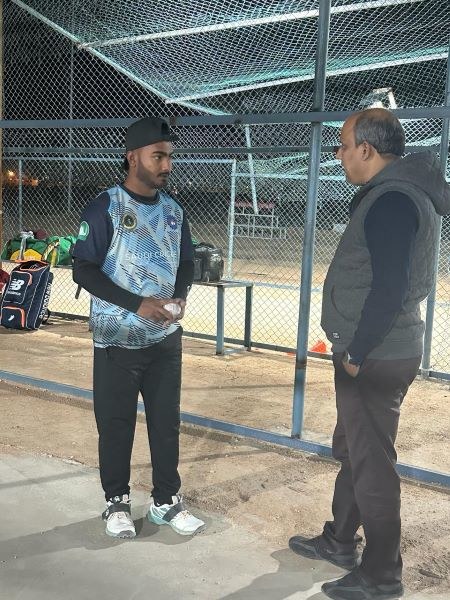
Arab News caught Syed Salman Hussain from Pakistan, who was busy in net practice at Mark Cricket Academy, which is affiliated to the RCA at its home ground in Al-Sulai Industrial Area, Al-Mashael District in Riyadh.

Hussain enjoys playing cricket whenever he has time off work, and hopes to play one day in the Saudi national cricket team.

On playing cricket in Pakistan and Saudi Arabia, he said it is tougher here as the cricket kit is not fully available, and must be brought from his homeland. Moreover, to play on the grassless pitches in Riyadh is tough.

“Here the ground is full of stones and sand, as against green grassy playground in Bangladesh,” said Nojmul Hasan from Dhaka, blaming the sandy area beside a shopping mall’s parking lot for his team’s slow run buildup in a friendly match.

“There are no carefully manicured grass pitches for cricketers in this city carved out of the desert. In Riyadh, there is hardly any grass. But the good thing is, after the formation of the SACF, things are changing, we have heard that there is work in progress for turf wicket here, so that’s great news.”

Obaidullah Zaman from Afghanistan, who is working in Riyadh for several years and plays cricket with the Mark Cricket Academy in Al-Mashael District every Friday, is happy with the pace of change, saying: “We are really excited to see the development around cricket in Saudi Arabia with the federation planning to have professional cricket academies, more grounds, better facilities with entertainment and other services around them to attract Saudi as well as the diaspora to the game. I look forward to finding a place in the national team either here or in my Afghan team, so I come religiously to practice at my academy and be prepared to play the matches organized by the RCA.”

Mohamed Sauky, a Sri Lankan expat playing cricket in Riyadh, told Arab News: “We are very passionate about cricket. My favorite cricketer is Angelo Mathews from Sri Lanka. One day I aspire to be like him and represent the national team, therefore, I participate in all the training sessions by the RCA and as a result I am the highest wicket taker so far this season. With the coaching facilities, practice sessions on the net and practice matches, we are enhancing our skill. Playing together, we the South Asian diaspora enjoy our diversity and share our experiences to help each other in enhancing the skill to become a better player.”

Kannan K. Gopi, an Indian who has lived here for decades and plays cricket, was selected in the Saudi national cricket team to play the 40 overs tournament, but could not join because of the age factor. He still joins the players in the practice sessions and also coaches new players aspiring to be professional cricketers making it to the national team.

Sharing old memories, Gopi said: “Earlier, expats formed some clubs to play the game, now things are progressing well. We are looking forward to our favorite sport taking a big leap in the Kingdom, with the SACF keen to introduce a series of programs and domestic leagues.”

Speaking to Arab News last year regarding the plans, Prince Saud said: “Saudi Arabia is the biggest country in the region with the biggest number of teams and players. So there will be leagues on all levels. We have developed throughout our time in the federation great relationships with the International Cricket Council, the global governing body of cricket, and the Asian Cricket Council, the organization that promotes and develops the sport of cricket in Asia, as well as some successful international cricket boards and big cricketers globally.”

High-profile figures from the world of cricket have offered their expertise and backing for cricket in the Kingdom.

Pakistani greats Wasin Akram and Shoaib Akhter, Indian pacer Irfan Pathan, and British cricketer Kevin Pietersen have been in Riyadh and met the SACF chief to discuss cricket and share expertise on how to develop the game.


Shayan Jahangir and Jordan Cox ensure Dubai Capitals a play-off spot  

Updated 5 sec ago
Follow

Shayan Jahangir and Jordan Cox ensure Dubai Capitals a play-off spot  

  • The defending champions become the third team after Desert Vipers and MI Emirates to make the playoffs of DP World ILT20 Season 4  

DUBAI: Shayan Jahangir and Jordan Cox registered fifties to help defending champions Dubai Capitals sail into the play-offs with a strong six-wicket win over Sharjah Warriorz on Christmas Eve at the Dubai International Stadium.

Jahangir was also resourceful behind the stumps, getting dangerman Tom Kohler-Cadmore out in an impressive all-round performance.    

Chasing 135, Dubai Capitals made light work of the target with an early blitz by Jahangir and an unbeaten Cox, who set the Dubai International Stadium ablaze scoring 61 off 50 balls with six fours and one six. His effort also fetched him the green belt, putting him on top of the highest scorers list in the tournament so far.  

Jahangir and Cox set up a partnership of 76 runs off 63 balls after they lost opening batter Sediqullah Atal with just 17 on board. It was Harmeet Singh who bowled him out, but it took the Warriorz a lifetime to find another breakthrough. However, Sikandar Raza’s over made up for the long wicket-less spells as he picked up two crucial back-to-back wickets — that of half-centurion Jahangir and Mohammad Nabi in the 14th over. Jahangir was caught at long-on by Kohler-Cadmore while Nabi (4 off 4) holed out to deep square leg. 

Taskin Ahmed packed off Leus Du Plooy (5 off 6) in the 17th over, but the Capitals were already racing towards victory at this point. Jordon Cox became the cynosure of the chase, breaking no sweat to make the target in five balls to spare.   

The Dubai Capitals’ bowlers had also done exceedingly well, restricting the Warriorz total to a paltry 134/8 with Haider Ali and Waqar Salamkheil picking up two wickets each. Ali was extremely economical too, giving away just 13 runs in four overs. David Willey, Mustafizur Rahman and Mohammad Nabi bagged a wicket each, contributing to the Capitals’ third successive victory that has landed them in the play-offs.    

Asked to bat first, Sharjah Warriorz had an uneventful outing at the crease. Just as the opening batters were settling in, the Warriorz received an early jolt when Monank Patel (24 off 13) was run out by a quick-thinking David Willey. A mix up in the middle, Patel was sent back by Charles (43 off 46) with Willey at arm’s length from the bails. Losing a wicket in the fifth over with just 34 runs on board was a setback and it did not help the Warriorz cause when Haider Ali bowled Tom Abell (9 off 10 balls).   

Kohler-Cadmore (3 off 4) followed suit. He was stumped by Shayan Jahangir while attempting to go big off Haider Ali but he was nowhere close to the ball and Jahangir was bang-on. 

With just 65/3 on board in 10 overs, the Warriorz needed a solid partnership that could keep them afloat on a slow track at the Ring of Fire. There was still some hope with opener Johnson Charles piloting the innings and power hitter Sikandar Raza joining him after Kohler-Cadmore’s dismissal. Raza was also gifted a new lease of life when Jahangir dropped a simple catch off Haider Ali’s ball. Unfortunately, Raza (8 off 11) could not muster much from this opportunity as he lost his wicket, in a caught-and-bowled effort by Mustafizur Rahman.   

Charles followed a couple of overs after, when he was attempting to pull towards the long-on boundary, but Willey took a fine low catch ending Charles’ batting prowess with two boundaries and two sixes.  

From here on, the Warriorz were on a spiral, losing almost four wickets in the death overs but for the 24 runs coming off the final two overs. Adil Rashid and Harmeet Singh scored a quick 14 runs each. Tim Southee (5 off 2) contributed towards the Warriorz’ total to a chasable 134/8 in 20 overs. 

Player of the match Cox said: “It was quite tough against spin, but when the seamers came on, we tried to put them under pressure. Jahangir was very impressive. We’ve been encouraging him to be aggressive, and it was great to watch from the other end. For me, it was about not leaving it to the next man.”

Sharjah Warriorz captain Southee commented: “We had to keep taking wickets to be in with a chance. The nature of the wickets is keeping sides in it for long. Not over for us. One game left, we win that and give ourselves a chance.”