ISLAMABAD: Pakistan’s Caretaker Commerce Minister Dr. Gohar Ejaz on Wednesday discussed enhancing bilateral trade and investment with Saudi Arabia in various sectors such as construction, infrastructure and digital economy, the commerce ministry said.
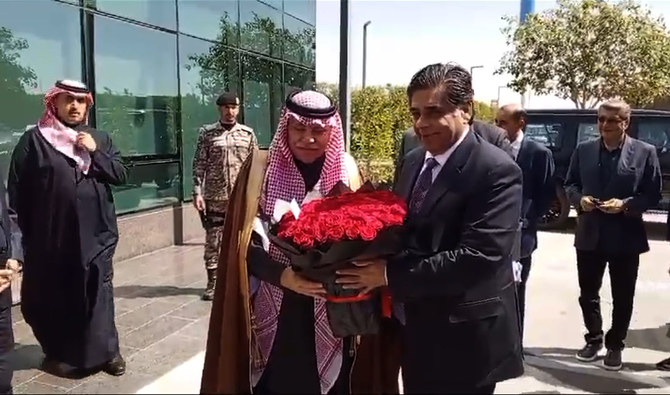
Ejaz met Saudi Arabia’s commerce minister, Majid bin Abdullah Al-Qasabi, as he led a delegation of prominent Pakistani businesspersons in the kingdom on Wednesday. Members of the delegation included notable Pakistani businessperson Arif Habib and the president of the Federation of Pakistan Chambers of Commerce and Industry, (FPCCI) Atif Ikram.
“Pakistan and Saudi Arabia agreed on enhancing bilateral trade,” Pakistan’s commerce ministry said. “The two sides agreed to enhance investment in the fields of construction, digital economy and infrastructure.”
In a message on social media platform X, Al-Qasabi said he and Ejaz discussed developing bilateral trade relations and “investing in promising opportunities” in the two countries.
Last year a delegation of 15 top Pakistani IT companies led by IT Minister Dr. Umar Saif visited Saudi Arabia and signed deals to accelerate digital transformation, foster innovation and advance digital infrastructure.
The agreements will also boost the ecosystems for small and medium-sized enterprises and startups and encourage the transfer of businesses and the exchange of information on accelerators and incubators.
Both countries have also decided to establish a special task force to promote Saudi-Pakistan digital cooperation.
Pakistan enjoys strong economic and trade relations with Saudi Arabia. The kingdom is home to over 2.7 million Pakistani expatriates, serving as the top source of remittances for the cash-strapped South Asian country.
Saudi Arabia has also frequently bailed Pakistan out of its economic crisis over the years, serving as an important strategic partner for the South Asian country.


![]()

Pakistani, Saudi commerce ministers agree to enhance bilateral trade, investment
Short Url
https://arab.news/2eg2b
Pakistani, Saudi commerce ministers agree to enhance bilateral trade, investment
- Commerce Minister Dr. Gohar Ejaz is leading a delegation of prominent Pakistani businesspersons in Saudi Arabia
- Both sides agreed to increase investment in construction, digital economy sectors, says Pakistani commerce ministry
Latest updates


© 2026 SAUDI RESEARCH & PUBLISHING COMPANY, All Rights Reserved And subject to Terms of Use Agreement.