

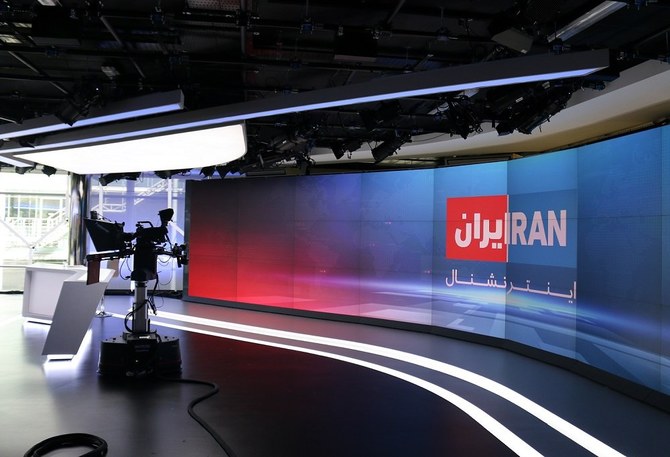

LONDON: Dozens of British-based journalists have been targeted by Iran in a coordinated harassment campaign aimed at silencing the network, top secret intelligence documents revealed on Wednesday.
The leaked information, obtained by hacktivist group Edalat-e Ali, exposes how Iran International TV staff received financial bans and threats to their families during the 2019 protests.
The London-based network has said it was previously aware of the intimidation tactics but that the documents offered “indisputable proof that Iran’s Intelligence Ministry and judicial officials were coordinating the harassment efforts.”
During nationwide protests in November 2019, sparked by a sudden hike in gasoline prices and met with a violent crackdown by security forces, Iran International persisted in reporting on the situation despite a government internet shutdown.
This drew unwanted attention and scrutiny from the authorities, with the broadcaster facing accusations of disseminating false news to fuel rebellion.
The leaked documents outline the intimidation methods used. A ministry letter addressed to the Tehran Prosecutor General, dated Nov. 30, 2019, disclosed that 15 family members of Iran International employees were summoned and 71 key players faced financial restrictions.
The tactics were designed to have a psychological impact, causing mental distress and insecurity for employees.
The leaked documents also exposed Tehran’s harassment of ordinary citizens who attempted to contact the network. The papers revealed that journalists and their families faced threats, with the government warning that continuing to work with “opposition media” would have legal consequences.
In February 2023, the escalating harassment campaign prompted the channel to relocate temporarily from London to Washington DC due to assassination attempts. However, it resumed operations in the British capital in September under heightened security measures.
Last year, an Iranian plot to assassinate two of the network’s anchors during the 2022 anti-government protests was thwarted by a double agent, resulting in the arrest and conviction of a Chechen national.
The US and UK both announced sanctions against a network involved in assassination plots, including those targeting Iran International journalists.


