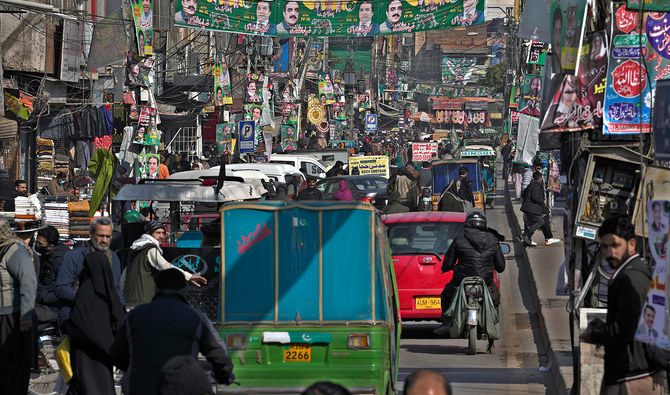
KARACHI/LAHORE: Around 22 million youths aged between 18 and 23 are gearing up to vote for the first time in Pakistan’s upcoming 2024 general elections.
But the elation that should be around on such a joyous occasion seems to be missing.
Most first-time voters interviewed by Reuters seemed disillusioned about the outcome of the election and what change it could bring for them.
“Thieves and robbers will return to the new government, to fill their pockets, as usual. That’s all they will do. There will be no benefits for the masses, nor for the youth,” said 20-year-old disc jockey Noman, as he played cricket with friends in Lahore.
According to the Election Commission of Pakistan (ECP), young voters constitute the largest age group among a total of 127 million registered voters of all ages across the country. Approximately 55 million or around 43.85 percent registered voters are young Pakistanis aged 18 to 35.
A report published in September 2023 by Pakistan Institute of Legislative Development and Transparency (PILDAT), an independent, non-partisan and not-for-profit think tank, says this age group forms “a significant demographic in the electoral landscape of the country” and its vote could have a significant impact on the election outcomes.
Unfortunately, in Pakistan, the youth have always under-participated when it comes to vote casting.
The PILDAT report estimates that “the average youth voter turnout of the past eight elections, from 1988 to 2018, has been abysmally low at 31 percent, which is 13 percentage points lower than the average overall voter turnout of 44 percent in these eight elections.”
The numbers of young contesters has also been low.
Data from the 2018 general election shows that there were only 57 (4.91 percent) candidates younger than 30 years of age among the 1,162 candidates who contested for the National Assembly seats.
Political experts believe there are several reasons for the low level of interest by youth in elections, the primary one being a lack of trust in the democratic system.
With reports of widespread rigging and manipulation of voters surrounding every election in the country, there are also deep misgivings about the fairness of the entire electoral process which may be keeping young voters away.
“In the past, very election was unfair; there has never been a fair election. There is rigging, always. People who come into power are not the people you wanted. Let’s hope this time the election is fair so that our country can progress,” said pre-university student and first-time voter Fatima Farooq.
Most parties agree the large number of registered young voters can prove to be the potential game changer in the upcoming election, and any party that bags the youth vote will most likely win the election.
Analysts say with the increasing numbers of youth in the country, their impact on elections is going to keep growing in the coming years.


![]()

First-time Pakistani voters skeptical about election outcome
Short Url
https://arab.news/y3xfs
First-time Pakistani voters skeptical about election outcome
- Around 22 million Pakistani aged between 18 and 23 are gearing up to vote for the first time
- Approximately 55 million or around 43.85 percent registered voters are young Pakistanis aged 18 to 35
Latest updates






© 2026 SAUDI RESEARCH & PUBLISHING COMPANY, All Rights Reserved And subject to Terms of Use Agreement.