ISTANBUL: Russian President Vladimir Putin will visit Turkiye soon, the Turkish foreign minister said late Sunday. It would be Putin’s first trip to a NATO country since Russia’s full-scale invasion of Ukraine two years ago.
Foreign Minister Hakan Fidan told the A Haber private TV channel that Putin’s meeting with Turkish President Recep Tayyip Erdogan will focus on a new way to allow Ukrainian grain exports through the Black Sea.
He did not mention a date for the visit, but Turkish media has reported that Putin will come on Feb. 12.
The International Criminal Court last year issued an arrest warrant against Putin over the alleged deportation of Ukrainian children to Russia, greatly limiting his opportunity to travel abroad. Turkiye, like Russia, is not a party to the court, allowing Putin to visit without fear of arrest.
Turkiye has sought to maintain good ties with both Russia and Ukraine, its Black Sea neighbors. While declining to join Western sanctions on Moscow, it has also backed Ukraine’s territorial integrity and provided arms to Kyiv.
“The previous grain deal worked within a certain mechanism. Now it has been seen that there is a possibility of going with a different mechanism,” Fidan said, referring to the previous deal that lasted a year before Russia withdrew in July. At the time, Russia said the deal would be suspended until demands to get Russian food and fertilizer to the world are met.
Turkiye helped the United Nations broker that accord to provide safe passage from Ukrainian ports.
Fidan said Erdogan would also discuss with Putin security in Syria and energy cooperation.

Putin will visit Turkiye soon to discuss new Black Sea grain export ideas for Ukraine, minister says
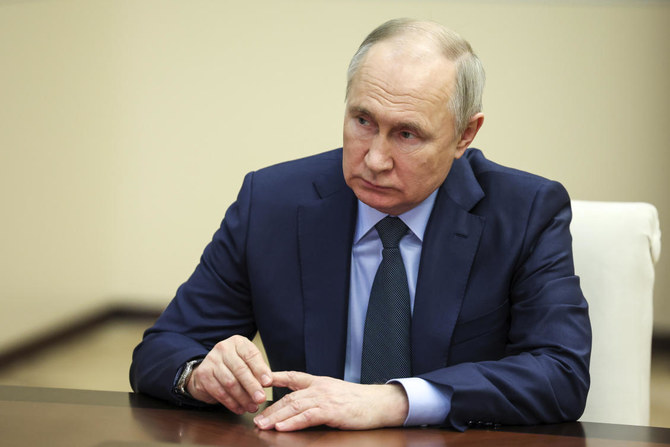
- It would be Putin’s first trip to a NATO country since Russia’s full-scale invasion of Ukraine
- He did not mention a date for the visit, but Turkish media has reported that Putin will come on Feb. 12.
Russia’s Lavrov sees no ‘bright future’ for economic ties with US
MOSCOW: Russia remains open for cooperation with the United States but is not hopeful about economic ties despite Washington’s ongoing efforts to end the Ukraine war, Russian Foreign Minister Sergei Lavrov said in an interview published on Monday.
Speaking to Russia-based media outlet TV BRICS, Lavrov cited what he called the United States’ declared aim of “economic dominance.”
“We also don’t see any bright future in the economic sphere,” Lavrov said.
Russian officials, including envoy Kirill Dmitriev, have previously spoken of the prospects for a major restoration of economic relations with the United States as part of any eventual Ukraine peace settlement.
But although President Donald Trump has also spoken of reviving economic cooperation with Moscow and has hosted his Russian counterpart Vladimir Putin on US soil since returning to the White House, he has imposed further onerous sanctions on Russia’s vital energy sector.
Lavrov also cited Trump’s hostility to the BRICS bloc, which includes Russia, China, India, Brazil and other major developing economies.
“The Americans themselves create artificial obstacles along this path (toward BRICS integration),” he said.
“We are simply forced to seek additional, protected ways to develop our financial, economic, logistical and other projects with the BRICS countries.”
Speaking to Russia-based media outlet TV BRICS, Lavrov cited what he called the United States’ declared aim of “economic dominance.”
“We also don’t see any bright future in the economic sphere,” Lavrov said.
Russian officials, including envoy Kirill Dmitriev, have previously spoken of the prospects for a major restoration of economic relations with the United States as part of any eventual Ukraine peace settlement.
But although President Donald Trump has also spoken of reviving economic cooperation with Moscow and has hosted his Russian counterpart Vladimir Putin on US soil since returning to the White House, he has imposed further onerous sanctions on Russia’s vital energy sector.
Lavrov also cited Trump’s hostility to the BRICS bloc, which includes Russia, China, India, Brazil and other major developing economies.
“The Americans themselves create artificial obstacles along this path (toward BRICS integration),” he said.
“We are simply forced to seek additional, protected ways to develop our financial, economic, logistical and other projects with the BRICS countries.”
© 2026 SAUDI RESEARCH & PUBLISHING COMPANY, All Rights Reserved And subject to Terms of Use Agreement.


