

UAE’s PMI falls to 56.6 in January, lowest level in 5 months: S&P Global

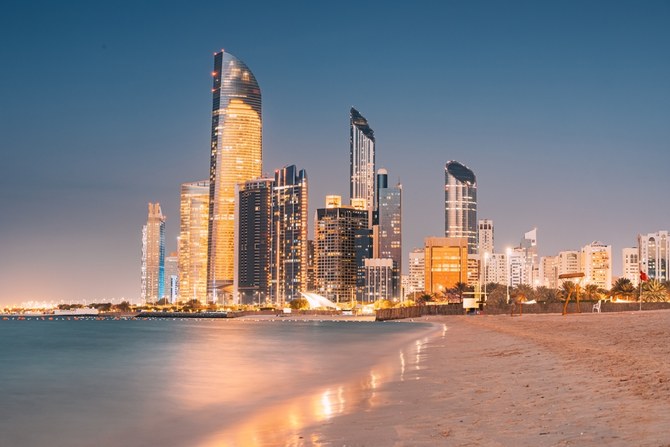
UAE employment growth is at its weakest point since December 2022, according to the report. Shutterstock
Short Url
Updated 05 February 2024
Follow

UAE’s PMI falls to 56.6 in January, lowest level in 5 months: S&P Global

RIYADH: Slowdowns in new order growth and employment rates led the UAE’s Purchasing Managers’ Index to fall to 56.6 in January from 57.4 the previous month, a new survey showed.

The latest S&P Global PMI report disclosed that non-oil business activity in the country eased to a five-month low in January but remained above the 50 mark.

Any PMI reading above that number indicates growth in the non-oil sector, while readings below 50 signal contraction, according to S&P Global.    

“While the UAE non-oil economy largely continued where it left off at the end of 2023, the PMI’s dip to 56.6 in January pointed to a slight moderation of growth from the sector’s best quarterly performance in four-and-a-half years,” said David Owen, a senior economist at S&P Global Market Intelligence.

He added: “Output and new order growth stayed above their long-run trends but softened, with the former easing to a five-month low.”

Owen went on to stress that employment growth was waning at its weakest point since December 2022, as strong demand and business optimism failed to translate into greater hiring.

“Meanwhile, the disruption to supply lines resulting from the Red Sea attacks appeared to have a modest impact on the UAE non-oil sector in January, with a few firms noting delivery delays, aggregate backlogs rising, and reports of higher shipping costs by survey respondents,” the economist underlined.

Owen continued to note that the impact on inflationary pressures so far has been notable but not severe, as input costs rose at a faster rate than in December but remained slower than in the preceding three months.

Moreover, the data indicated that an increase in transport costs underlined a faster rise in purchase prices than in December.

In addition to this, businesses also mentioned that greater material prices and salary adjustments pushed up expenses sturdily.

Despite this, average prices charged by non-oil firms decreased for the third month running, and to the greatest extent since May 2023.

Lower charges are often attributed to a build-up of competition and subsequent efforts to lure in new customers.

The survey further showed that confidence regarding year-ahead outlook for activity was positive and approximately on par with the 2023 average.

Companies are projecting strong demand and sales pipelines in the UAE to drive a sustained expansion in output.

The new projects and investments on the horizon are also expected to aid in bolstering positivity.


Saudi public investment fund assets rise 36% to$58bn in Q3 

Updated 25 sec ago
Follow

Saudi public investment fund assets rise 36% to$58bn in Q3 

RIYADH: Assets held by public investment funds in Saudi Arabia rose 36 percent from a year earlier to about SR217.9 billion ($58.1 billion) by the end of the third quarter of 2025, driven by strong growth in domestic investments, official data showed. 

Asset values also rose 5.7 percent from the previous quarter, according to data from the Capital Market Authority cited by the Saudi Press Agency. 

Saudi Arabia’s stock exchange has seen strong growth in recent years, attracting increased investor interest in fixed-income instruments amid a global environment of elevated interest rates. 

According to SPA, the number of subscribers to public investment funds reached 1.59 million by the end of the third quarter, representing an annual increase of 1.5 percent. 

The growth in public investment fund assets was driven by a 39 percent year-on-year rise in assets of local funds, which reached SR186.9 billion in the third quarter of 2025 and accounted for 86 percent of total assets. 

Meanwhile, assets of foreign funds rose to SR31.1 billion, reflecting annual growth of 21 percent. 

The number of public investment funds in the Kingdom increased 11.6 percent year on year to 346, up from 310 in the third quarter of 2024. 

Public investment fund assets were distributed across a range of investment types, including equities, bonds, cash instruments, real estate investments, and other assets. 

Local money market funds held the largest share of assets at SR75.6 billion, followed by local equities at SR46.6 billion, real estate investment funds at SR28.9 billion, and funds invested in other local assets at SR19.6 billion. 

To further strengthen the capital market ecosystem, the Kingdom announced earlier this month that it would open its financial markets to all foreign investors. 

The measures introduced by the Capital Market Authority include the removal of restrictions such as the Qualified Foreign Investor framework, which required a minimum of $500 million in assets under management, as well as the abolition of swap agreements.
