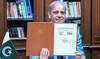
Biden condemns anti-Arab hate after WSJ opinion piece calls Dearborn ‘jihad capital’

Dearborn has one of the highest percentages of Arab Americans among US cities, with census figures showing it is about 54 percent Arab American. (Reuters/File Photo)
Short Url
Updated 05 February 2024
Follow

Biden condemns anti-Arab hate after WSJ opinion piece calls Dearborn ‘jihad capital’

  • Dearborn has one of the highest percentages of Arab Americans among US cities, with census figures showing it is about 54 percent Arab American

DEARBORN: President Joe Biden on Sunday denounced anti-Arab rhetoric in response to a Wall Street Journal opinion piece targeting Dearborn, Michigan, that the mayor called “bigoted” and “Islamophobic.”
The WSJ published the piece on Friday headlined as “Welcome to Dearborn, America’s Jihad Capital,” suggesting the city’s residents, including religious leaders and politicians, supported Palestinian Islamist group Hamas and extremism.

The column drew outrage from Dearborn Mayor Abdullah Hammoud, as well as several US lawmakers and rights advocates from the Council on American-Islamic Relations and the Arab American Anti-Discrimination Committee.
The mayor said on Saturday he had ramped up the city’s police presence at houses of worship and other public places after “an alarming increase in bigoted and Islamophobic rhetoric online targeting the city of Dearborn.”

As of Sunday afternoon, there were no reports of any unrest in Dearborn, a suburb of about 110,000 people that borders Detroit.
Biden, while not referring directly to the WSJ or the article’s author, said on social media platform X it was wrong to blame “a group of people based on the words of a small few.”
“That’s exactly what can lead to Islamophobia and anti-Arab hate, and it shouldn’t happen to the residents of Dearborn – or any American town,” Biden said on the platform formerly called Twitter.
The city has one of the highest percentages of Arab Americans among US cities, with census figures showing it is about 54 percent Arab American.
“Reckless. Bigoted. Islamophobic,” Hammoud said on Saturday about the WSJ piece written by Steven Stalinsky, executive director of the Middle East Media Research Institute.
Biden, who is running for re-election, has himself faced criticism and protests from Dearborn and from anti-war voices around the country for his administration’s support for Israel in its operations in Gaza.
The WSJ did not respond to a request for comment. Stalinsky said he stood by his piece and added that videos compiled by his institute showed that “shocking anti-US and pro-jihad sermons and marches” had taken place in the city. Reuters was not able to independently verify the location or the date of when the videos were filmed.
Rights advocates have noted a rise in Islamophobia, anti-Palestinian bias and antisemitism in the US since the eruption of war in the Middle East in October.
Among anti-Palestinian incidents that raised alarm were a November shooting in Vermont of three students of Palestinian descent and the fatal stabbing of a 6-year-old Palestinian American in Illinois in October.
Some Democratic members of the US Congress like Representatives Pramila Jayapal and Ro Khanna, and Senators Gary Peters and Debbie Stabenow, also condemned the WSJ opinion piece, with Jayapal demanding an apology from the newspaper.
The latest eruption of war in the Middle East began on Oct. 7 when Hamas attacked Israel, killing 1,200. Israel has since assaulted Hamas-governed Gaza, killing over 27,000, according to the local health ministry. Nearly all of Gaza’s 2.3 million population is displaced. The densely populated enclave also faces starvation.


ASEAN should adhere to rule of law in face of ‘unilateral actions,’ Philippines’ top diplomat says

Updated 3 sec ago
Follow

ASEAN should adhere to rule of law in face of ‘unilateral actions,’ Philippines’ top diplomat says

  • Several ASEAN members have expressed deep concern over the US strike that resulted in the arrest of Venezuelan leader Nicolas Maduro
  • Philippines’ top envoy: ‘Across our region, we continue to see tensions at sea, protracted internal conflicts and unresolved border and humanitarian concerns’
CEBU, Philippines: Southeast Asian countries should steadfastly maintain restraint and adhere to international law as acts of aggression across Asia and “unilateral actions” elsewhere in the world threaten the rules-based global order, Manila’s top diplomat said Thursday.
Philippine Foreign Secretary Theresa Lazaro did not provide details of the geopolitical alarm she raised before her counterparts in the 11-nation Association of Southeast Asian Nations who were holding their first major closed-door meetings this year in the Philippines’ central seaside city of Cebu.
Several ASEAN members, however, have expressed deep concern over the secretive US strike that resulted in the arrest of Venezuelan leader Nicolas Maduro on orders from US President Donald Trump. China’s intensifying aggressive stance on Taiwan and in the disputed South China Sea have also troubled the region for years.
Calling out the US and China, among the largest trading and defense partners of ASEAN countries, have been a dilemma and diplomatic tightrope.
“Across our region, we continue to see tensions at sea, protracted internal conflicts and unresolved border and humanitarian concerns,” Lazaro said in her opening speech before ASEAN counterparts.
“At the same time, developments beyond Southeast Asia, including unilateral actions that carry cross-regional implications, continue to affect regional stability and erode multilateral institutions and the rules- based international order,” she said.
“These realities underscore the interim importance of ASEAN’s time-honored principles of restraint, dialogue and adherence to international law in seeking to preserve peace and stability to our peoples.”
The Philippines holds ASEAN’s rotating chair this year, taking what would have been Myanmar’s turn after the country was suspended from chairing the meeting after its army forcibly ousted Aung San Suu Kyi’s democratically elected government in 2021.
Founded in 1967 in the Cold War era, ASEAN has an unwieldy membership of diverse countries that range from vibrant democracies like the Philippines, a longtime treaty ally of Washington, to authoritarian states like Laos and Cambodia, which are close to Beijing.
The regional bloc adopted the theme “Navigating our future, Together” this year but that effort to project unity faced its latest setback last year when deadly fighting erupted between two members, Thailand and Cambodia, over a longtime border conflict.
Aside from discussing the deadly fighting that embroiled Thailand and Cambodia before both forged a US-backed ceasefire last year, the ASEAN foreign ministers will deliberate how to push a five-point peace plan for the war in Myanmar, issued by the regional bloc’s leaders in 2021. The plan demanded, among others, an immediate end to fighting and hostilities, but it has failed to end the violence or foster dialogue among contending parties.
ASEAN foreign ministers are also under pressure to conclude negotiations with China ahead of a self-imposed deadline this year on a so-called “code of conduct” to manage disputes over long-unresolved territorial rifts in the South China Sea. China has expansive claims in the waterway, a key global trade route, that overlap with those of four ASEAN members, the Philippines, Malaysia, Vietnam and Brunei.