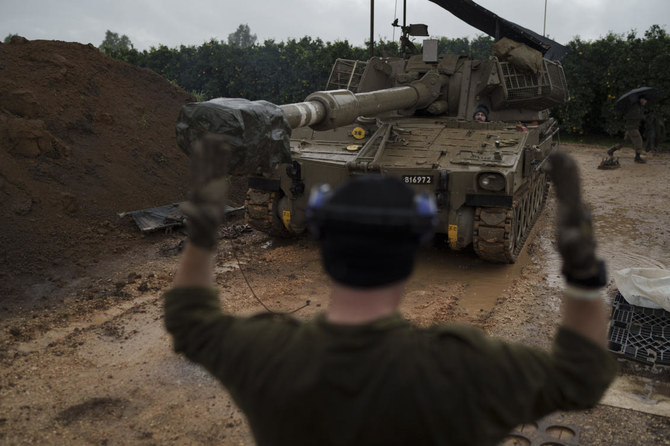
JERUSALEM: Israel has attacked more than 50 Hezbollah targets in Syria and 3,400 in Lebanon since the war with Hamas in Gaza began in October, Israeli army spokesman Daniel Hagari said Saturday.
“Since the beginning of the war, we have attacked, from the ground and air, more than 50 such targets of Hezbollah spread throughout Syria,” Hagari told reporters, adding that more than 3,400 similar strikes against the group had been carried out in southern Lebanon.
Hezbollah has for years been fighting on the side of Syrian President Bashar Assad in his country’s war, and is an ally of Palestinian Islamist group Hamas.
Israel rarely comments on individual strikes targeting Syria, but it has repeatedly said it will not allow arch-foe Iran, which backs Assad, to expand its presence there.
Since the outbreak of war between Hamas and Israel on October 7, the Lebanese-Israeli border has witnessed near-daily exchanges of fire, mainly between the Israeli army and Hezbollah.
At least 218 people have been killed in Lebanon, mostly Hezbollah fighters but also at least 26 civilians, according to an AFP tally.
Hagari on Saturday said more than 200 “terrorists and commanders” had been killed in Israeli strikes on Lebanon.
In northern Israel, nine Israeli soldiers and six civilians have been killed since the war in Gaza began, Israeli officials have said.
Late on Friday the United States carried out air strikes against Iran-backed armed groups in Iraq and Syria and promised more to come, in retaliation for a drone attack that killed three US soldiers in Jordan on Sunday.
The US military said it struck a total of 85 targets at seven different sites in Syria and Iraq.
The strikes killed at least 29 pro-Iran fighters in Syria, the Syrian Observatory for Human Rights war monitor said. In Iraq, they killed 16 people, including civilians, the Baghdad government said.
Bases hosting US and allied troops have been attacked more than 165 times in Iraq, Syria and Jordan since mid-October in a campaign waged by Iran-backed armed groups angered by US support for Israel in the war in Gaza.
The war in Gaza broke out following Hamas’s attack on Israel on October 7 that resulted in the deaths of more than 1,160 people in Israel, mostly civilians, according to an AFP tally based on official Israeli figures.
In response, Israel launched a blistering air, land and sea offensive in Gaza that has killed at least 27,238 people, most of them women and children, according to the Hamas-run territory’s health ministry.


![]()

Israel says struck thousands of Hezbollah targets in Lebanon, Syria during Gaza war
Short Url
https://arab.news/w7fbz
Israel says struck thousands of Hezbollah targets in Lebanon, Syria during Gaza war
- “Since the beginning of the war, we have attacked, from the ground and air, more than 50 such targets of Hezbollah spread throughout Syria,” Hagari told reporters
- Israel rarely comments on individual strikes targeting Syria, but it has repeatedly said it will not allow arch-foe Iran, which backs Assad, to expand its presence there


Latest updates


Recommended


© 2026 SAUDI RESEARCH & PUBLISHING COMPANY, All Rights Reserved And subject to Terms of Use Agreement.