Pakistan federal cabinet approves increase in prices of over 140 life-saving medicines

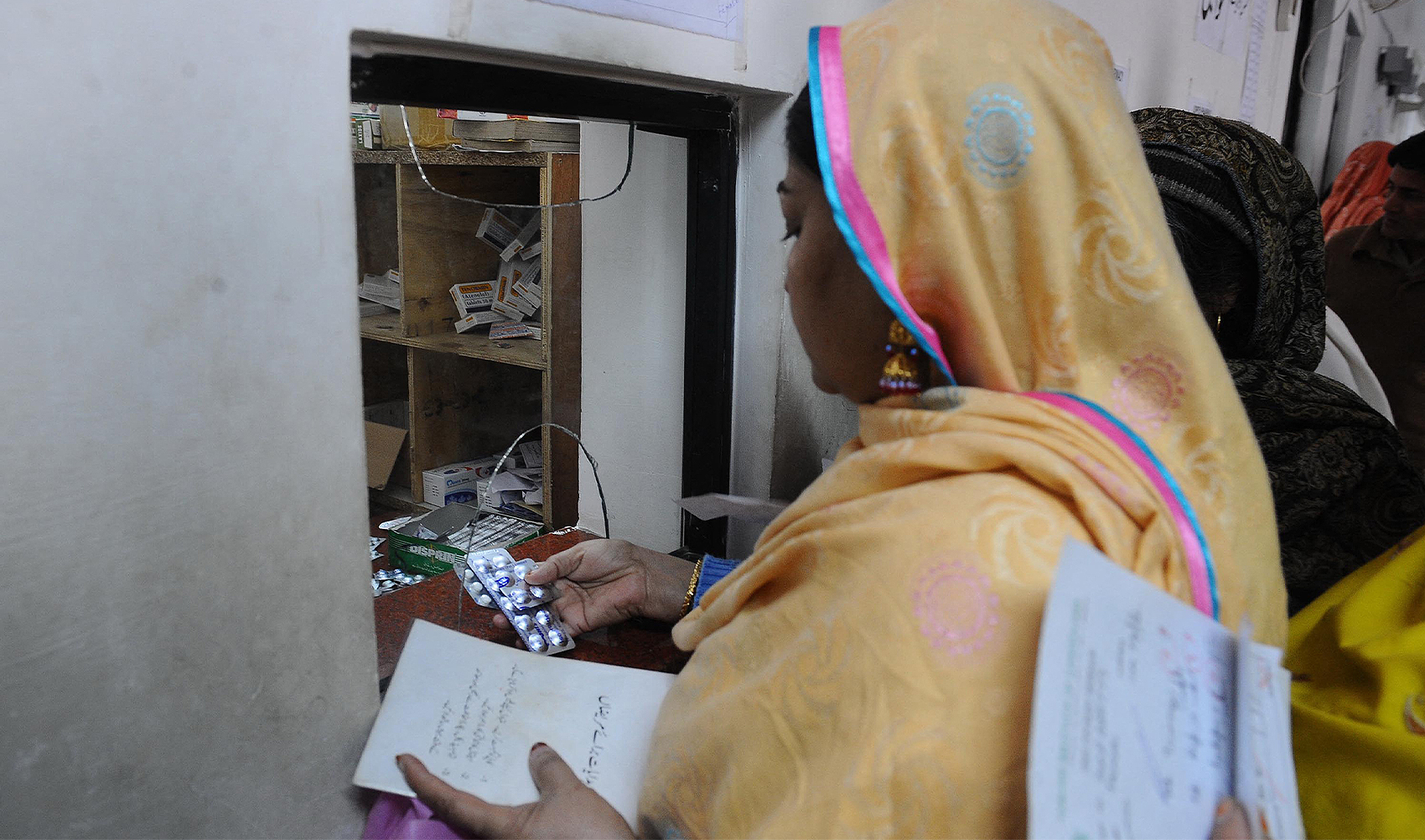
Pakistani heart patients and their family members queue for their prescription medication from a pharmacy at the Punjab Institute of Cardiology in Lahore on January 24, 2012. (AFP/File)
Short Url
Updated 02 February 2024
Follow

Pakistan federal cabinet approves increase in prices of over 140 life-saving medicines

  • Development comes after a year-long tussle between government, drug-makers over prices of medicines
  • Last year, drug manufacturers even stopped supply citing rising cost of production and dollar-rupee parity

ISLAMABAD: The federal cabinet has approved an increase in prices of more than 140 life-saving medicines, Pakistani state media reported on Thursday.

The development comes after more than a year-long tussle between the government and drug manufacturers over the prices of essential medicines.

The decision to increase the prices was made at a meeting of the federal cabinet presided over by Prime Minister Anwaar-ul-Haq Kakar in Islamabad, the state-run Radio Pakistan broadcaster reported.

“On recommendation of the Ministry of National Health, the Federal Cabinet approved increase in the prices of 146 essential life-saving medicines,” the report read.

It said the decision was taken while keeping in view the “rising prices of raw materials in global market.”

Last year, pharmaceutical firms and importers had stopped supply of medicines due to the outgoing government’s inaction on price adjustment according to the rising inflation and dollar-rupee disparity.

The move led to shortage of critical medicines, including oncology products, plasma-derived products, vaccines, recombinant biologicals, equine serum products, cardiac enzymes and specialized hormones, insulin, and mostly importantly the general anesthesia used in operation theaters, in Pakistani health facilities, doctors and pharmacists said at the time.

Speaking at the cabinet meeting, PM Kakar said his government was taking every possible step for the provision of medicines at suitable prices, according to the report.

“The government is devising such policies which would not only benefit the common man, but the pharmaceutical industry as well,” he was quoted as saying.

The prime minister asked authorities to speed up action against hoarding and smuggling of medicines.


Pakistan mulls 'Super App' for public services, document verification in major technology push

Updated 7 sec ago
Follow

Pakistan mulls 'Super App' for public services, document verification in major technology push

  • Pakistan has been urging technology adoption in public, private sectors as it seeks to become a key tech player globally
  • The country this month launched the Indus AI Week to harness technology for productivity, skills development and innovation

KARACHI: Pakistan is planning to launch a “Super App” to deliver public services and enable digital document verification, the country's information technology (IT) minister said on Sunday, amid a major push for technology adoption in public and private sectors.

Pakistan, a country of 240 million people, seeks to become a key participant in the global tech economy, amid growing interest from governments in the Global South to harness advanced technologies for productivity, skills development and innovation.

The country's information and communications technology (ICT) exports hit a record $437 million in Dec. last year, according to IT Minister Shaza Fatima Khawaja. This constituted a 23% increase month on month and a 26% increase year on year.

Pakistan's technology sector is also advancing in artificial intelligence (AI) and cloud computing, marked by the launch of Pakistan’s first sovereign AI cloud in November, designed to keep sensitive data domestic and support growth in the broader digital ecosystem.

“In developed countries, citizens can access all government services from a mobile phone,” Fatima said, announcing plans for the Super App at an event in Karachi where more than 7,000 students had gathered for an AI training entrance test as part of the ‘Indus AI Week.’

“We will strive to provide similar facilities in the coming years.”

Khawaja said the app will reduce the need for in-person visits to government offices such as the National Database and Registration Authority (NADRA) and the Higher Education Commission (HEC).

The Indus AI Week initiative, which ran from Feb. 9 till Feb. 15. was aimed at positioning Pakistan as a key future participant in the global AI revolution, according to the IT minister.

At the opening of the weeklong initiative, Prime Minister Shehbaz Sharif announced that Pakistan would invest $1 billion in AI by 2030 to modernize the South Asian nation’s digital economy.

“These initiatives aim to strengthen national AI infrastructure and make the best use of our human resource,” Khawaja said, urging young Pakistanis to become creators, inventors and innovators rather than just being the consumers of technology.