

Global M&A market drops 15% in 2023 to $3.2tn

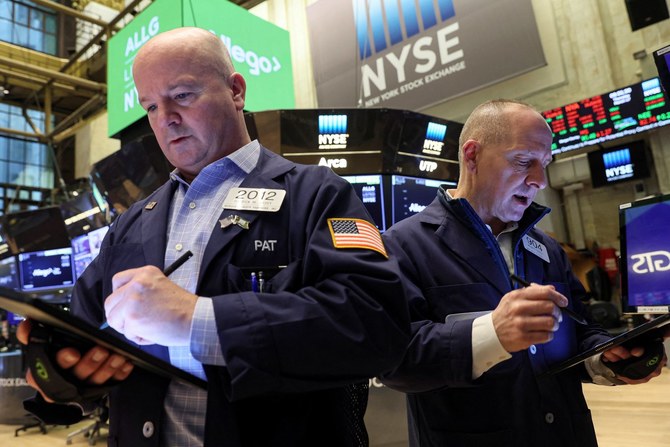
Dealmakers grappled with several obstacles, including high interest rates, increased regulatory scrutiny, and mixed macroeconomic signals, forcing them to be more selective. Reuters/File
Short Url
Updated 30 January 2024
Follow

Global M&A market drops 15% in 2023 to $3.2tn

  • Overall strategic deal multiples hit a 15-year low, says a report

RIYADH: The global merger and acquisition market witnessed a 15 percent drop year-on-year to $3.2 trillion in 2023, marking its lowest level in a decade, according to recent findings.

Dealmakers grappled with several obstacles, including high interest rates, increased regulatory scrutiny, and mixed macroeconomic signals, forcing them to be more selective in their pursuit of deals, Bain & Co.’s annual report stated. 

It highlighted that the gap between valuations was one of the most significant challenges. Additionally, overall strategic deal multiples hit a 15-year low at 10.1 times.

“The drop in deal multiples led to a wait-and-see atmosphere in 2023, with many sellers hesitant to come to the table at a market bottom,” said Les Baird, partner and head of Bain & Co.’s global M&A and divestitures practice.

A decline in tech M&A played a pivotal role with tech deal values dropping by approximately 45 percent.

Furthermore, median valuations plummeted from 25 times in 2021 to 13 times in 2023. However, the energy and healthcare sectors had a strong year, driven by sector-specific dynamics and big-ticket deals.

The research document further highlighted that mega deals were mostly made in the second half of 2023, signaling a potential shift in the outlook of dealmakers. 

Despite the decline in deal counts, companies maintained high levels of proactive deal screening and due diligence.

“History shows that downturns and times of disruption always produce newer, stronger competitors that used the turbulence to make market gains,” said Suzanne Kumar, Bain & Co.’s global practice vice president for M&A and divestitures.

The report also highlights an evolving regulatory climate, with at least $361 billion in announced deals facing challenges from regulators worldwide in the past two years. 

The average time to reach a regulatory outcome for scrutinized deals is now 12 months, adding complexity to deal planning, it stated.

Looking ahead, the findings pinpoint that generative artificial intelligence is expected to play a more significant role in dealmaking. 

In a survey of more than 300 M&A practitioners, Bain & Co. reports that only 16 percent currently use generative AI for deal processes, 80 percent anticipate adopting it within the next three years. 

Early users have found the technology to be efficient in generating ideas and reviewing data in the diligence phase, with 85 percent reporting that it met or exceeded their expectations. 

However, practitioners also recognized challenges related to data accuracy, privacy, and cybersecurity.

Additionally, the report delves into industries, highlighting that healthcare and life sciences are expected to remain active, driven by high levels of cash reserves and executive confidence. 

Energy and natural resources companies will take a more targeted approach to their energy transition acquisitions.

The space industry also closed multibillion-dollar deals in 2023 and is anticipated to continue to grow.


Acwa signs key terms to develop 5GW of renewable energy capacity in Turkiye

Updated 23 February 2026
Follow

Acwa signs key terms to develop 5GW of renewable energy capacity in Turkiye

JEDDAH: Saudi utility giant Acwa has signed key investment agreements with Turkiye’s Ministry of Energy and Natural Resources to develop up to 5 gigawatts of renewable energy capacity, starting with 2GW of solar power across two plants in Sivas and Taseli.

Under the investment agreement, Acwa will develop, finance, and construct, as well as commission and operate both facilities, according to a press release.

The program builds on the company’s first investment in Turkiye, the 927-megawatt Kirikkale Independent Power Plant, valued at $930 million, which offsets approximately 1.8 million tonnes of carbon dioxide annually, the statement added.

A separate power purchase agreement has been concluded with Elektrik Uretim Anonim Sirketi for the sale of electricity generated by each facility.

Turkiye aims to boost solar and wind capacity to 120GW by 2035, supported by around $80 billion in investment, while recent projects have already helped prevent 12.5 million tonnes of CO2 emissions and reduced reliance on imported natural gas.

Turkiye’s energy sector has undergone a rapid transformation in recent years, with renewable power emerging as a central pillar of its strategy.

Raad Al-Saady, vice chairman and managing director of ACWA, said: “The signing of the IA (implementation agreement) and PPA key terms marks a pivotal moment in Acwa’s partnership with Turkiye, reflecting the country’s strong potential as a clean energy leader and manufacturing powerhouse.”

He added: “Building on our long-standing presence, including the 927MW Kirikkale Power Plant commissioned in 2017, this step elevates our partnership to a new level,” Al-Saady said.

In its statement, Acwa said the 5GW renewable energy program will deliver electricity at fixed prices, enhancing predictability for grid planning and supporting long-term industrial investment.

By replacing imported fossil fuels with domestically generated clean energy, the initiative is expected to reduce Turkiye’s exposure to global energy market volatility, strengthening energy security and lowering long-term power costs.

The company added that the economic impact will extend beyond the anticipated investment of up to $5 billion in foreign direct investment, with thousands of jobs expected during the construction phase and hundreds of high-skilled roles created during operations.

The energy firm concluded that its existing progress in Turkiye reflects a strong appreciation for Turkish engineering, construction, and manufacturing capacity, adding that localization has been a strategic priority, and it has already achieved 100 percent local employment at its developments in the country.