RAFAH, Gaza Strip: The head of the main UN aid agency in the war-battered Gaza Strip warned late Saturday that its work is collapsing after nine countries decided to cut funding over allegations that several agency employees had participated in the deadly Hamas attack against Israel four months ago.
Philippe Lazzarini, head of the UN agency for Palestinian refugees, known as UNWRA, said he was shocked such decisions were taken as “famine looms” in the ongoing Israel-Hamas war. “Palestinians in Gaza did not need this additional collective punishment,” he wrote on X. “This stains all of us.”
His warning came a day after he announced he had fired and was investigating several agency employees over allegations that they participated in the Oct. 7 attack on Israel that sparked the war. The United States, which said 12 agency employees were under investigation, immediately said it is suspending funding, followed by several other countries, including Britain, Italy and Finland.
The agency, which has 13,000 employees in Gaza, most of them Palestinians, is the main organization aiding Gaza’s population amid the humanitarian disaster. More than 2 million of the territory’s 2.3 million people depend on it for “sheer survival,” including food and shelter, Lazzarini said, warning this lifeline can “collapse any time now.”
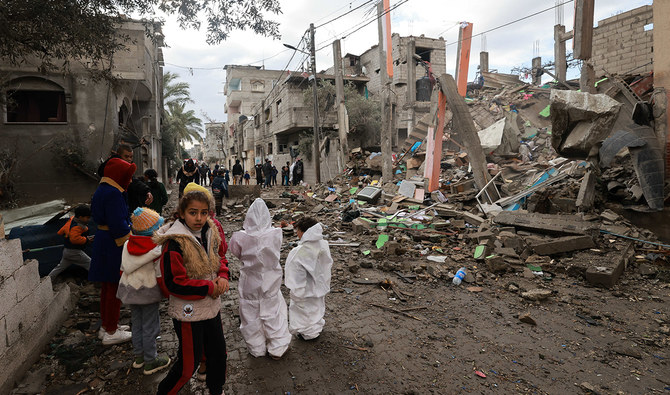
The Israel-Hamas war has killed more than 26,000 Palestinians, according to local health officials, destroyed vast swaths of Gaza and displaced nearly 85 percent of the territory’s 2.3 million people. The Hamas attack in southern Israel killed about 1,200 people, mostly civilians, and about 250 hostages were taken.
In Israel, Prime Minister Benjamin Netanyahu pushed back Saturday after the International Court of Justice ruling to limit death and destruction in the military’s Gaza offensive, declaring that “we decide and act according to what is required for our security.”
Among the first deaths reported since the ruling, witnesses said three Palestinians were killed in an airstrike that Israel said targeted a Hamas commander.
Israel’s military is under increasing scrutiny now that the top United Nations court has asked Israel for a compliance report in a month. The court’s binding ruling on Friday stopped short of ordering a ceasefire, but its orders were in part a rebuke of Israel’s conduct in its nearly 4-month war against Gaza’s Hamas rulers.
At least 174 Palestinians were killed over the past day, the Health Ministry in Gaza said. It does not distinguish between combatants and civilians in its tolls, but has said about two-thirds are women and children.
Israel holds Hamas responsible for civilian casualties, saying the militants embed themselves in the local population. Israel says its air and ground offensive in Gaza has killed more than 9,000 militants.
Israel’s military said it had conducted several “targeted raids on terror targets” in the southern city of Khan Younis in addition to the airstrike in nearby Rafah targeting a Hamas commander.
Bilal Al-Siksik said his wife, a son and a daughter were killed in the Rafah strike, which came as they slept. He said the UN court ruling meant little since it did not stop the war.
“No one can speak in front of them (Israel). America with all its greatness and strength can do nothing,” he said, standing beside the rubble and twisted metal of his home.
More than 1 million people have crammed into Rafah and the surrounding areas after Israel ordered civilians to seek refuge there. Designated evacuation areas have repeatedly come under airstrikes, with Israel saying it would go after militants as needed.
In Muwasi, a narrow coastal strip once designated as a safe zone but struck in recent days, displaced Palestinians tiptoed on sandaled feet through garbage-lined puddles in damp and chilly weather. Walls of sheets and tarps billowed in the wind. A mother wept after rain leaked in and soaked the blankets.
“This is our life. We have nothing and we left (our homes) with nothing,” said Bassam Bolbol, whose family ended up in Muwasi after leaving Khan Younis and finding no shelter in Rafah.
Frustration with the uncertainty grows. As thousands of Gazans fled Khan Younis toward Muwasi, Israel shared video showing a crowd appearing to call for bringing down Hamas.
The case brought by South Africa to the UN court alleged Israel is committing genocide against Gaza’s people, which Israel vehemently denies. A final ruling is expected to take years.
The court ordered Israel to urgently get aid to Gaza, where the UN has said aid entering the territory remains well below the daily average of 500 trucks before the war. The UN also says access to central and northern Gaza has been decreasing because of “excessive delays” at checkpoints and heightened military activity.
The World Health Organization and the medical charity MSF issued urgent warnings about the largest health facility in Khan Younis, Nasser Hospital, saying remaining staff could barely function with supplies running out and intense fighting nearby.
WHO footage showed people in the crowded facility being treated on blood-smeared floors as frantic loved ones shouted and jostled. Cats scavenged on a mound of medical waste.
“These are the only painkillers left we have. If you want to count them, they are only for maybe five or four patients,” Dr. Muhammad Harara said.
Gaza’s Health Ministry spokesperson Ashraf Al-Qidra said in a statement that Nasser Hospital lacked anesthesia and other medicines for intensive care units and had “dangerous” shortages of blood.
The United States, Israel’s closest ally, has increasingly called for restraint and for more humanitarian aid to be allowed into Gaza while supporting the offensive.
More mediation lies ahead in search of a deal to secure the release of hostages who remain captive in Gaza. Over 100 were released in a swap for Palestinian prisoners during a week-long ceasefire in November. An unspecified number of the remaining 136 are believed to be dead.
The US CIA director will meet in Europe with the head of the intelligence agencies of Israel and Egypt and with the prime minister of Qatar, according to three people familiar with the matter who insisted on anonymity to discuss the sensitive talks.
Netanyahu in his address said he would not take back “a single word” of his earlier criticism of Qatar, again accusing it of hosting Hamas leaders and funding Hamas.
“If they position themselves as a mediator, so please, let them prove it and bring back the hostages, and in the meantime deliver the medicines to them,” he said.
While the prime minister’s comments appeared to be aimed at his right-leaning base of supporters, other Israelis again gathered in Tel Aviv and outside Netanyahu’s residence in Jerusalem to call for new elections, frustrated with the government’s failure to bring all hostages home. Israel also was marking International Holocaust Remembrance Day, alongside other countries around the world.
Hamas has said it will only release the hostages in exchange for an end to the war and the release of large numbers of Palestinian prisoners held by Israel.


![]()

Embattled UN agency warns its aid operation in Gaza is ‘collapsing’ over a wave of funding cuts
Short Url
https://arab.news/cspq6
Embattled UN agency warns its aid operation in Gaza is ‘collapsing’ over a wave of funding cuts
- 9 countries decided to cut funding to agency over allegations several employees participated in Oct. 7 attacks against Israel
- The agency, which has 13,000 employees in Gaza, most of them Palestinians, is the main organization aiding Gaza’s population
Latest updates




© 2026 SAUDI RESEARCH & PUBLISHING COMPANY, All Rights Reserved And subject to Terms of Use Agreement.